
Lesson · Basics
Light and shadow: one light source, two shadows, and volume appears
A line drawing shows a shape; light gives it volume. You only need one rule, where the light comes from, to place every shadow on a character without hesitating.
- Intermediate
- 10 min practice
- 3 min read
- Updated
Key takeaways
- A shadow that switches sides from one object to the next means two lights: the drawing instantly loses credibility.
- The stronger the contrast between light and shadow, the more dramatic the scene. Soft lighting suits calm moments.
- Light a simple object with your phone's flashlight in a dark room and move the light around: you'll see the shadows move.
- Squint at a reference: details disappear and only the big masses of light and shadow remain.
On this page
A single light source
-
Step 1Decide where it comes from
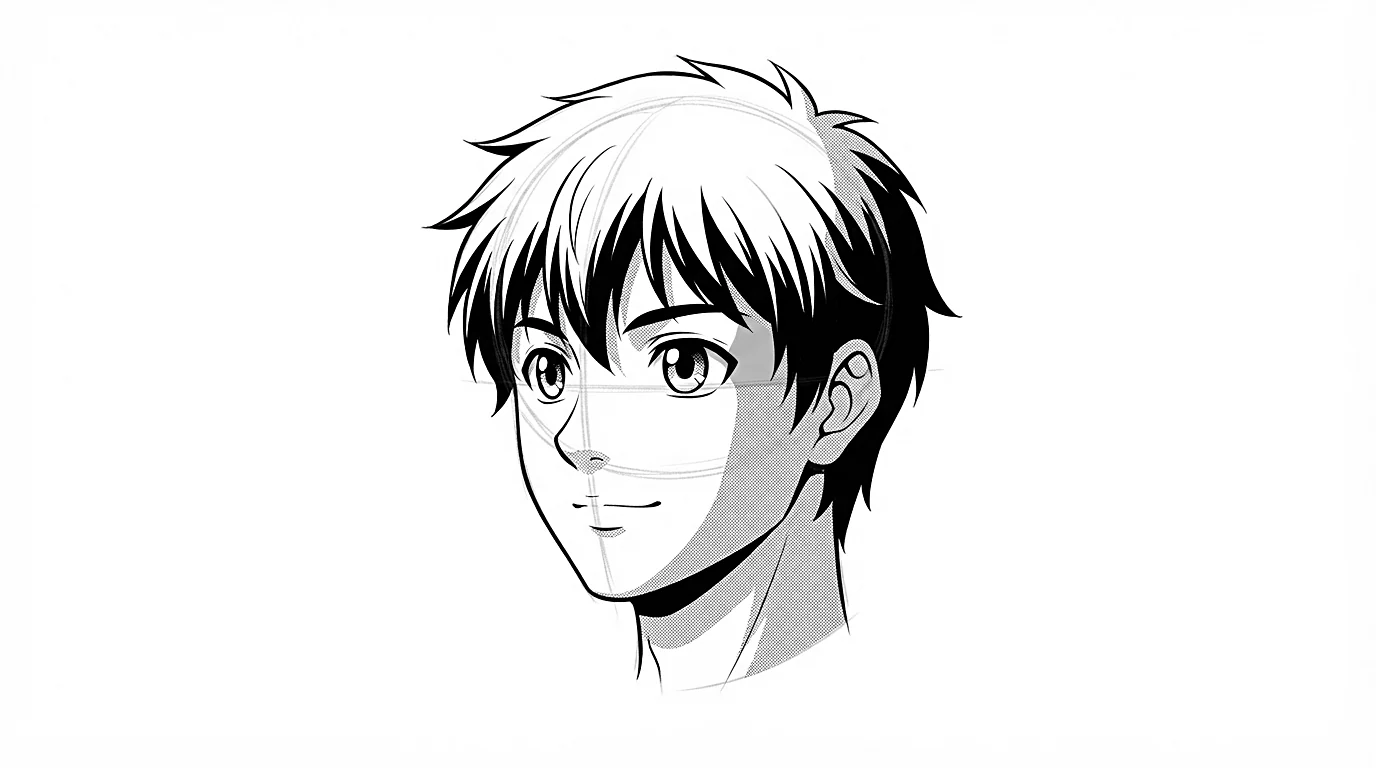
Before the first shadow, choose where the light comes from: top left, for example. Mark it with a small arrow in a corner.
-
Step 2What faces it is lit
Surfaces turned toward the light stay light. Those turning away from it go into shadow.
-
Step 3The border follows the form
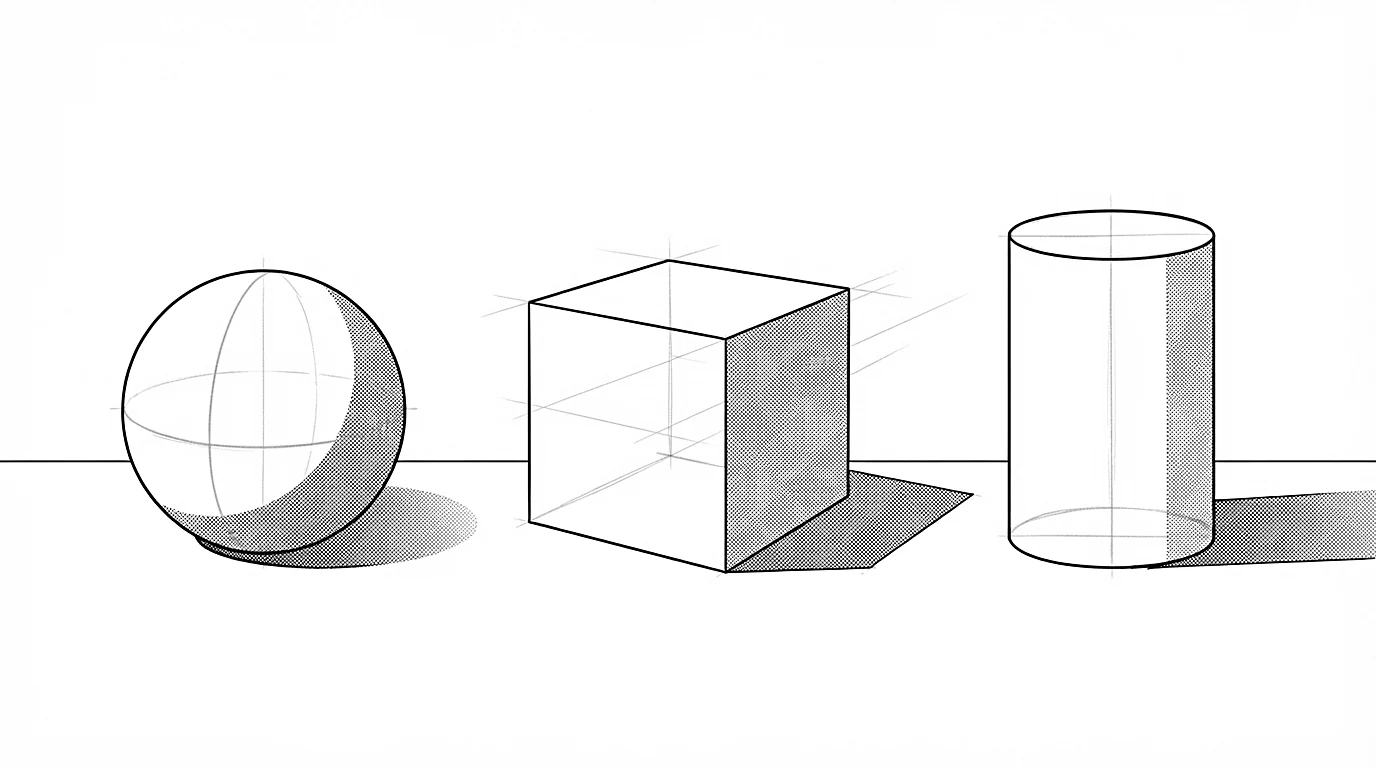
The border between light and shadow hugs the volume: curved on a sphere, straight on a box, a band on a cylinder.
-
Step 4Test on simple volumes
Before a character, shade a sphere, a box and a cylinder with the same light. A body is just these shapes put together.
A shadow that switches sides from one object to the next means two lights: the drawing instantly loses credibility.
Form shadow and cast shadow
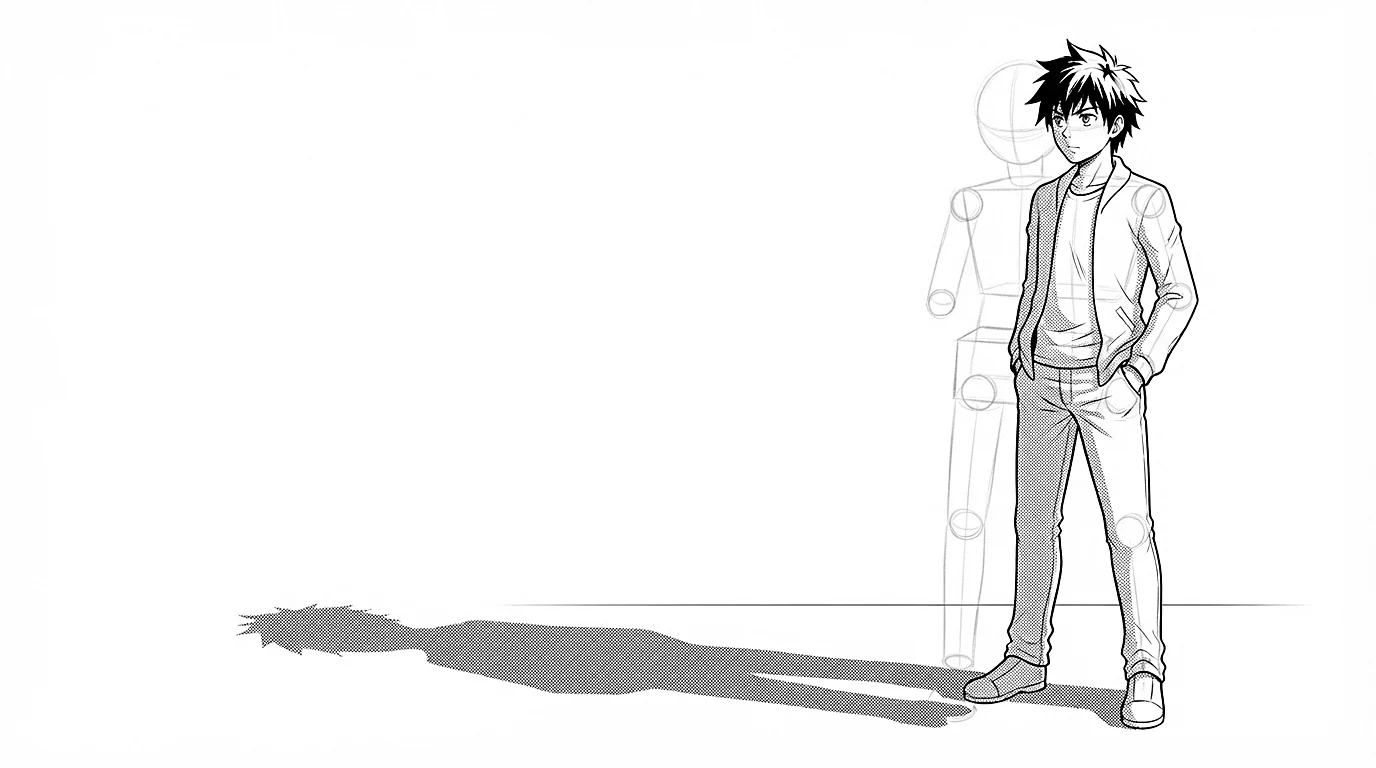
- The form shadow is on the object itself: the side that doesn't see the light.
- The cast shadow is the one the object throws onto something else: the ground, a wall, another character.
- The cast shadow starts at the object, on the side away from the light. The lower the light, the longer it gets.
- On a character, the most useful cast shadows: the head on the neck, the bangs on the forehead, the arm on the torso, the nose on the cheek.
- A cast shadow under the feet is enough to put a character on the ground.
Two-tone anime shading
-
Step 1A single shadow tone
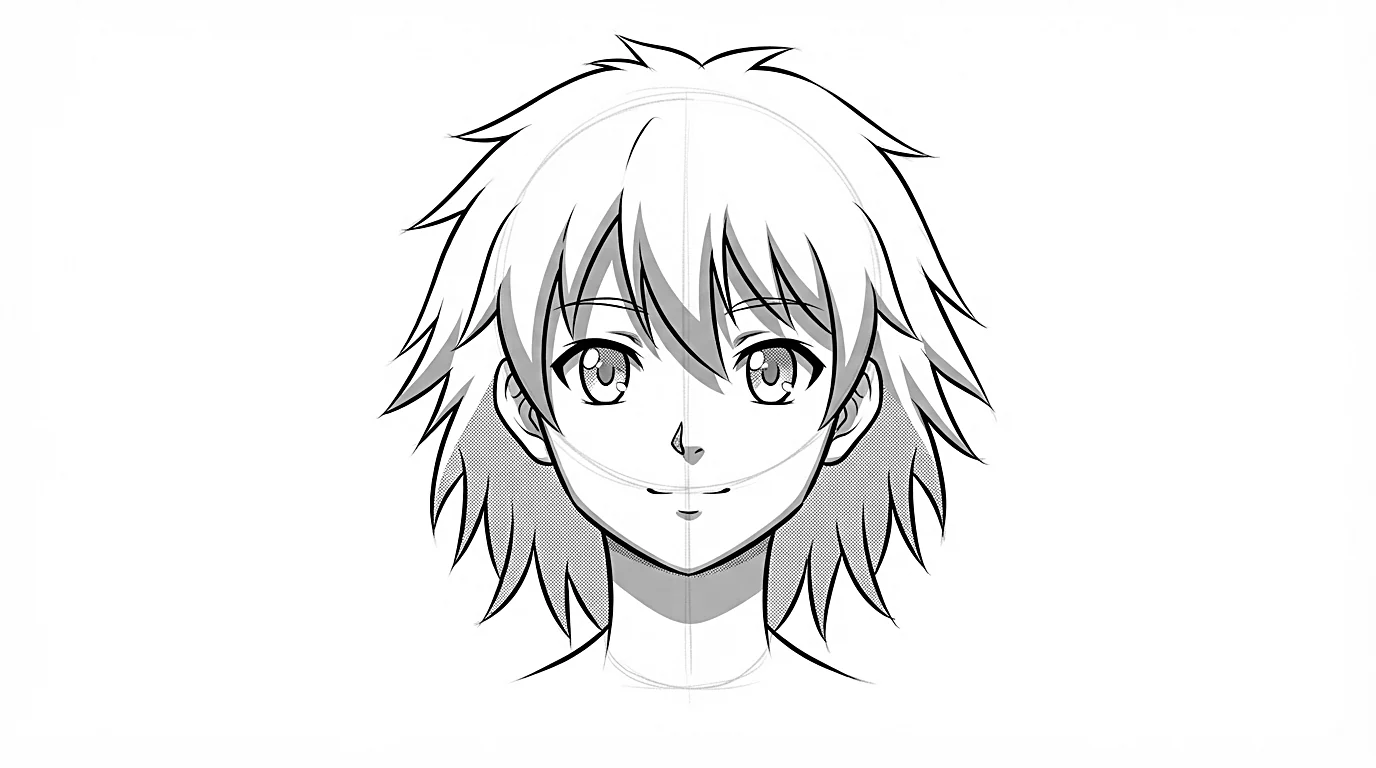
Anime often uses a single shadow tone with a crisp edge. No gradient: the shape of the shadow is enough to show the volume.
-
Step 2Simple shapes
Draw the shadow as a graphic shape: a crescent on the cheek, a triangle under the nose, a band under the chin.
-
Step 3Folds and hollows
Add shadows in the hollows: under the bangs, in the folds of the clothes, under the arms. Light never reaches these places.
-
Step 4A highlight if needed
To finish, a small light spot on the hair or the eyes makes them shine.
Backlight and mood lighting
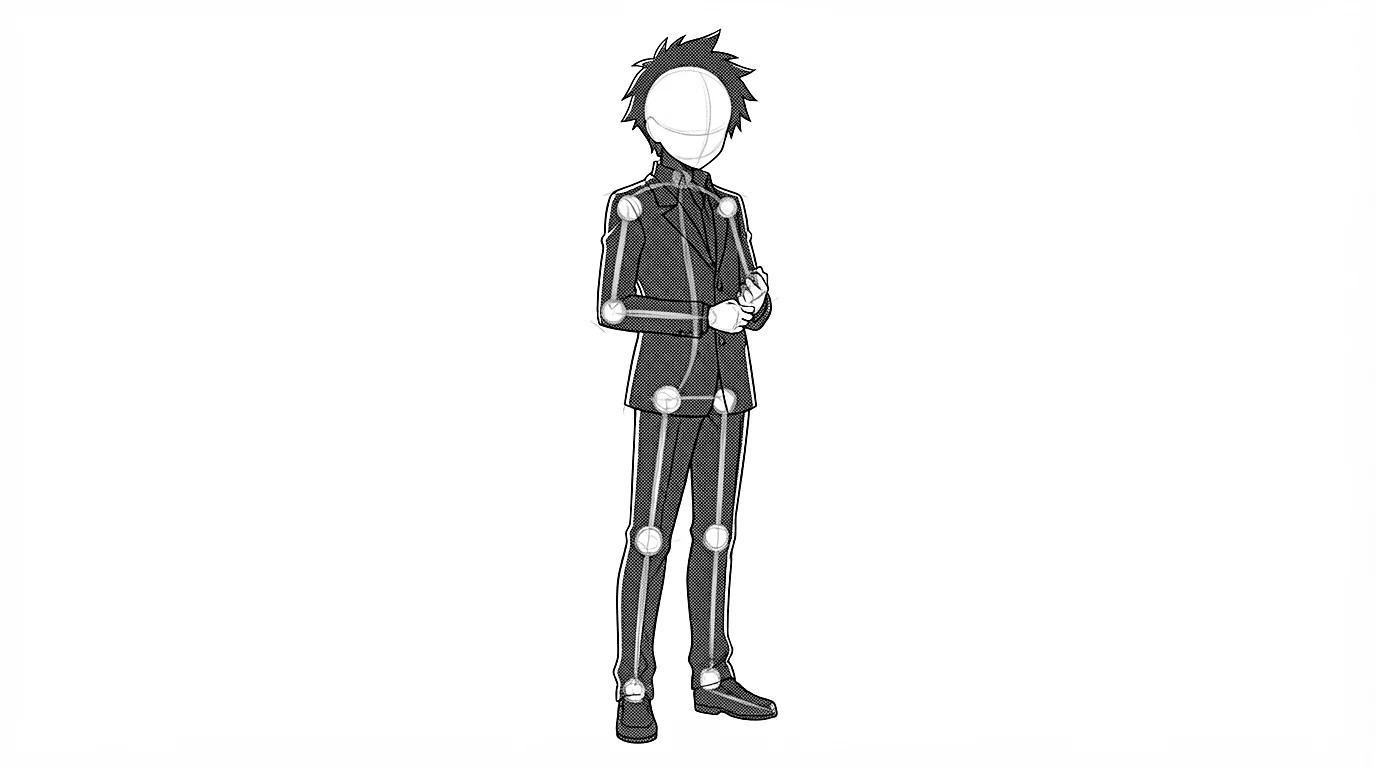
Changing the light changes the mood of a panel without touching the drawing.
-
Step 1Backlight
The light comes from behind: the character is almost all in shadow, and only a thin bright rim outlines them. Perfect for a mysterious entrance.
-
Step 2Light from below
Light coming from below, like a flashlight, flips the shadows of the face. A sure effect for a menacing character.
-
Step 3Two lights
A strong main light and a weaker one on the other side, in another color: the scene gains depth. Always keep one dominant light.
-
Step 4Night
Darken the whole drawing, then add the lights: a window, a street lamp, a phone screen. They are what guides the eye.
The stronger the contrast between light and shadow, the more dramatic the scene. Soft lighting suits calm moments.
The coach's tips
- Light a simple object with your phone's flashlight in a dark room and move the light around: you'll see the shadows move.
- Squint at a reference: details disappear and only the big masses of light and shadow remain.
- A few well-placed shadows beat many shadows everywhere.
- Keep the face mostly in the light: that's where the reader looks.
- In the app, pick a character and guess where the light would come from, based on their shadows, before tracing them.
Practice right now
Once the lesson is read, draw this exercise: it takes about 10 minutes.
Draw a sphere, a box and a cylinder side by side. Pick a light at the top left and give each one its form shadow and its cast shadow, in a single tone.
Keep learning
 Beginner
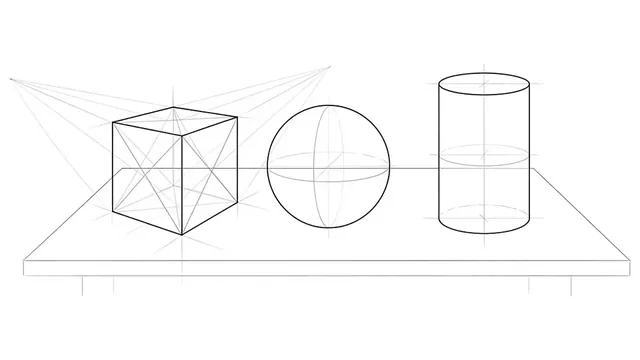
Drawing basics: lines, circles, shapes and cubes: every artist's warm-up
Lines, circles, shapes and cubes: every artist's warm-up.
 Intermediate
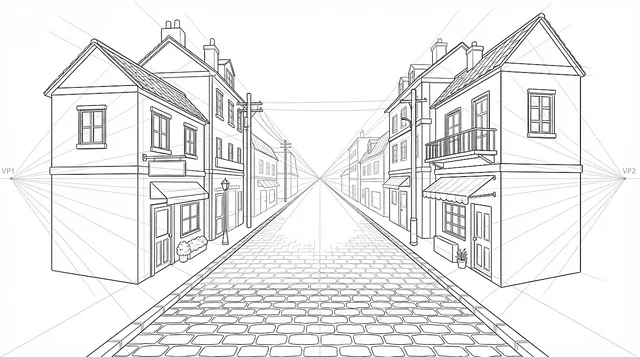
Perspective: horizon, vanishing points and characters in a scene
Horizon, vanishing points and characters in a scene.
 Beginner
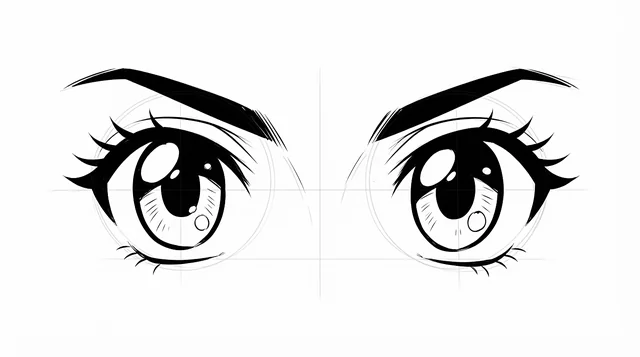
Manga eyes: place them, build them, bring the gaze to life
Place them, build them, bring the gaze to life.