
Guide · Practice & exercises
Is tracing bad? How to trace and still learn to draw
Tracing is not bad: it is a learning tool, as long as you use it actively and never present traced art as your own original work. Trace to feel the lines and proportions of a drawing you admire, then rebuild it with its construction and draw it again freehand. What holds artists back is tracing only, not tracing itself.
- 4 min read
- Updated
Key takeaways
- Tracing for practice is fine; presenting traced art as your original work is not.
- Tracing teaches line confidence, proportions and how artists simplify.
- It does not teach construction or drawing from imagination: you need exercises for that.
- Trace, rebuild the construction, then draw it again freehand and compare.
On this page
Is tracing cheating?
It depends on what you do with the result. Tracing a drawing in your sketchbook to study it is practice, like a musician playing someone else's song. Posting a traced drawing as if you had drawn it yourself, entering it in a contest or selling it is where it becomes dishonest, and it can also break the artist's copyright.
If you share a traced study, say so and credit the original artist. In private, trace as much as you like: the question is not whether tracing is allowed, but whether it makes you better.
What tracing teaches you
Tracing lets you feel how a confident line moves. Following the curve of a jaw or a lock of hair drawn by a skilled artist trains your hand to draw long, smooth strokes instead of short, hesitant ones.
It also shows you choices you would not notice by looking: how big the eyes are compared with the face, where the lines stop, which details the artist left out. For anime, where the style is mostly about simplifying, that is valuable.
- Line confidence: smooth, continuous strokes.
- Proportions: where the features and the joints really sit.
- Simplification: which lines a style keeps and which it drops.
- Line weight: where artists press harder and where they lighten.
What tracing cannot teach you
Tracing follows lines that already exist, so it skips the hardest part of drawing: deciding where the lines go. It does not teach you to build a head as a volume, to turn a body in space or to invent a pose. Artists who only trace often find they cannot draw anything without a model underneath.
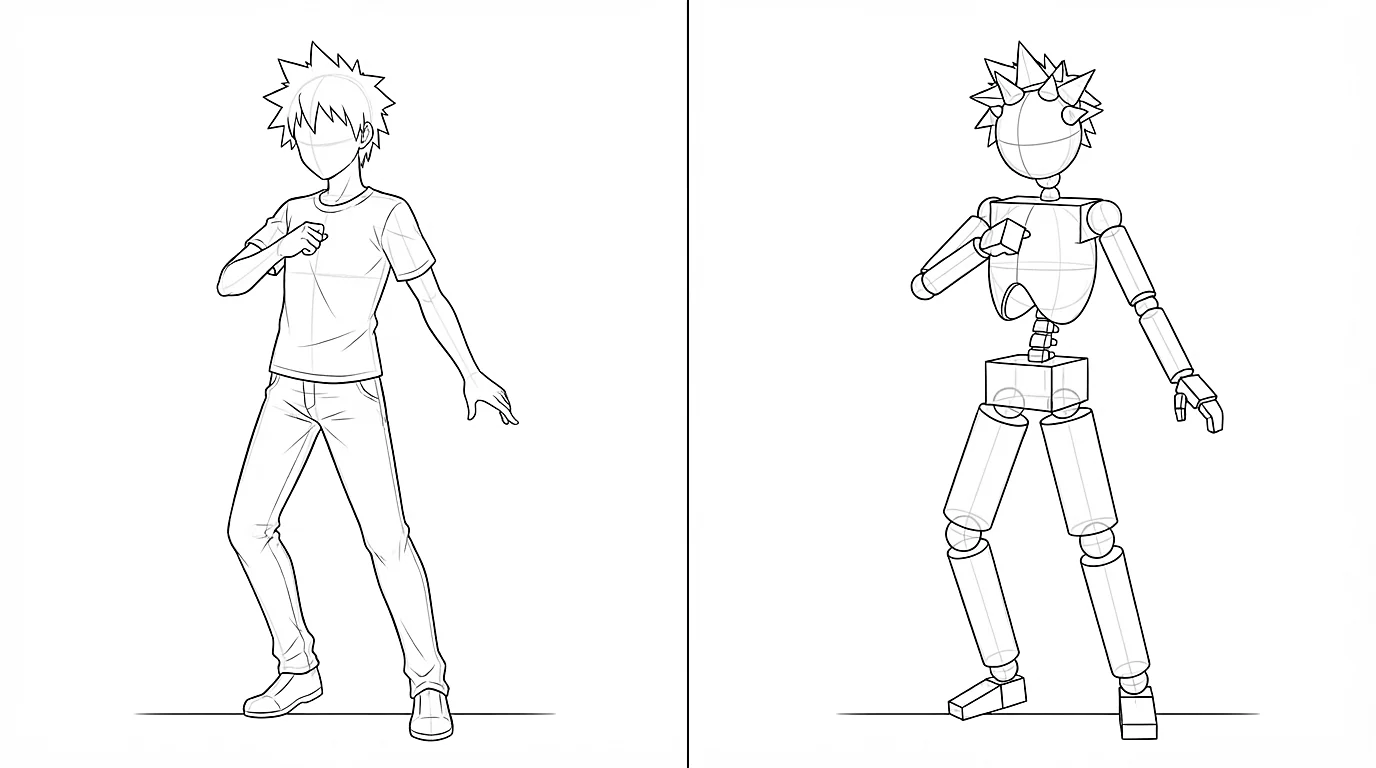
That is why tracing works best next to construction exercises, like the box in perspective, the mannequin and the head built as a volume.
How to trace so you actually learn
Turn every tracing into a short study. It takes a little longer than tracing alone, and it is what makes the skill stay when the model is gone.
- Pick a drawing you admire, ideally a clean line drawing in the style you want.
- Trace it slowly but in long strokes, paying attention to where each line starts and ends.
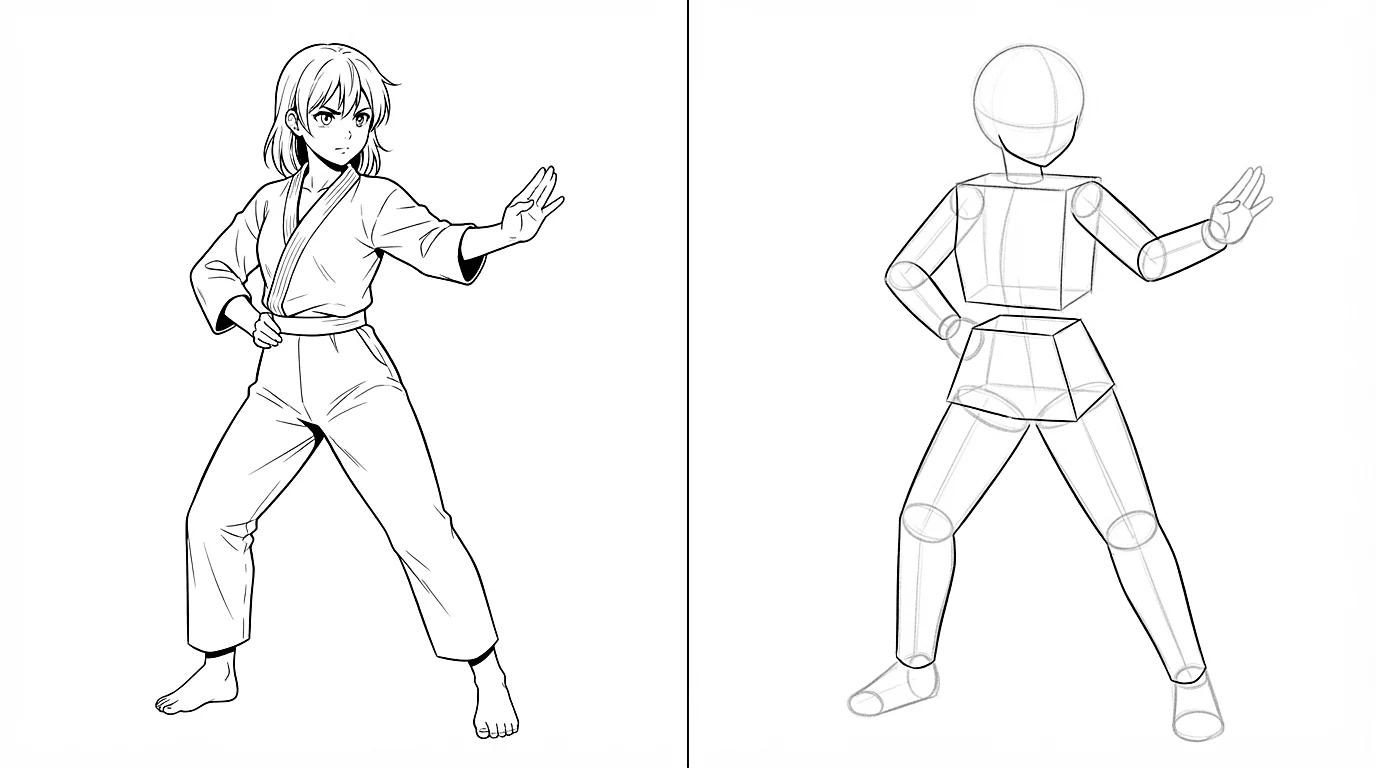
- Find the construction on your tracing: the sphere of the skull, the axis of the face, the line of action, the rib cage and the pelvis.
- Draw it again freehand next to the tracing, starting from that construction.
- Compare the two and note what drifted: the eyes too high, the arm too short, a stiffer curve.
- Draw it a third time from memory, the next day if you can.
Put the original and your freehand drawing side by side, or one on top of the other against a window, to see the differences at a glance.
Tracing, copying and drawing from reference
Tracing means drawing over the lines of an existing image. Copying means reproducing it freehand while looking at it. Drawing from reference means using an image to understand something, a pose, a fold or a light, and drawing your own version from that understanding.
All three are useful at different moments. Tracing builds line confidence, copying trains your eye to measure, and drawing from reference is how professionals work every day. A healthy routine uses all three, and more and more of the last one over time.
How SketchAI uses tracing
SketchAI is built around this idea. Pick a character from the catalog, at your level, and draw it with the sketch on screen as your model, or trace it in AR mode.
When you are done, you take a photo of your drawing and compare it with the model to see what drifted. The 5-week program then trains what tracing cannot: the head from every angle, expressions, the body, poses, hands and clothes, in short daily sessions.
Common tracing mistakes
- Tracing without looking: following lines mechanically while thinking of something else. Ask yourself why each line is there.
- Only tracing: never drawing freehand afterwards, so nothing carries over to your own drawings.
- Short, scratchy strokes: tracing in tiny pieces trains hesitation. Follow each curve in one movement.
- Skipping the construction: tracing the outline but never the volumes that hold it together.
- Sharing traced art without credit: always say it is a traced study and name the original artist.
Frequently asked questions
Is tracing cheating?
Not when it is practice in your sketchbook. It becomes cheating when you present traced art as your own original work, enter it in a contest or sell it.
Does tracing help you learn to draw?
Yes, for line confidence, proportions and understanding how a style simplifies, as long as you follow it with construction and freehand drawing. Tracing alone does not teach you to draw from imagination.
Is it okay to post traced art?
Only if you clearly say it is traced and credit the original artist. Never present it as your own original work.
How do I stop relying on tracing?
After each tracing, find the construction and draw the same image again freehand, then from memory. Add daily exercises like boxes, mannequins and simplified heads.
Is using a lightbox or a tracing app bad?
No. They are tools to make tracing easier. What matters is what you do around them: studying the construction and drawing again without the model.
Keep learning
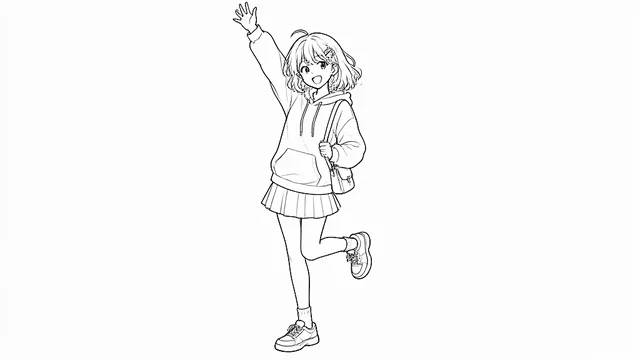
How to learn to draw anime: a roadmap from zero
A realistic roadmap from the head to expressions, bodies, poses, hands and clothes, a little every day.
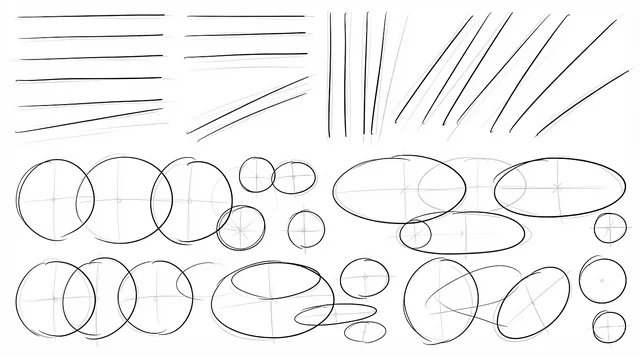
7 drawing exercises for beginners who want to draw anime
Lines, ellipses, boxes, cylinders, mannequins, lines of action and heads, with counts and timings.
 Beginner
How to draw an anime face, step by step
Build the head as a volume, then place the eyes, nose, mouth and hair on it, one at a time.