
Guide · Getting started
How to learn to draw anime: a roadmap from zero
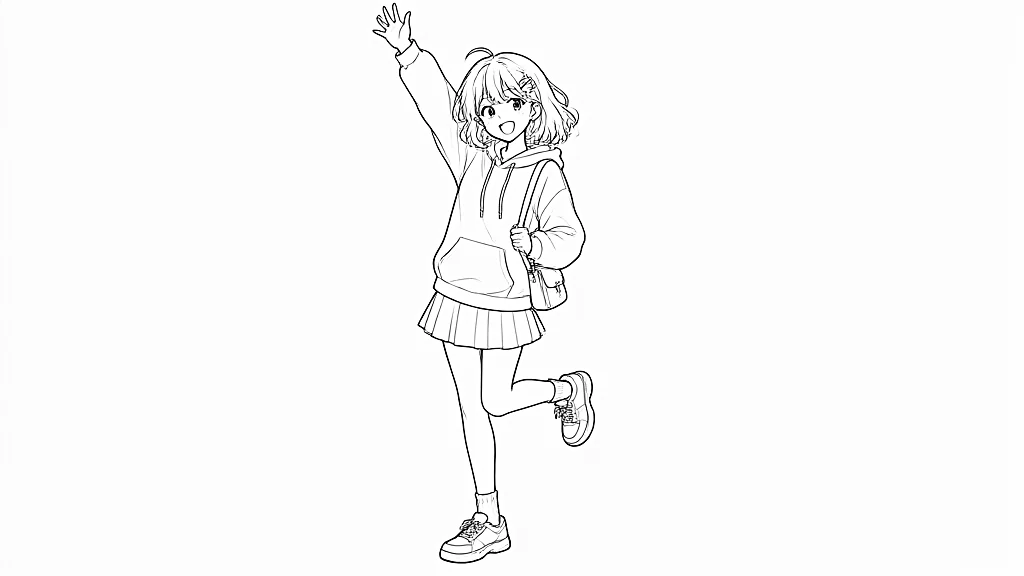
To learn to draw anime, learn how things are built before the style: the head as a volume and its features, then expressions, then the body, poses, hands and clothes, one method a day. Keep a few minutes of basic shapes as a warm-up, draw 10 to 15 minutes every day, and draw your own character at the end of each week to use what you learned.
- 6 min read
- Updated
Key takeaways
- Anime is a style on top of construction: learn how the head and the body are built, and the style becomes much easier.
- Follow an order: the head, expressions, the body, poses, then hands and clothes, one new method a day.
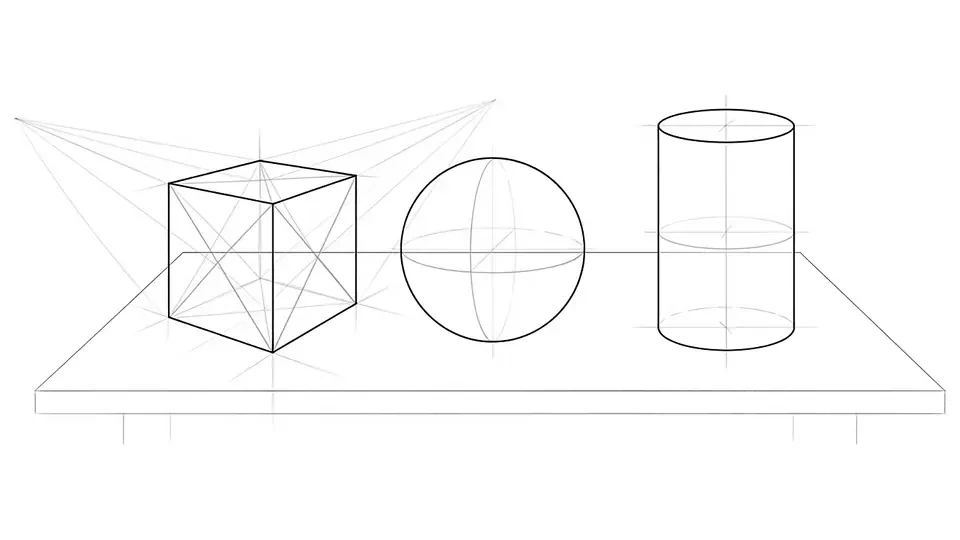
- Keep basic shapes as a warm-up: lines, ellipses, boxes and cylinders, a few minutes a day.
- 10 to 15 minutes every day beats a long session once a week, and drawing your own character each week makes it stick.
On this page
Can anyone learn to draw anime?
Yes. Drawing is a skill, not a gift: the people who draw well are the ones who practiced the right things for long enough. Your first drawings will look stiff and lopsided, like everyone's, and that is part of the process, not a sign that you lack talent.
What makes the difference is the order in which you learn. Many beginners start by copying their favorite characters line by line and get stuck after a few months, because they never learned what is under the lines. Anime is a style applied to a construction: learn the construction, and the style becomes much easier.
What to learn first
Start with what people look at first: the face. A manga head is not a flat circle but a ball you carve, always in the same few steps, and once you can build it from the front, in three-quarter view and in profile, the eyes, the nose and the mouth have a place to go.
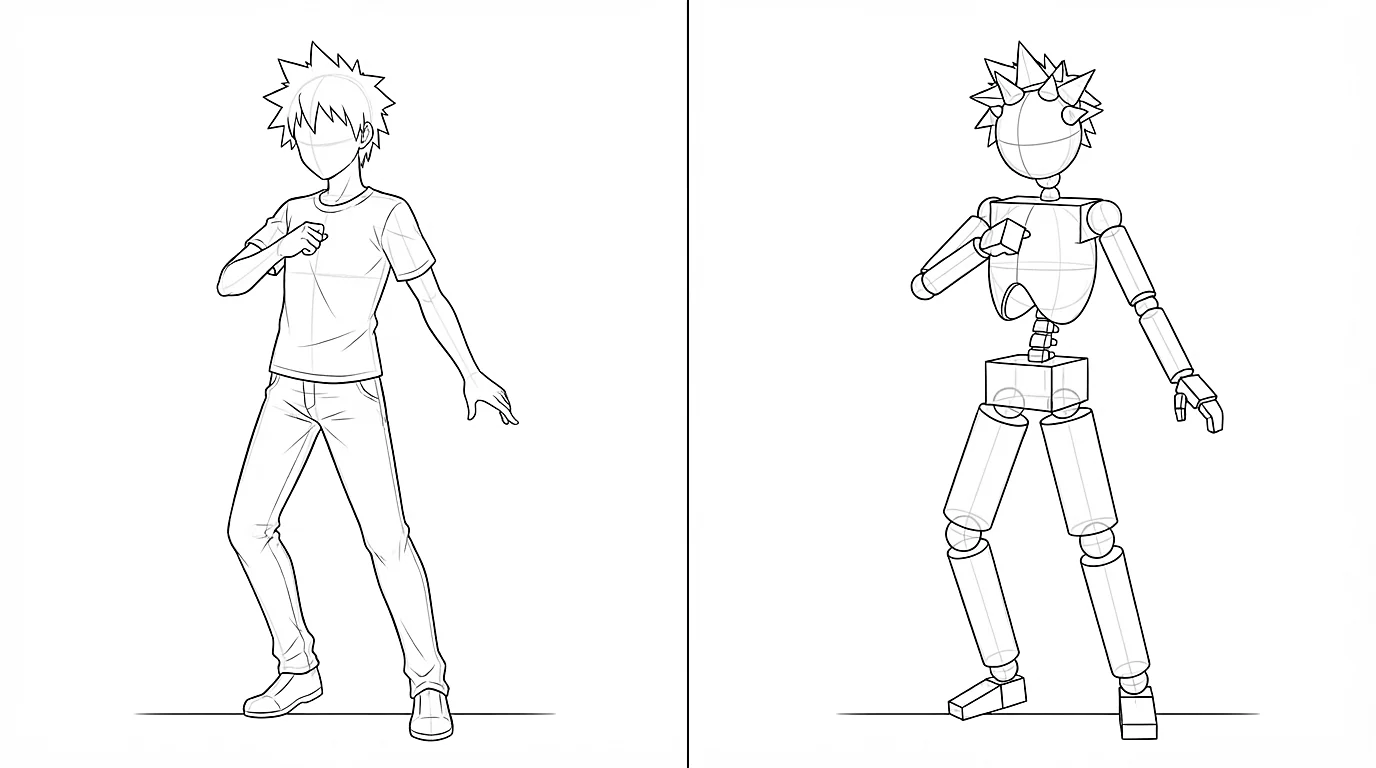
At the same time, train your hand with basic shapes, a minute or two before each session: confident lines, circles and ellipses, then boxes and cylinders that turn in space. They are the building blocks of everything else: a head is a sphere with a jaw, a rib cage is an egg, a pelvis is a box and a limb is a cylinder.
A 5-week roadmap from the head to a full character
Here is an order that works, in two phases: the face, then the body. It is the order of the SketchAI program, and you can follow it with a pencil and a sketchbook. Spend about a week on each step, one new method a day, and end each week by drawing your own character with what you learned. Do not wait to be perfect before moving on: you will come back to each skill again and again.
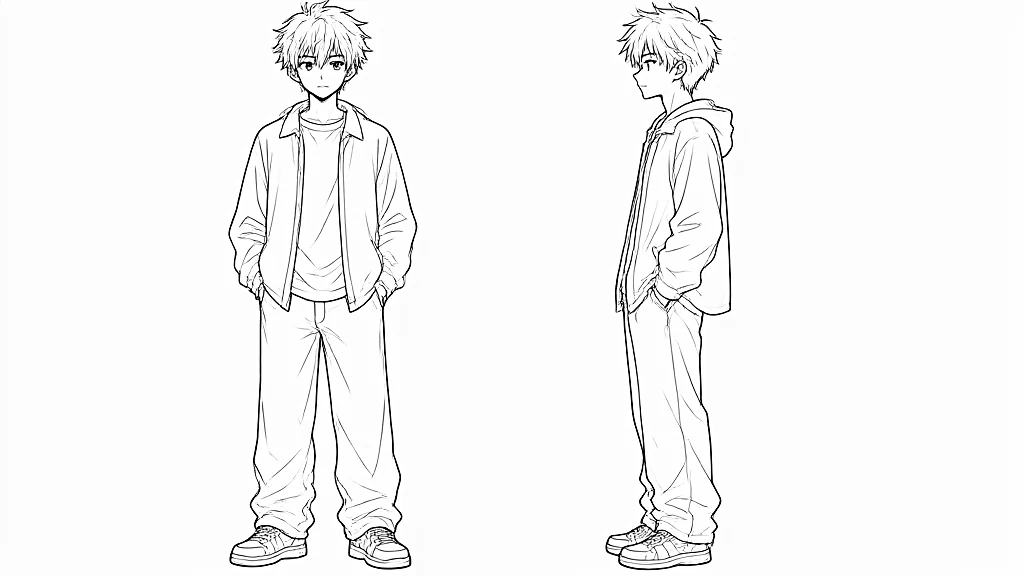
- Week 1, the head from every angle: the head as a volume, then the eyes, the nose, the mouth and the hair, one a day, with the anime face method. Your character's head from three angles.
- Week 2, expressions: joy, sadness, anger, surprise and fear, then the manga codes, with the expressions tutorial. An expression sheet of your character.
- Week 3, the body and its proportions: measuring in heads, the torso, the arms, the legs, then the full body, as in the anime body tutorial.
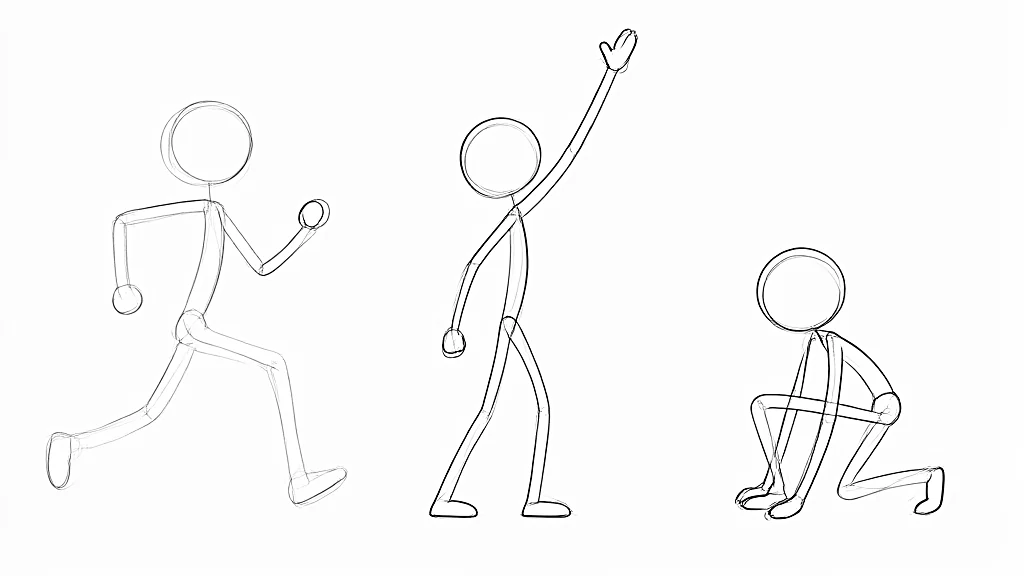
- Week 4, poses: the line of action, foreshortening and action poses, with the anime poses tutorial. Three poses that tell a story.
- Week 5, hands and clothes: the hand in blocks, folds, hanging fabric, then your character's outfit. Your complete character, dressed, in their signature pose.
A short daily routine
Short and daily wins. A session of 10 to 15 minutes is long enough to make progress and short enough to never skip, and your hand keeps what you practiced from one day to the next. Use a timer so you do not overthink each part, and don't try to make a perfect drawing every time: the goal is to learn the method of the day.
- Warm-up, 30 seconds: quick circles, lines or the basic shape of the day, just to loosen your hand.
- The method: read how the thing of the day is built, step by step, like a chapter of a drawing book.
- Follow the steps, 3 to 5 minutes: draw it once, following the method.
- Your turn, about 6 minutes: draw it on a new character, on your own.
- A challenge, 2 minutes: the same thing faster, from another angle or with a twist.
On busy days, do only the warm-up and one quick drawing. A few minutes still count, and keeping the habit matters more than any single session.
Copying, tracing and references: what actually helps
Copying and tracing drawings you love is not forbidden; it teaches you how artists simplify a face and how confident lines feel. It only becomes a trap when it is the only thing you do. After tracing or copying a drawing, find its construction and draw it again without looking: that is where the learning happens. Our guide is tracing bad? explains how to do it well.
References are just as important. Professionals use photos, mirrors and other drawings all the time, to understand a pose or a fold, not to copy them. Study a reference for its line of action, its proportions and its volumes, then draw from that understanding.
How to stay motivated
Progress in drawing is slow from one day to the next and huge from one month to the next. Keep every drawing, date your sketchbook pages and compare them every few weeks: seeing the difference is the best motivation there is.
Mix the methods with fun. Draw your own character at the end of each week, using what you practiced, and draw characters you love as a reward. Keep a streak, draw with friends, and remember that a bad drawing still trained your hand. For more short exercises, see the drawing exercises for beginners.
Learn to draw anime with SketchAI
SketchAI is an Android app that follows this roadmap. Its 5-week program gives you one short session a day with a timer, from the head to a complete character, with each method explained step by step and your own character to draw at the end of each week. Next to it, the Practice sessions train the volumes and the mannequin, and lessons on one theme each, from eyes and hands to perspective and inking, can be read in any order.
Its catalog of hundreds of manga and anime characters lets you draw the ones you love, at your level. When a drawing is done, take a photo and compare it with the model to see what to fix, keep it in your gallery to watch your progress, and climb the leaderboard of the day against the community. The app is free to download; without PRO, the program opens one session a day.
Frequently asked questions
How long does it take to learn to draw anime?
It depends on how often you practice. With 10 to 15 minutes a day, most beginners see clear progress within a few weeks, and drawing characters comfortably from imagination takes months of regular practice.
Can I teach myself to draw anime?
Yes. Follow a structured order, from the head and its features to expressions, the body, poses and hands, practice a little every day and compare your drawings with references to find what to fix.
Should I learn realism before drawing anime?
You do not need realistic rendering, but you do need its foundations: volumes, proportions and perspective. They are what make anime characters look solid instead of flat.
Do I need a tablet to learn to draw anime?
No. A pencil, an eraser and paper are enough to learn everything in this roadmap. Many artists keep drawing on paper even after they start working digitally.
What should I draw first as a beginner?
A head built as a volume: a sphere, a slice cut off its side, an axis and a jaw, from the front, in three-quarter view and in profile. Warm up with lines, circles and boxes before each session.
Keep learning
 Beginner
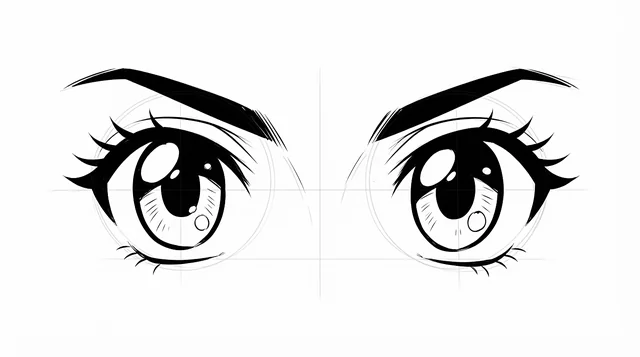
How to draw anime eyes, step by step
Build an anime eye in four stages, place it on the face, then change its style and emotion.
 Beginner
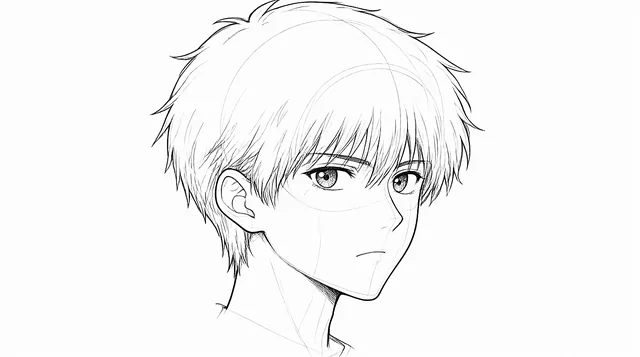
How to draw an anime face, step by step
Build the head as a volume, then place the eyes, nose, mouth and hair on it, one at a time.
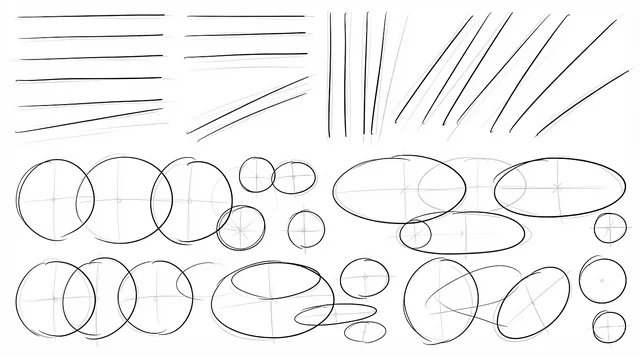
7 drawing exercises for beginners who want to draw anime
Lines, ellipses, boxes, cylinders, mannequins, lines of action and heads, with counts and timings.