
Lesson · Faces & expressions
Expressions: eyebrows, mouth and manga codes
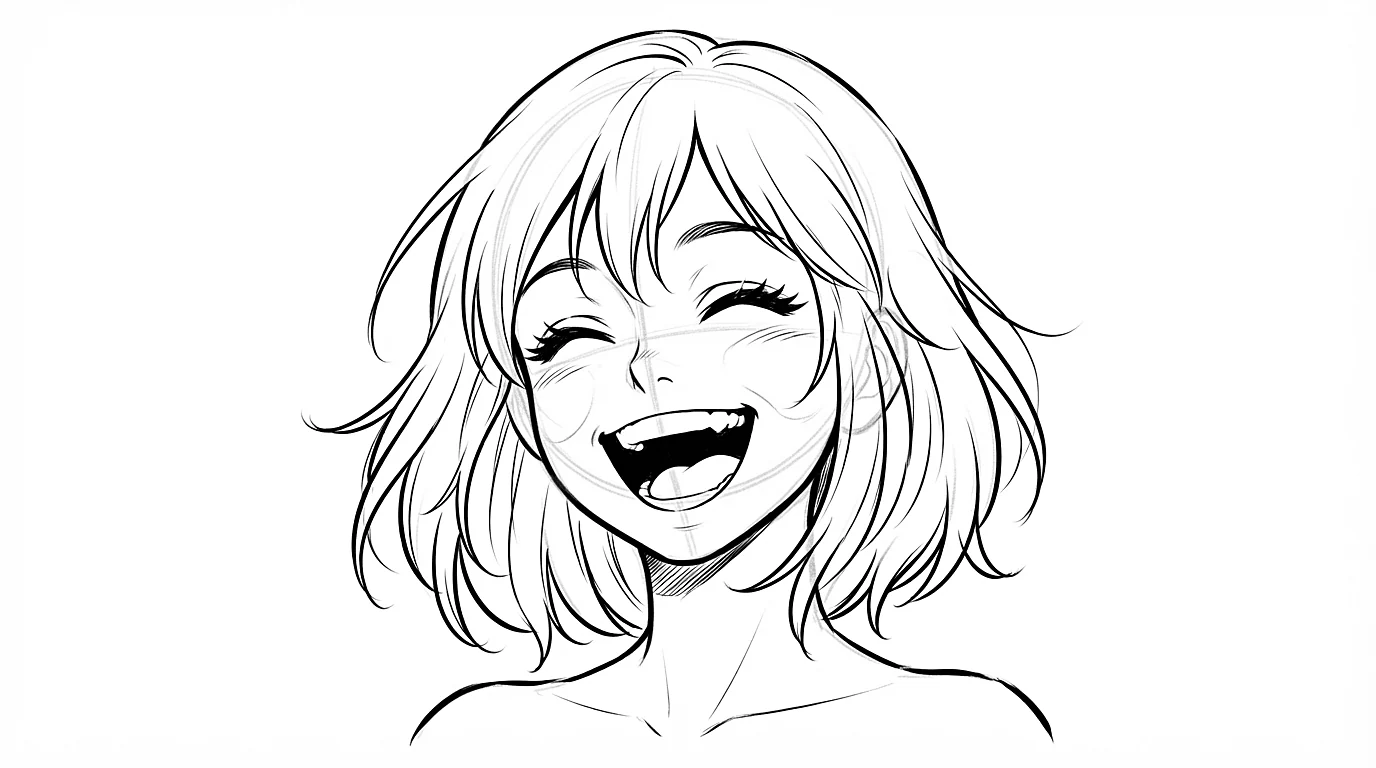
A character without an expression tells nothing. In manga, emotions read at a glance thanks to three things: the eyebrows, the eyes and the mouth. On top of them come visual codes every reader knows.
- Beginner
- 15 min practice
- 3 min read
- Updated
Key takeaways
- Cover the lower half of the face with your hand: if the emotion still reads, your eyebrows and eyes are doing their job.
- Keep the hairstyle and the shape of the eyes identical across the whole sheet: that is what makes the character recognizable.
- Make the faces yourself in a mirror or a selfie: you'll see what your eyebrows really do.
- Always push a little further than you think: in a small panel, a subtle emotion goes unnoticed.
On this page
Eyebrows, eyes, mouth
-
Step 1Eyebrows first
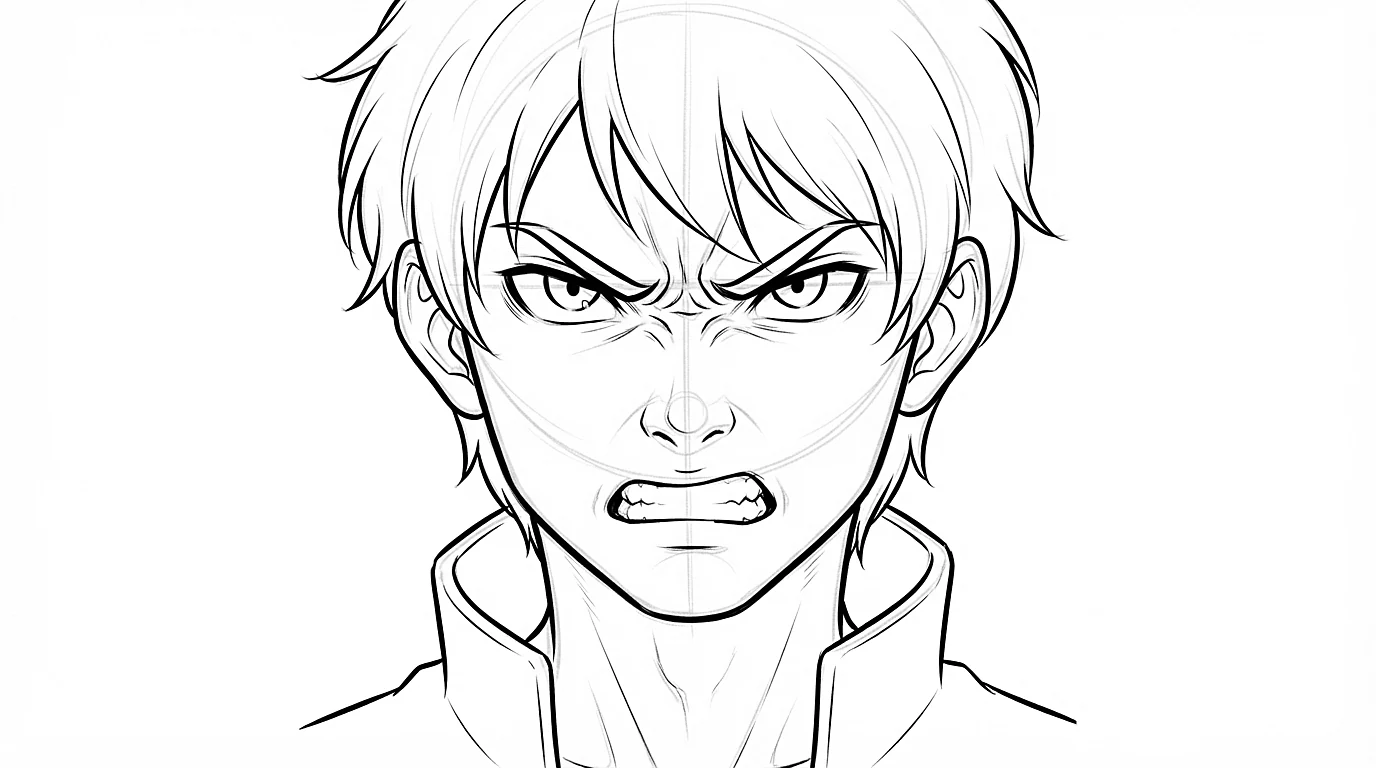
They are the strongest element. Lowered toward the nose: anger or focus. Raised in the middle: sadness or worry. Very high: surprise.
-
Step 2The eyes
Wide open for surprise and fear, narrowed for laughter or suspicion, closed in an arch for a big smile.
-
Step 3The mouth
It confirms the emotion: corners up for joy, down for sadness, clenched teeth for anger, a round opening for surprise.
-
Step 4All in the same direction
An emotion is clear when all three tell the same thing. A smile with frowning eyebrows is something else: a threatening smile.
Cover the lower half of the face with your hand: if the emotion still reads, your eyebrows and eyes are doing their job.
Six basic emotions
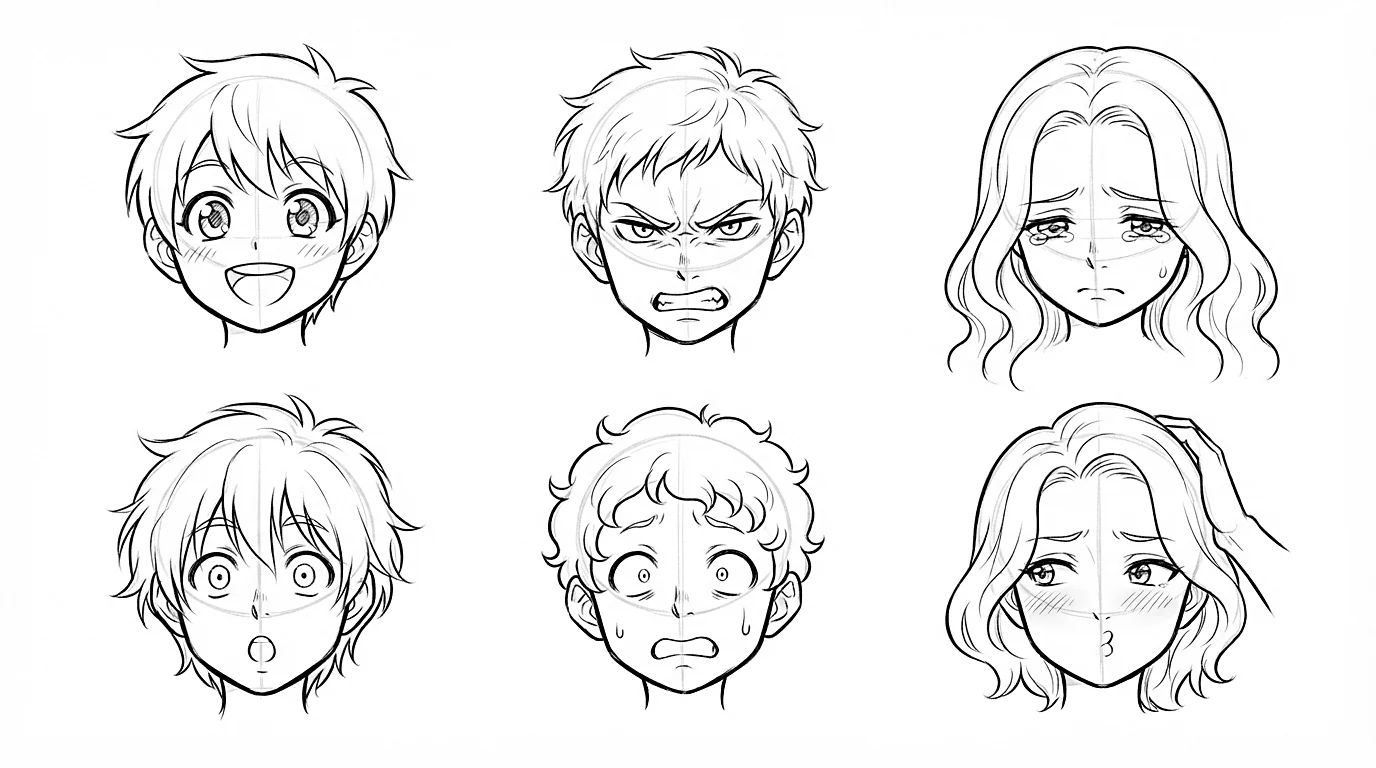
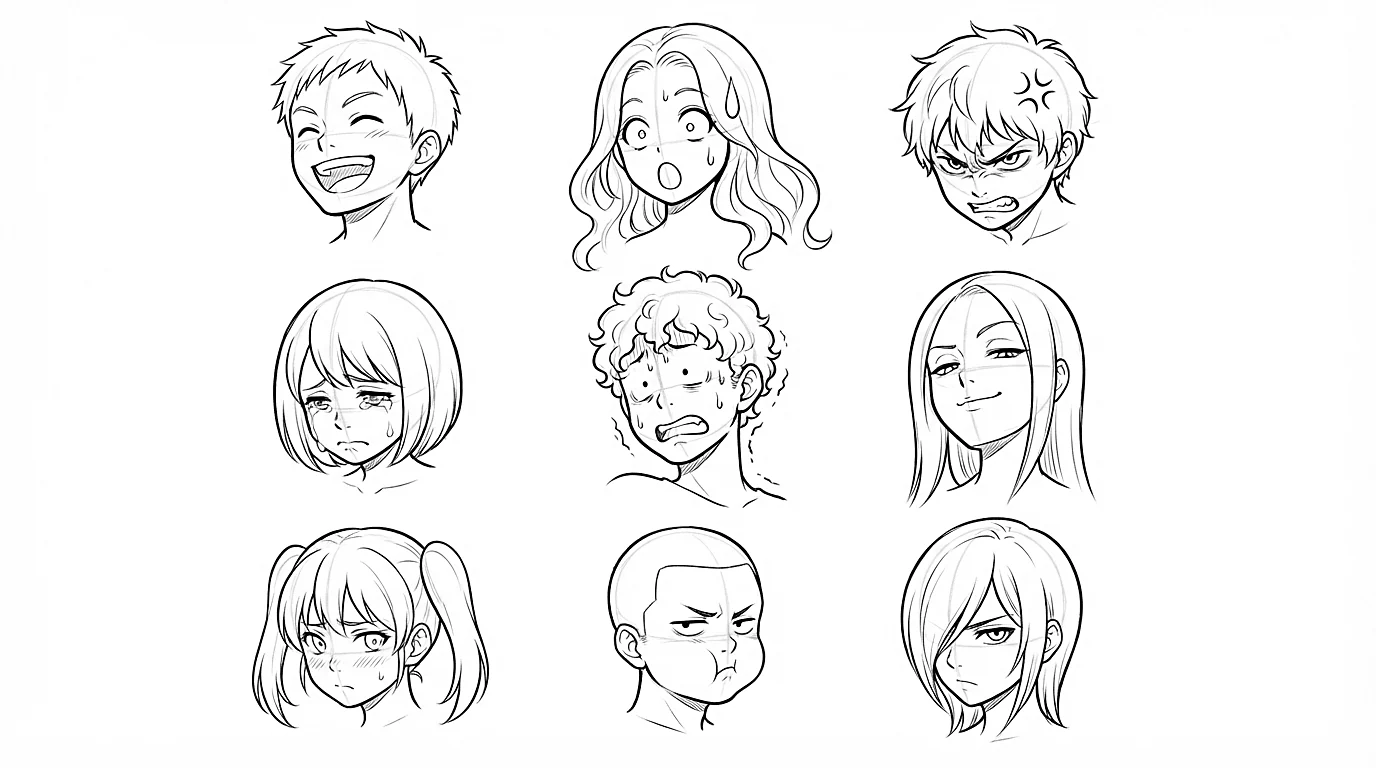
- Joy: eyes closed in an arch or narrowed, cheeks raised, mouth wide open.
- Anger: low eyebrows pulled together, creases between the eyes, teeth showing.
- Sadness: eyebrows raised in the middle, eyes looking down, mouth corners down, tears at the edge of the eyes.
- Surprise: very high eyebrows, small irises in big eyes, a round open mouth.
- Fear: like surprise, but the mouth stretched to the sides and the body pulling back.
- Embarrassment: eyes looking away, blush on the cheeks, a small wavy mouth.
Manga codes
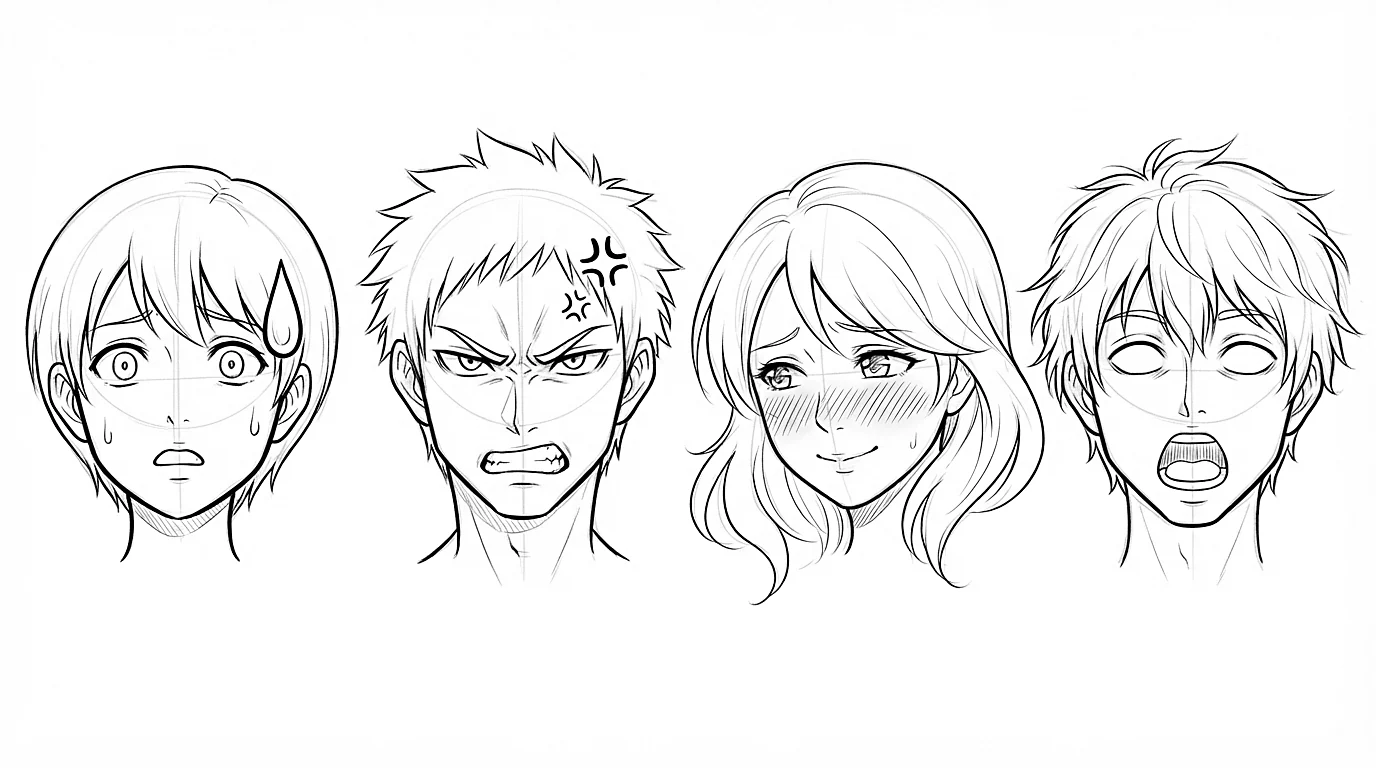
- A drop of sweat on the temple: unease or embarrassment.
- A cross-shaped vein on the forehead: irritation, often for comedy.
- Hatching on the cheeks: blushing, from shyness or love.
- Blank white eyes: shock, comic rage or a character at a loss.
- Vertical lines over the top of the face: despair or deep unease.
- A face suddenly drawn as a chibi: an exaggerated, funny reaction in the middle of a serious scene.
An expression sheet
Mangaka draw an expression sheet for every main character. It keeps them recognizable whatever they feel.
-
Step 1The same head
Draw the same head construction 12 times, small, from the front or in three-quarter view. The character changes emotion, not face.
-
Step 2Two intensities
For each emotion, draw two degrees: a smile and a burst of laughter, a pout and tears, annoyance and rage.
-
Step 3Their personality
A shy character doesn't laugh like an arrogant one. Keep their own habits: a crooked smile, eyebrows always slightly frowning.
-
Step 4Tilt the head
Head forward for anger, back for laughter, to the side for doubt. The emotion also goes through the angle.
Keep the hairstyle and the shape of the eyes identical across the whole sheet: that is what makes the character recognizable.
The coach's tips
- Make the faces yourself in a mirror or a selfie: you'll see what your eyebrows really do.
- Always push a little further than you think: in a small panel, a subtle emotion goes unnoticed.
- Hands help: a hand over the mouth, a clenched fist or crossed arms strengthen the expression.
- For anger, the lines point toward the center of the face; for joy, they spread outward.
- In the app, look at characters showing an emotion and find the eyebrows, eyes and mouth trio before tracing them.
Practice right now
Once the lesson is read, draw this exercise: it takes about 15 minutes.
Draw the same head 6 times, small, and give it the six basic emotions. Start each one with the eyebrows.
Keep learning
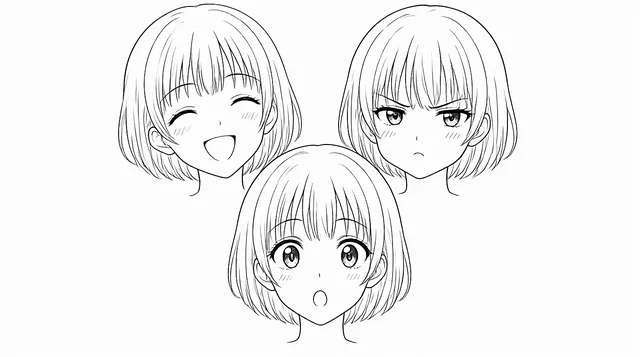 Beginner
How to draw anime expressions, step by step
Build every emotion with the eyebrows, the eyelids and the mouth, then push it the manga way.
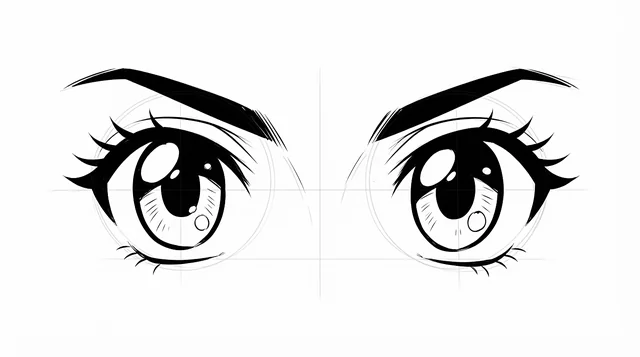 Beginner
How to draw anime eyes, step by step
Build an anime eye in four stages, place it on the face, then change its style and emotion.
BeginnerManga eyes: place them, build them, bring the gaze to life
Place them, build them, bring the gaze to life.