
Tutorial · Mouths, noses & expressions
How to draw anime expressions, step by step
To draw an anime expression, keep the same head and build the emotion in the same order every time: the eyebrows, then the eyelids, then the mouth. Joy lifts all three, sadness drops them except the middle of the eyebrows, anger pulls them toward the middle of the face, and surprise and fear open everything. Manga then adds codes like sweat drops, veins and blushes, one or two per face.
- Beginner
- 30 min practice
- 8 min read
- Updated
You'll need
- HB pencil
- 2B pencil for the final lines
- Eraser
- A mirror or your phone's camera
Key takeaways
- Build every emotion in the same order: the eyebrows, the eyelids, then the mouth. The mouth alone is never enough.
- An emotion is clear when all three tell the same thing: a smile under frowning eyebrows becomes a threatening smile.
- Each emotion has levels: a soft smile, a big smile, a laugh. Pick the one that fits the character.
- Manga codes like sweat drops, veins and blushes add to an expression: one or two per face is plenty.
On this page
How anime expressions work
An expression is a handful of features moving at the same time. Beginners often change only the mouth and wonder why the face still looks neutral: in real faces and in manga, the eyebrows move first and say the most, then the eyelids, then the mouth confirms the emotion.
Think of them as three levers you push in the same direction. Joy is all three going up. Sadness drops everything except the middle of the eyebrows. Anger pulls everything toward the middle of the face. Surprise and fear open everything. On top come the cheeks, the tilt of the head and the manga codes.
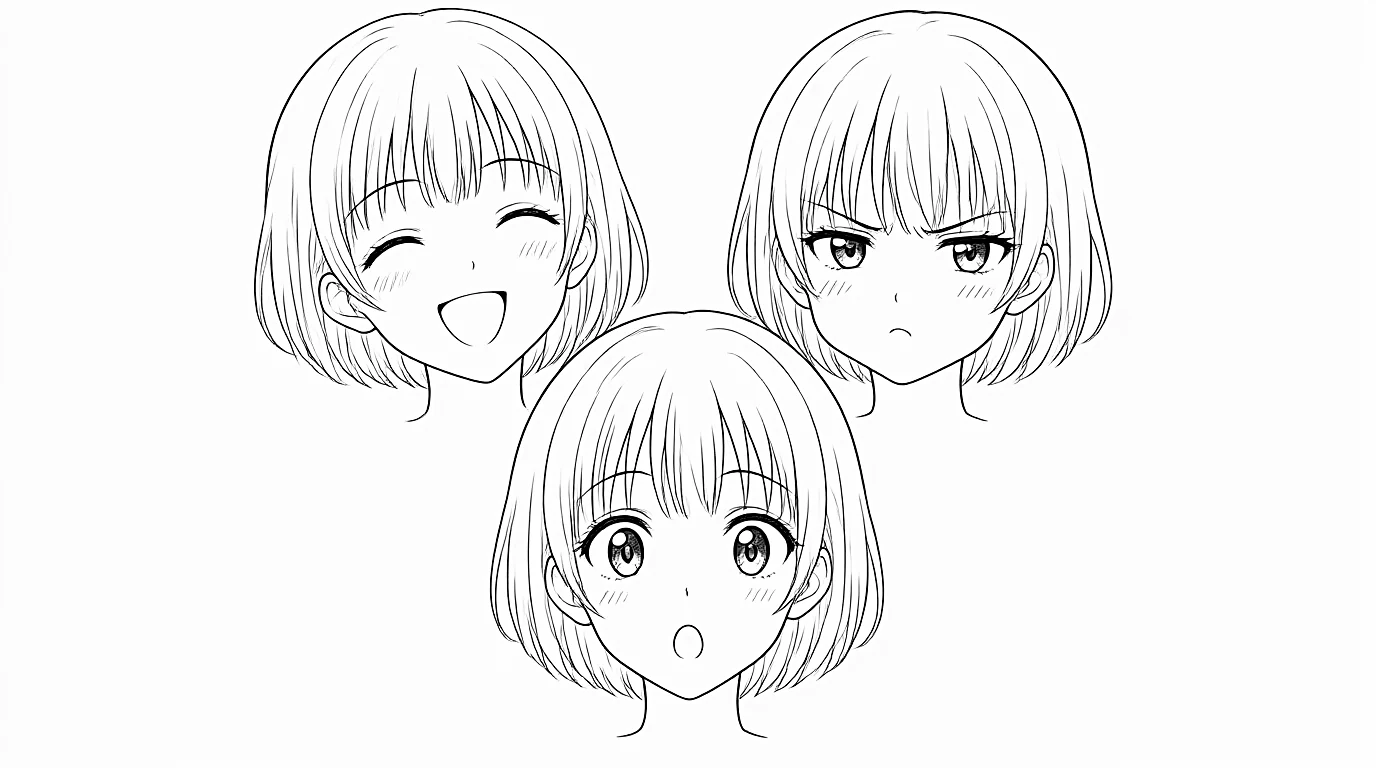
- The eyebrows: the strongest element. Lowered toward the nose for anger or focus, raised in the middle for sadness or worry, very high for surprise.
- The eyelids: wide open for surprise and fear, narrowed for anger or suspicion, closed into an arc for a big smile.
- The mouth: corners up for joy, down for sadness, clenched teeth for anger, a round opening for surprise.
How to draw an anime expression step by step
Choose one emotion before you start and make it yourself in a mirror or a selfie: you will see what your eyebrows really do. Then build the expression on a head you have already constructed, so the character stays recognizable whatever they feel.
-
Step 1Set the eyebrows first
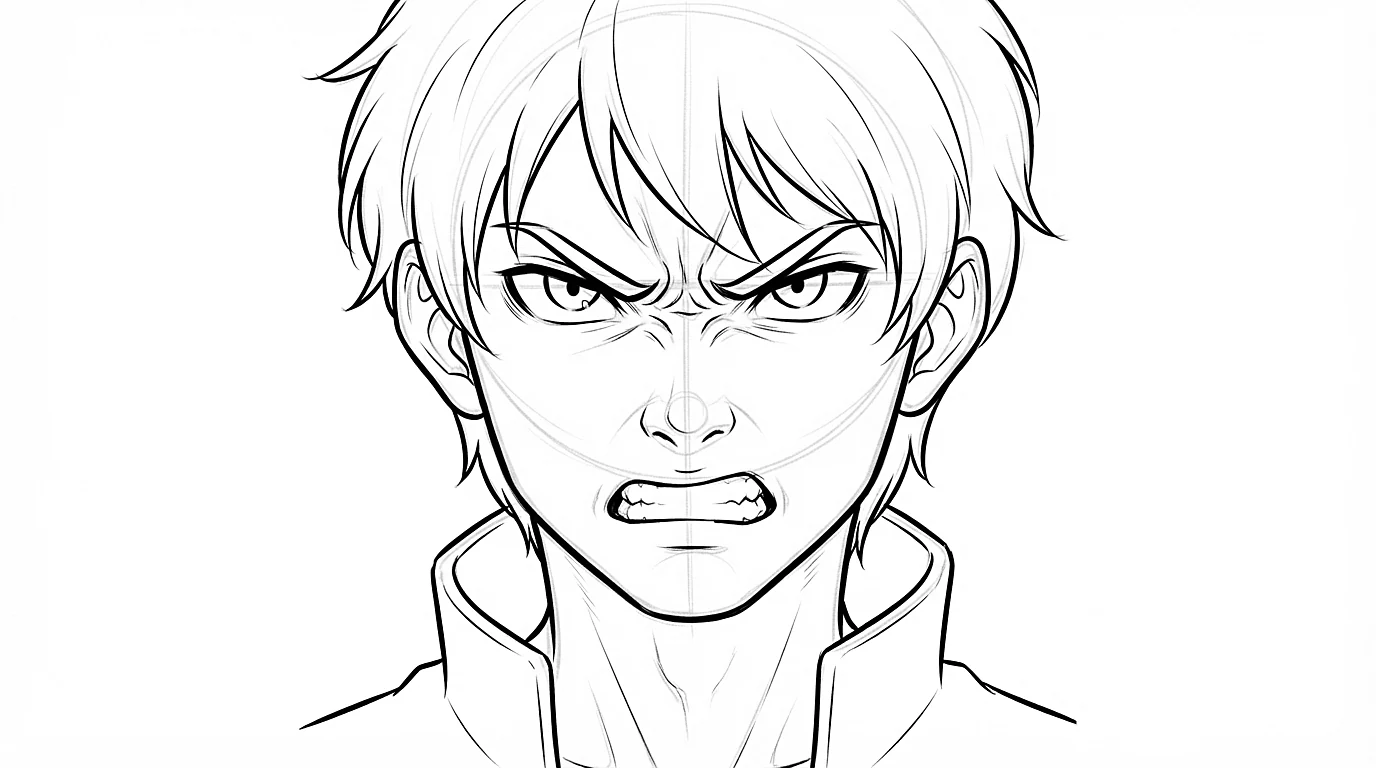
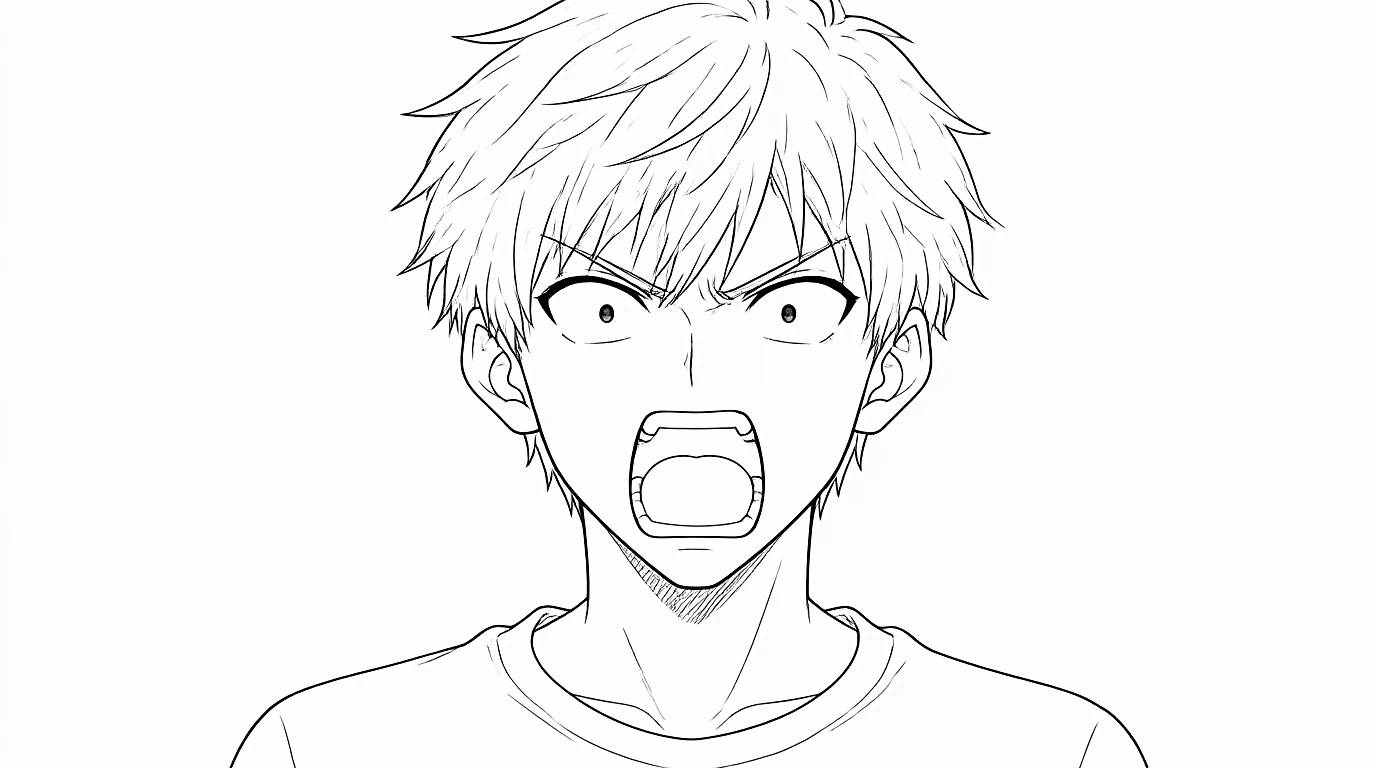
Draw the eyebrows before the eyes. For anger, drop the inner ends toward the nose in a V, with two small creases between the brows. For sadness, lift the inner ends and drop the outer ones, like a tent. For joy, keep them relaxed and slightly arched. For surprise, raise them high and round.
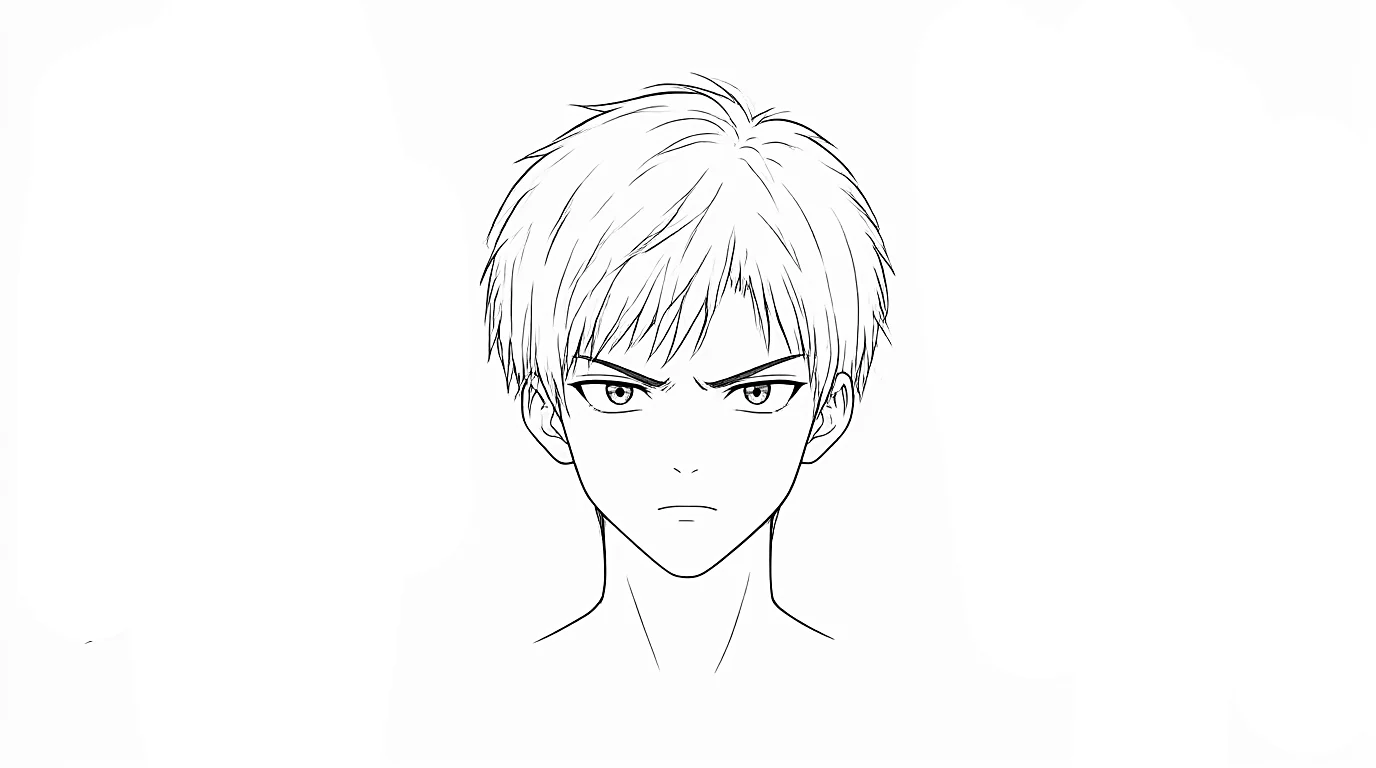
Anger starts with the eyebrows: the inner ends drop toward the nose in a V. -
Step 2Shape the eyelids
Match the eyelids to the eyebrows. In joy, the rising cheeks push the lower lid up and the eye squints, then closes into an arc in a big smile. In sadness, the upper lid drops over the iris. In anger, it comes down and straightens, and the pupils get smaller. In surprise and fear, the eyes open wide with white all around the iris.
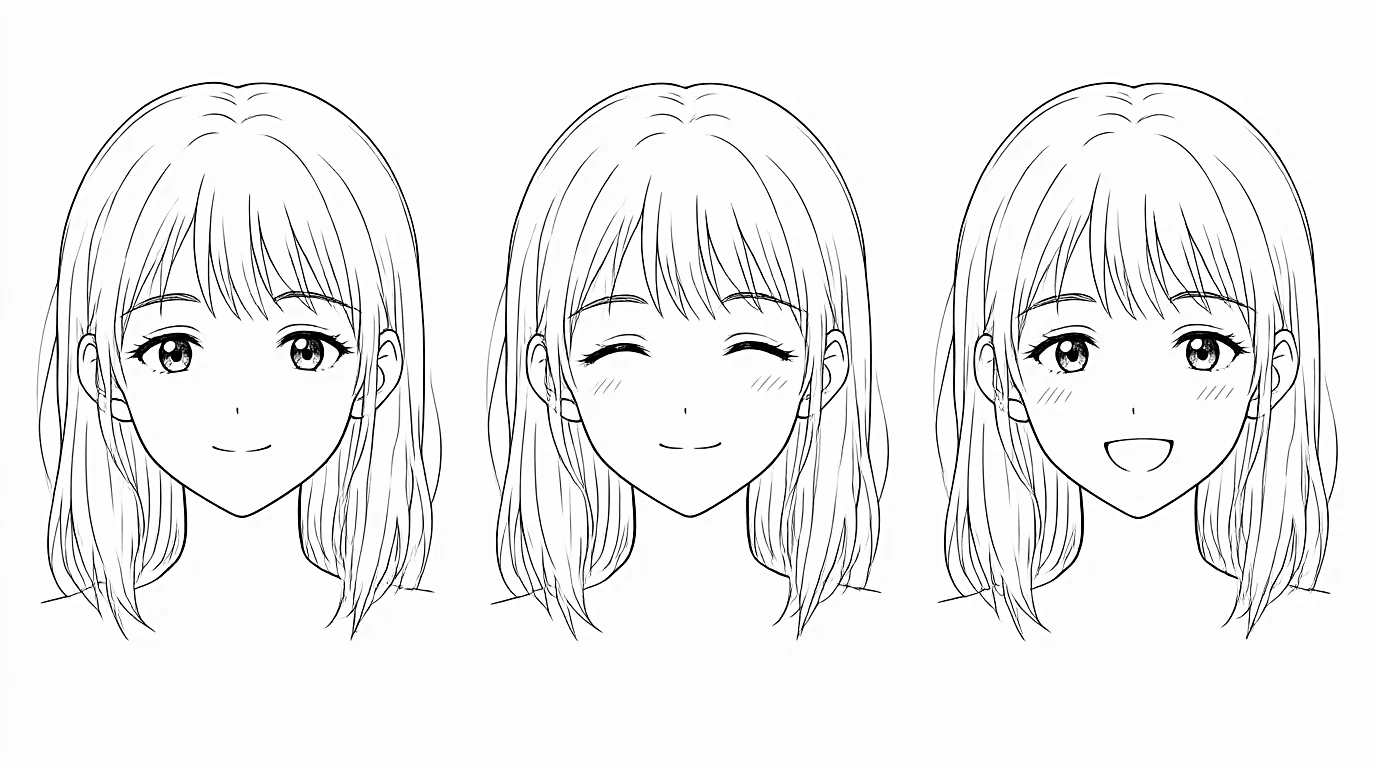
Joy getting stronger: the eyes squint, then close into arcs as the smile opens. -
Step 3Draw the mouth
The mouth confirms the emotion. Its corners go up for joy, opening into a D with the flat side on top as the joy grows. They go down for sadness, in a small wobbling wave, or square when the mouth opens. Anger tightens it into a straight line or clenched teeth, and a shout opens it into a trapezoid. Surprise makes a relaxed round opening.
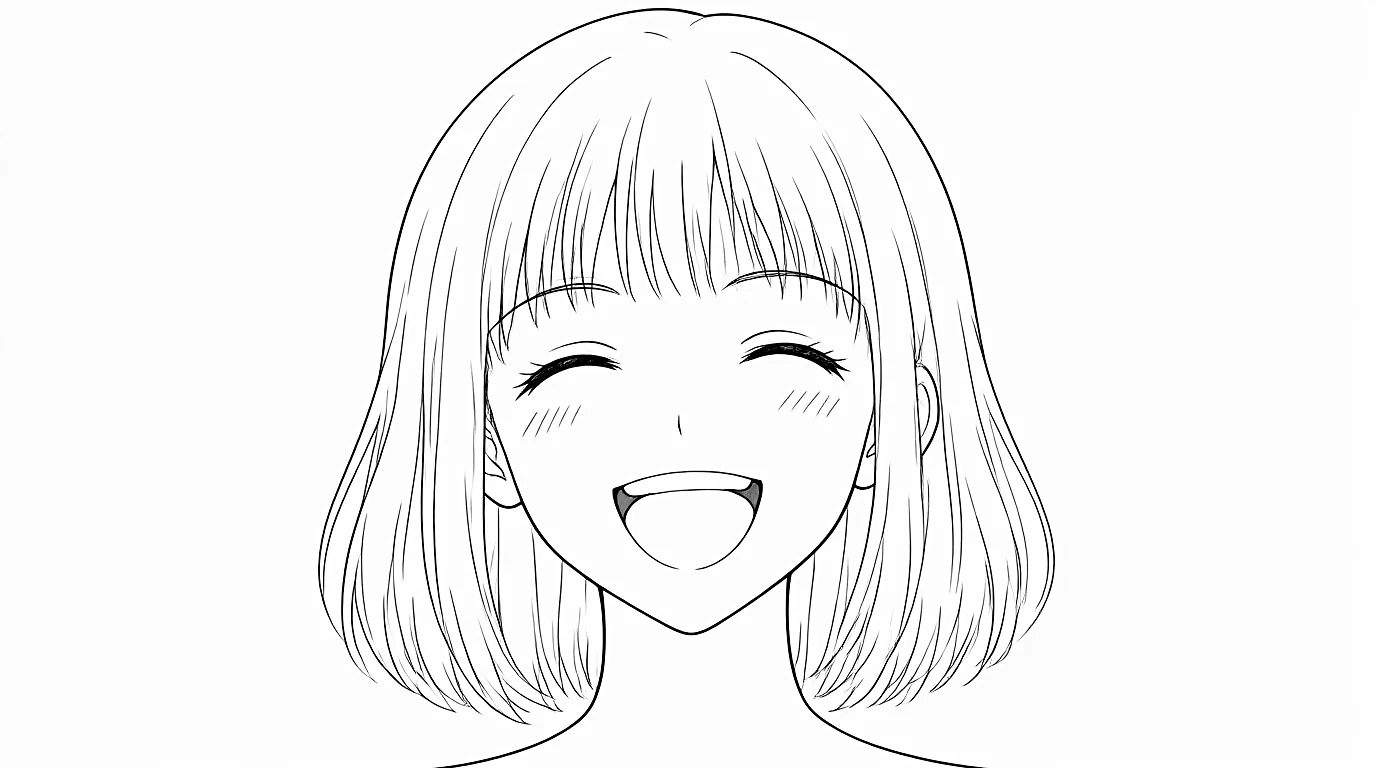
A big smile: the mouth opens into a D showing the upper teeth, and the eyes close into arcs. -
Step 4Add the cheeks and tilt the head
The cheeks lift with a smile: add a small curve under the eye or a few blush lines. Then let the whole head act. A sad head drops, an angry one pushes forward, a laughing one goes back, and in fear the head sinks into the shoulders and pulls back.
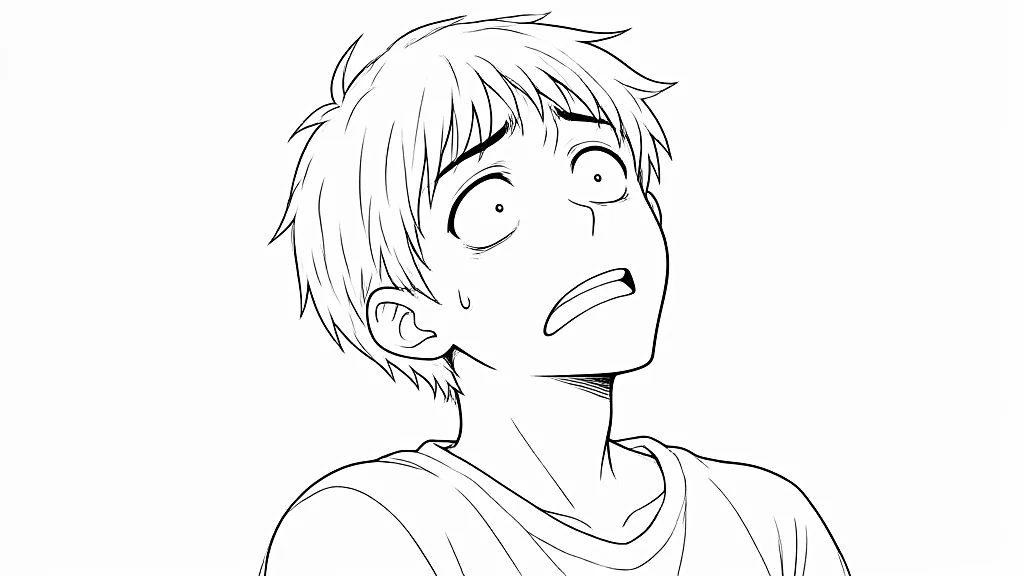
Fear: eyebrows lifted in the middle, a stretched mouth, a drop of sweat and the head pulling back. -
Step 5Add one manga code
Add a symbol only if it strengthens the emotion: a sweat drop for unease, a cross-shaped vein for annoyance, blush lines for embarrassment. One or two codes per face is plenty: beyond that, the emotion stops reading.
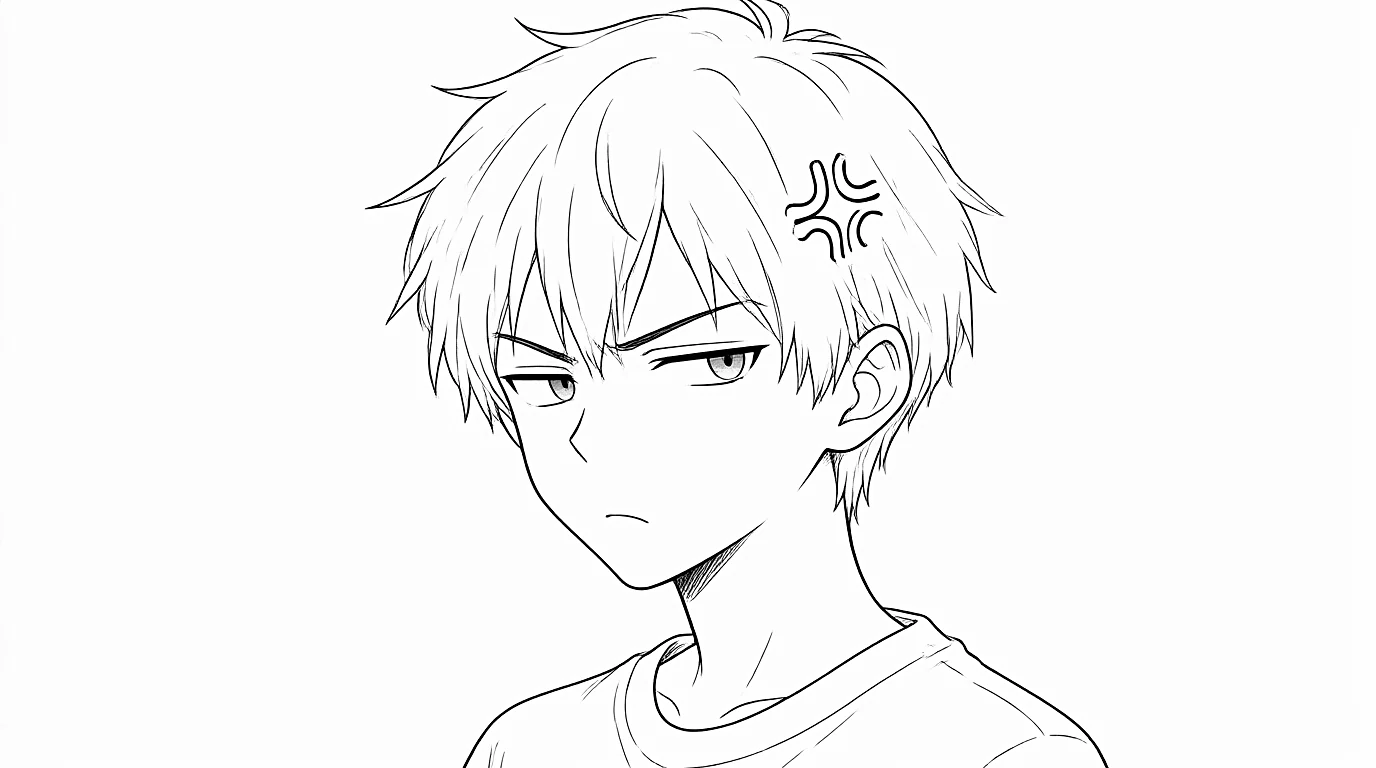
An anger vein on the temple: annoyance building up, on top of a frown that already says it. -
Step 6Check the expression from a distance
Step back from your drawing, then cover the lower half of the face with your hand. If the emotion still reads from the eyebrows and the eyes alone, they are doing their job. If not, push them further before adding any detail.
Six basic anime expressions
Learn these six first. Almost every other expression is a mix of two of them, like a nervous smile (joy and embarrassment) or a cold glare (anger held back).
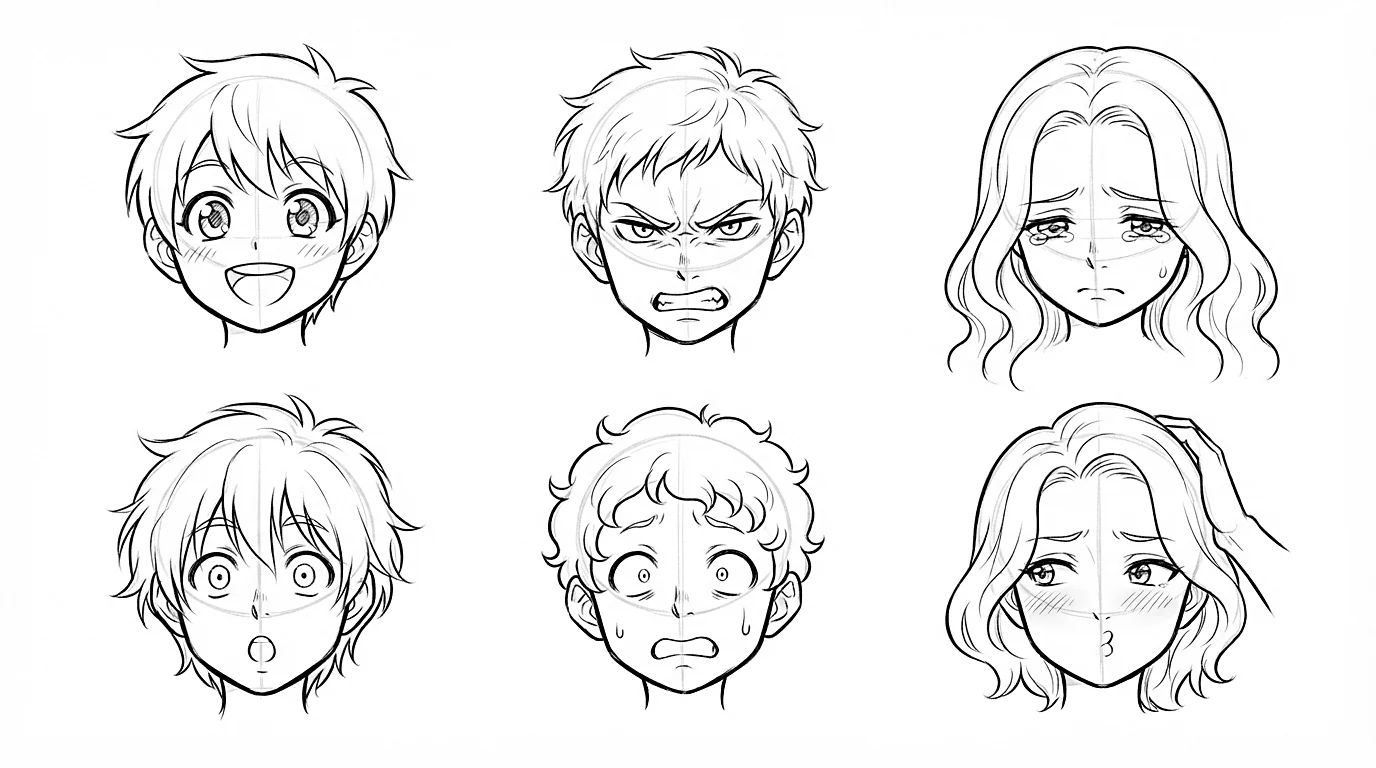
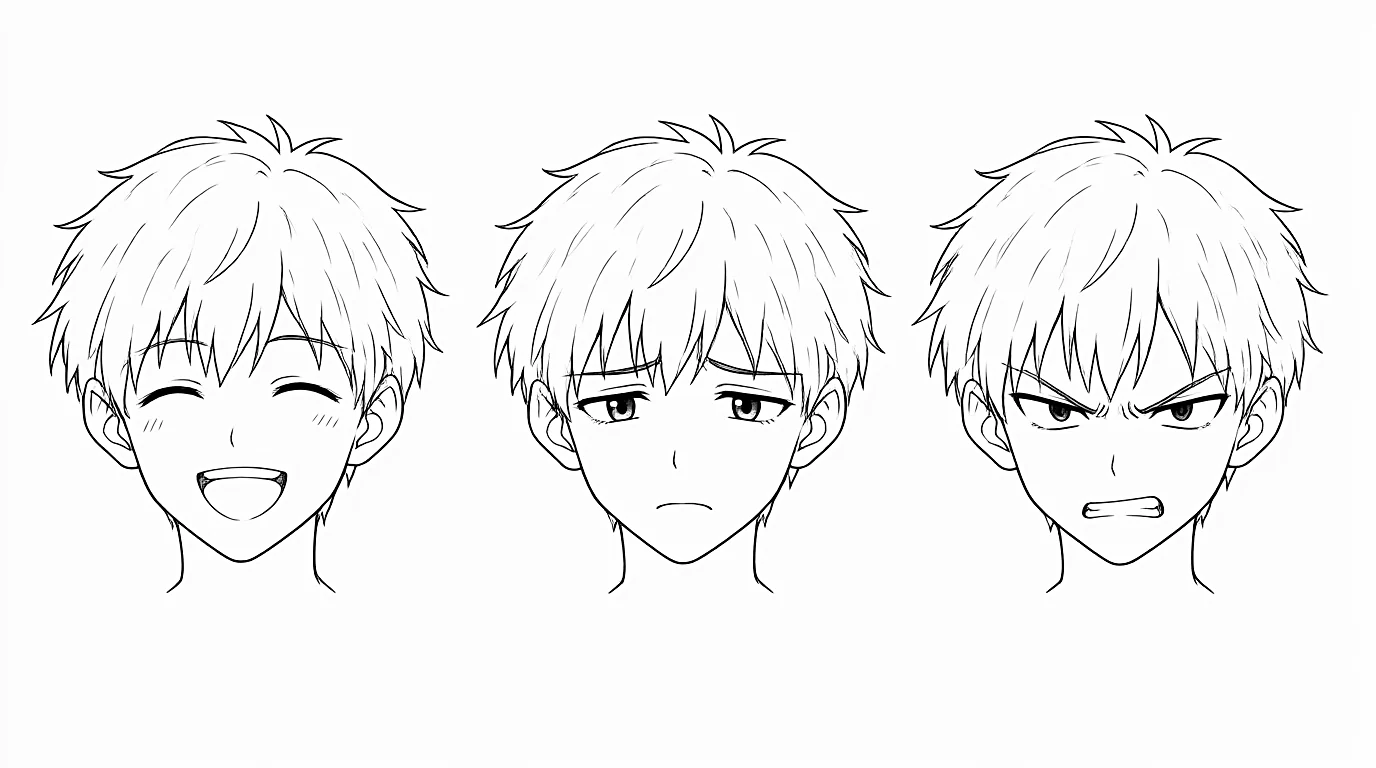
- Joy: eyes closed in an arc or narrowed, cheeks raised, the mouth open wide.
- Sadness: eyebrows raised in the middle, eyes looking down, mouth corners down, tears at the edge of the eyes.
- Anger: low eyebrows pulled together, creases between the eyes, teeth showing.
- Surprise: eyebrows high and rounded, eyes wide open with white all around the iris, a round open mouth.
- Fear: like surprise, but the eyebrows lift in the middle, the pupils become tiny, the mouth stretches sideways and the head pulls back.
- Embarrassment: eyes looking away, a blush on the cheeks, a small wavy mouth.
How to make an emotion softer or stronger
Every emotion has levels: the same levers, pushed more or less. Pick the level that fits the personality: a reserved character rarely grins with all their teeth, and a calm one stays annoyed where a hothead shouts. In a small panel, a subtle emotion goes unnoticed, so always push a little further than you think.
- Joy: a soft smile with the mouth closed, a big smile showing the upper teeth, a laugh with the eyes closed in arcs and the head thrown back, or an awkward smile with the eyebrows lifted in the middle.
- Sadness: a pout with the lower lip pushed out, teary eyes with a line of water on the lower lid, tears running along the cheek, then sobbing with the eyes squeezed shut and the mouth square.
- Anger: annoyed with half-closed eyes and a twisted mouth, sulking with puffed cheeks, furious with clenched teeth, then shouting with the mouth wide open.
- Surprise and fear: astonished with a small round mouth, shocked with small pupils, worried with the eyes darting to the side, then terrified with tiny pupils, a trembling mouth and sweat on the forehead.
A tear follows the curve of the cheek: draw it like a drop sliding over a ball.
Manga codes and comic reactions
Manga has a visual language that every reader knows. These codes add to an expression; they do not replace it. In funny scenes, manga goes further: the face gets simpler and stretches. A comic reaction works best right after a serious expression.
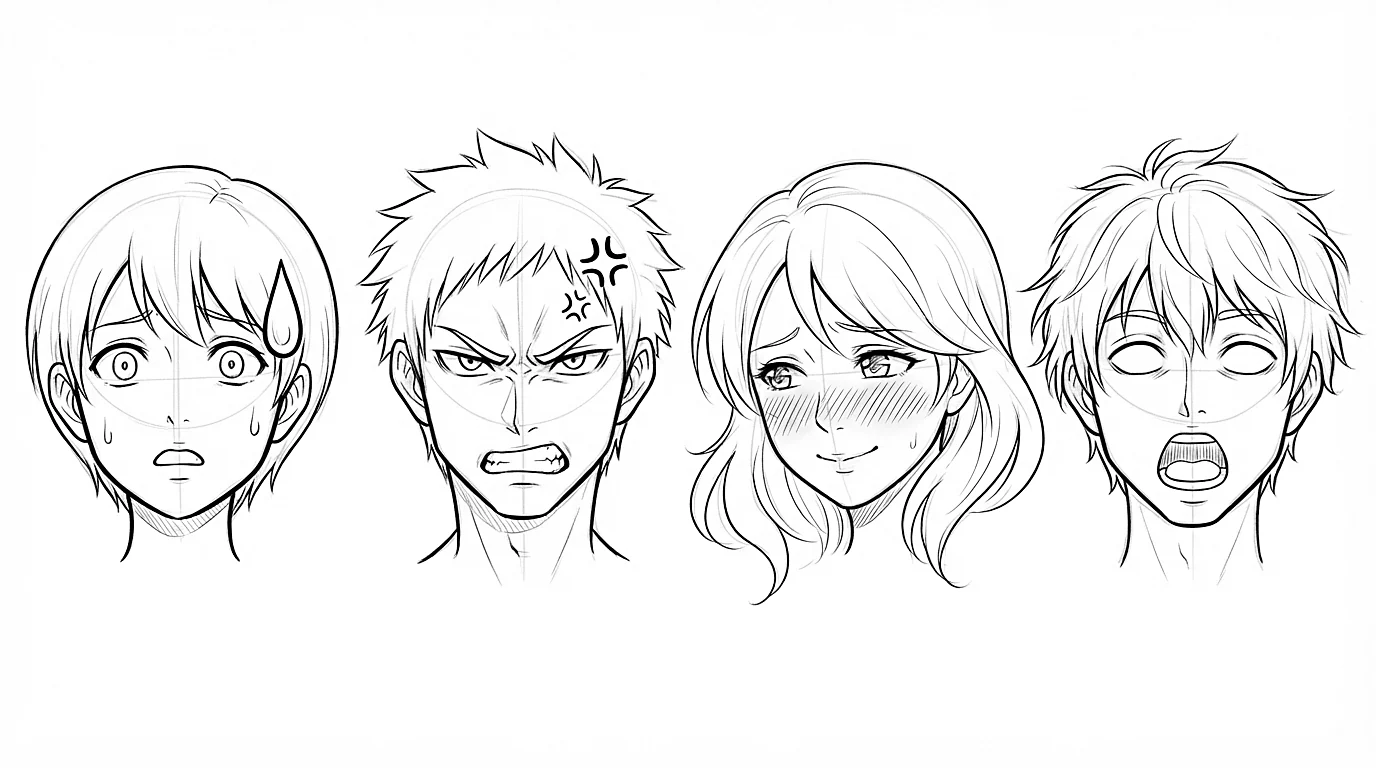
- The sweat drop: a big drop on the temple or behind the head, for awkwardness or unease.
- The anger vein: a cross with curved branches on the forehead or the temple, for annoyance building up.
- The blush: small slanted lines across the cheeks and the nose, for embarrassment, love or fever.
- Distorted eyes: spirals for dizziness, hearts for love, stars for wonder.
- Blank eyes: two empty ovals with no iris, for a character in shock.
- Waterfall tears: two streams gushing from closed eyes, grief blown up for laughs.
- The simplified face: no nose, dots or lines for eyes, a triangle mouth: the character almost turns chibi.
Keep the character recognizable
An expression should change the face, not the character. Keep the shape of the skull, the hairstyle and the shape of the eyes identical, and only move the eyebrows, the eyelids and the mouth. Keep their habits too: a shy character does not laugh like an arrogant one, and some characters always have slightly frowning eyebrows.
Mangaka draw an expression sheet for every main character: the same head several times, small, from the front or in three-quarter view, with a different emotion on each one. The anime face tutorial explains the construction that keeps everything in place, and the anime eyes tutorial the eyes that do most of the acting.
Common mistakes when drawing anime expressions
When an expression does not read, the problem is almost always one of these.
- Only the mouth changes: the eyes and brows stay neutral, so the face reads as blank. Start with the eyebrows.
- Mixed signals: angry brows with a happy mouth read as confusing, unless you want a threatening smile. Make every feature agree.
- A smile with neutral eyes: real joy shows in the eyes. If only the mouth smiles, the smile looks forced.
- Too many codes: blush, sweat, tears and veins all at once. One or two are enough.
- Timid expressions: a slight change nobody notices. Push it, then pull back if it is too much.
Draw 6 emotions of the same character on one page in 15 minutes, in 2 rows of 3: joy, sadness, anger, surprise, fear and a comic reaction. Keep the same head and hairstyle on all of them, start each one with the eyebrows, and use at most one manga code per face. It is the drawing that ends week 2 of the SketchAI program.
Frequently asked questions
How do you draw anime expressions for beginners?
Build the head first, then draw the eyebrows, the eyelids and the mouth in that order, all telling the same emotion. Add a manga code like a blush or a sweat drop only if it helps.
How do you draw an angry anime face?
Drop the inner ends of the eyebrows toward the nose in a V with two small creases, lower and straighten the upper eyelids, shrink the pupils and draw a tight straight mouth or clenched teeth.
How do you draw a crying anime face?
Lift the inner ends of the eyebrows, drop the upper lids over the irises, add a line of water on the lower lids and tears that follow the curve of the cheeks, and turn the mouth down. For sobbing, squeeze the eyes shut and open the mouth into a square.
What is the difference between surprise and fear in anime?
Both open the eyes wide. In surprise, the eyebrows go up and stay rounded and the mouth is a relaxed circle. In fear, the eyebrows lift in the middle, the pupils become tiny, the mouth stretches sideways and the head pulls back.
What does the sweat drop mean in anime?
A big drop on the temple or behind the head shows awkwardness or unease, often in a comic moment.
Keep learning
 Beginner
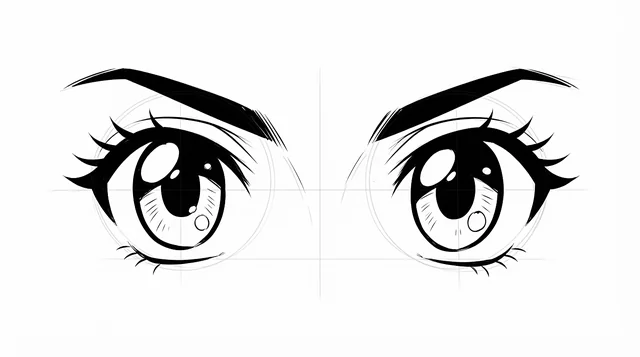
How to draw anime eyes, step by step
Build an anime eye in four stages, place it on the face, then change its style and emotion.
 Beginner
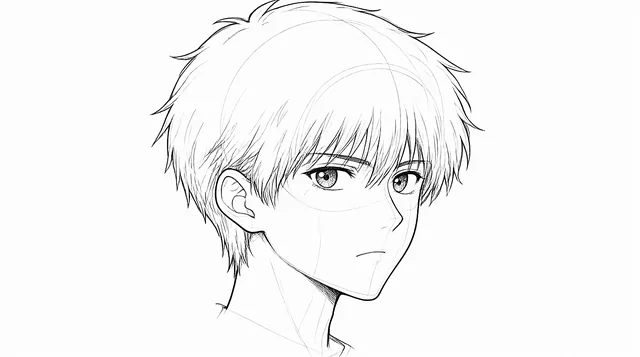
How to draw an anime face, step by step
Build the head as a volume, then place the eyes, nose, mouth and hair on it, one at a time.
 Beginner
How to draw a box in perspective, step by step
One face, three edges for the depth, the hidden edges: then turn the box any way you like.