
Lesson · Making manga
Action effects: speed lines, impacts and exaggeration
In manga, action isn't only in the pose: the effects around the character make you feel speed, force and impact. A few well-placed lines turn a frozen panel into a fight scene.
- Intermediate
- 15 min practice
- 3 min read
- Updated
Key takeaways
- Leave white space around the character: lines touching their outline make them unreadable.
- It's the first of the twelve principles of animation: it works as well in a still panel as in a cartoon.
- The moment just before the impact is often stronger than the impact itself: don't hesitate to give it its own panel.
On this page
Speed lines
-
Step 1In the direction of the movement
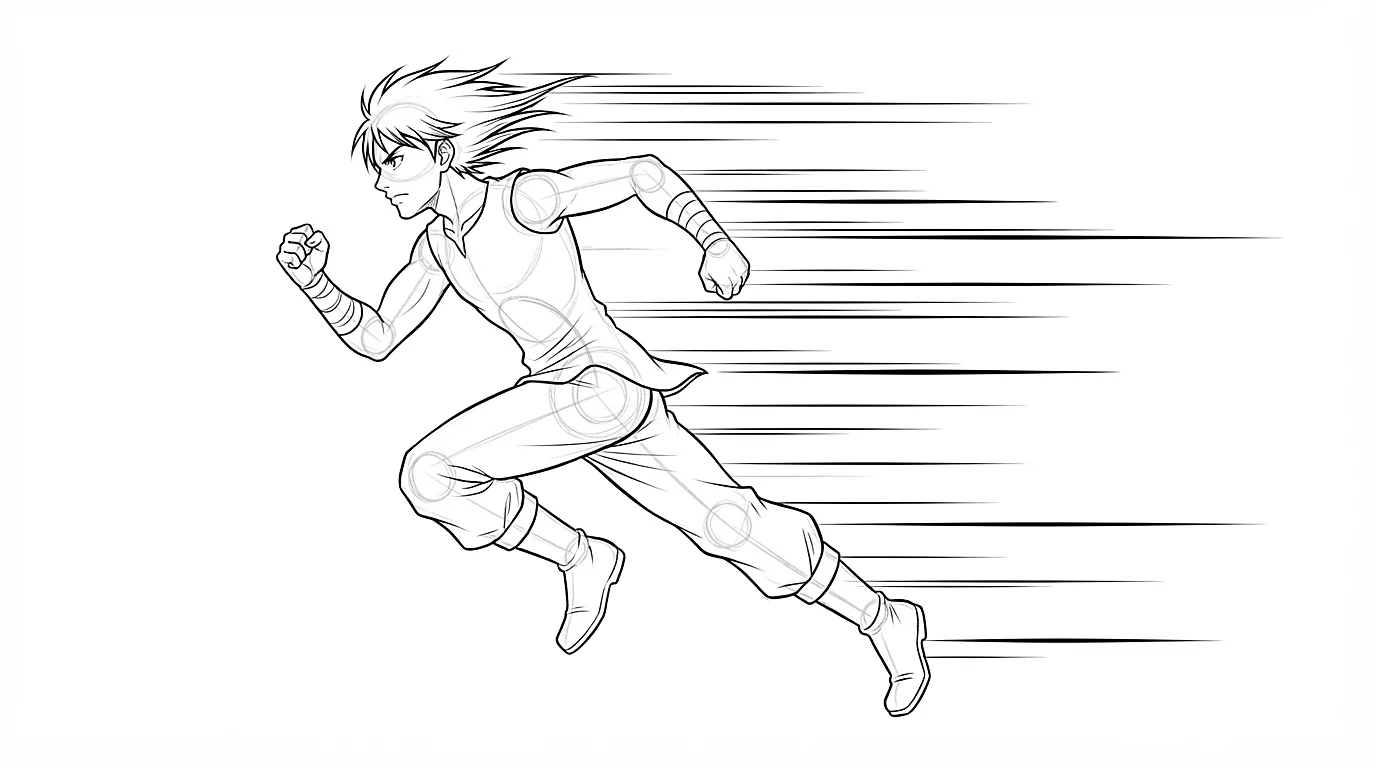
Draw parallel lines behind the character, in the direction they come from. They show the path they've just traveled.
-
Step 2Tapering lines
Each line starts thick near the character and thins out as it goes. Vary their length.
-
Step 3A rushing background
For extreme speed, fill the whole background with parallel lines: the setting disappears, only the movement remains.
-
Step 4Focus lines
Lines converging on a point, like the spokes of a wheel: they draw the eye to a face or an attack coming at the reader.
Leave white space around the character: lines touching their outline make them unreadable.
Impacts
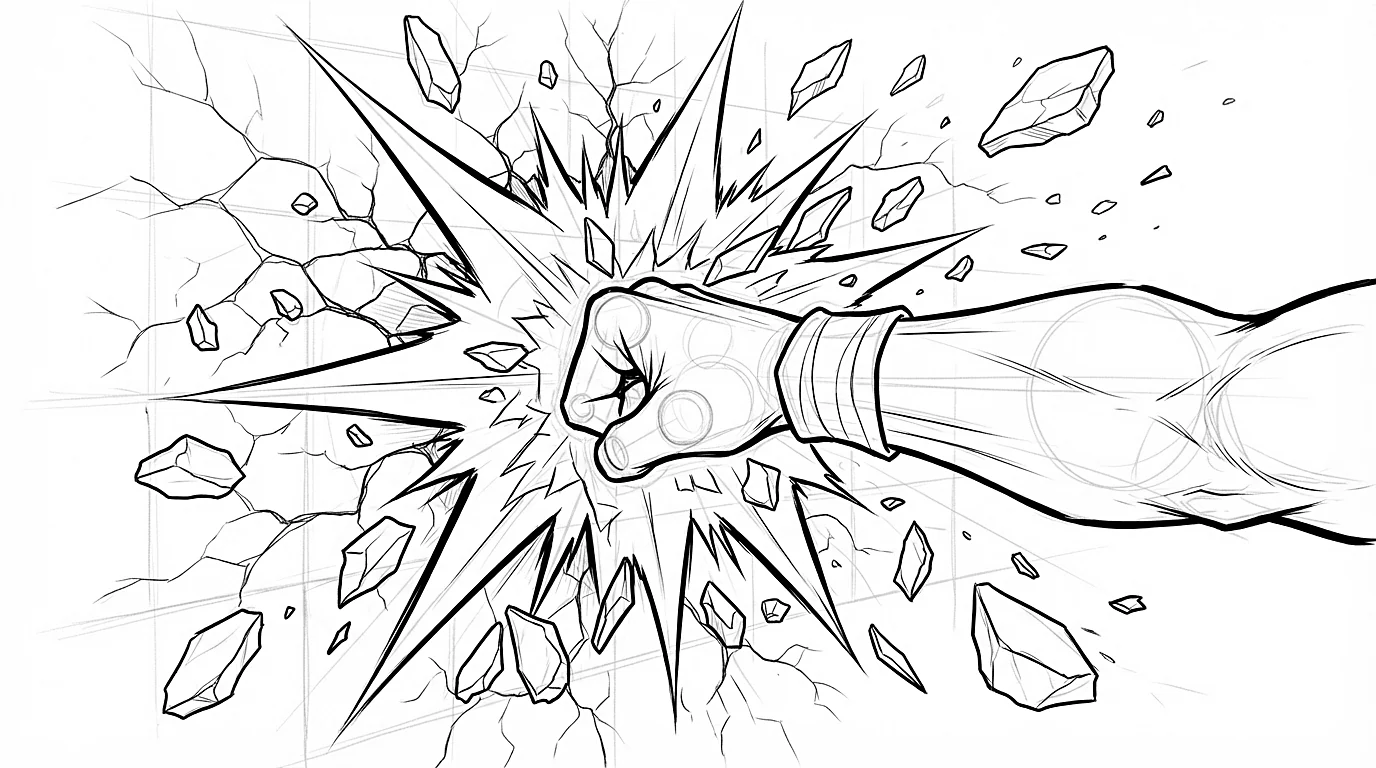
- A star shape with uneven points at the point of contact: the flash of the hit.
- Cracks and debris flying from the point of impact, smaller as they get farther.
- Small curved strokes around an object that vibrates or shakes.
- A cloud of dust under the feet when landing or taking off.
- A shockwave in concentric circles for an explosion or a powerful shout.
Squash and stretch
-
Step 1Stretch for speed
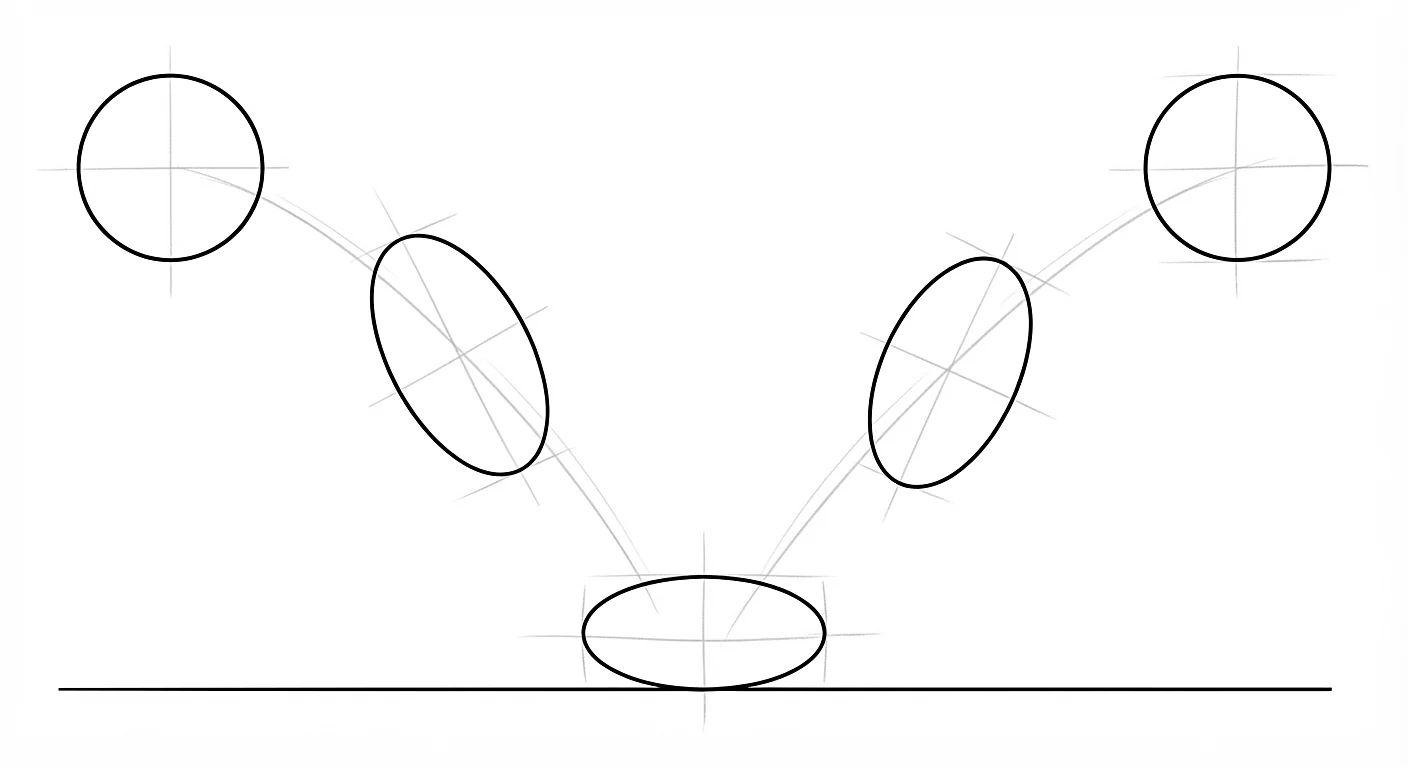
A body or object moving fast stretches in the direction of the movement: a thrown fist looks longer, a jumping character stretches out.
-
Step 2Squash on impact
At the moment of impact, the shape flattens against what it hits, before getting its shape back.
-
Step 3Keep the volume
What stretches gets thinner, what squashes gets wider: the total volume stays the same, or the shape seems to swell or melt.
It's the first of the twelve principles of animation: it works as well in a still panel as in a cartoon.
A fight scene in three panels
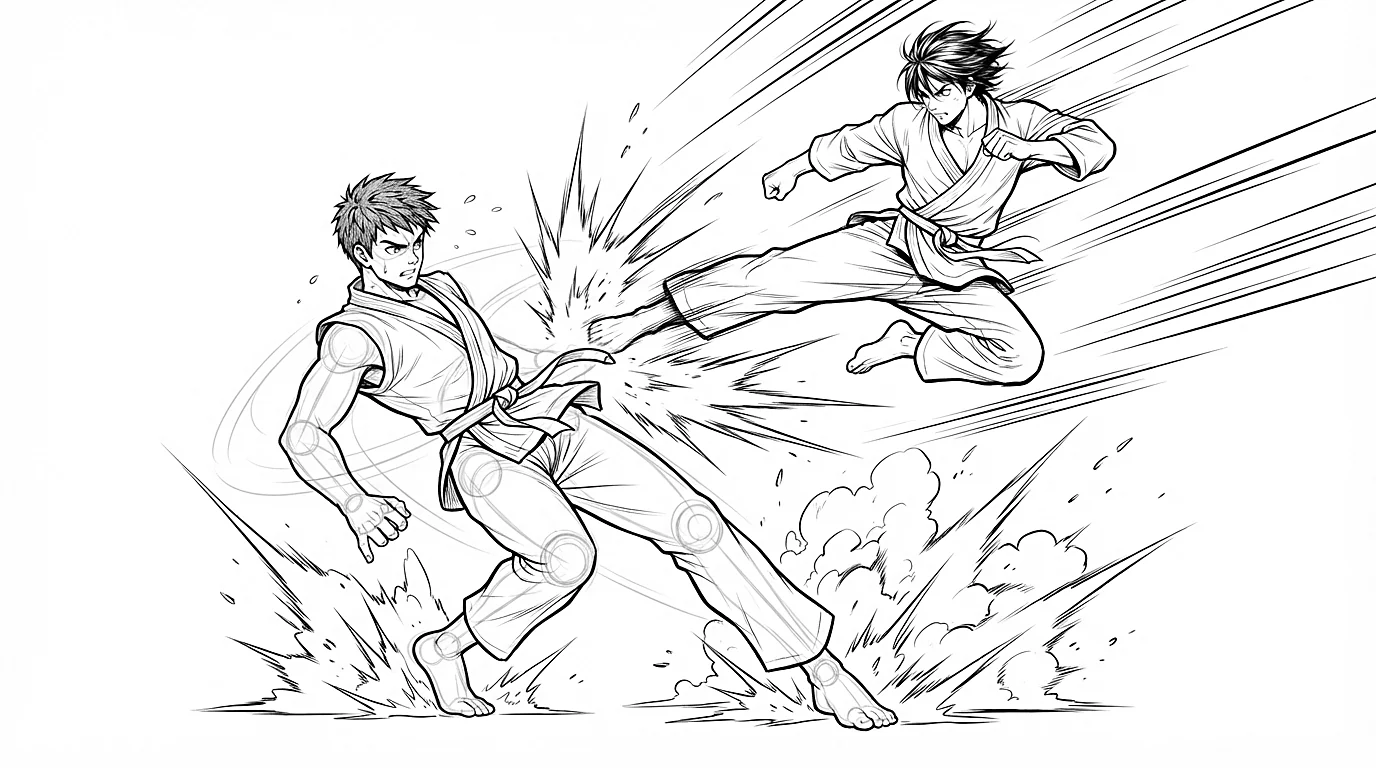
A good fight reads like a sentence: each panel is a word, and the reader must feel the blow before even seeing it.
-
Step 1The wind-up
First panel: the character winds up, body coiled, eyes locked on the target. Often a close-up on the eyes or a fist clenching.
-
Step 2The hit
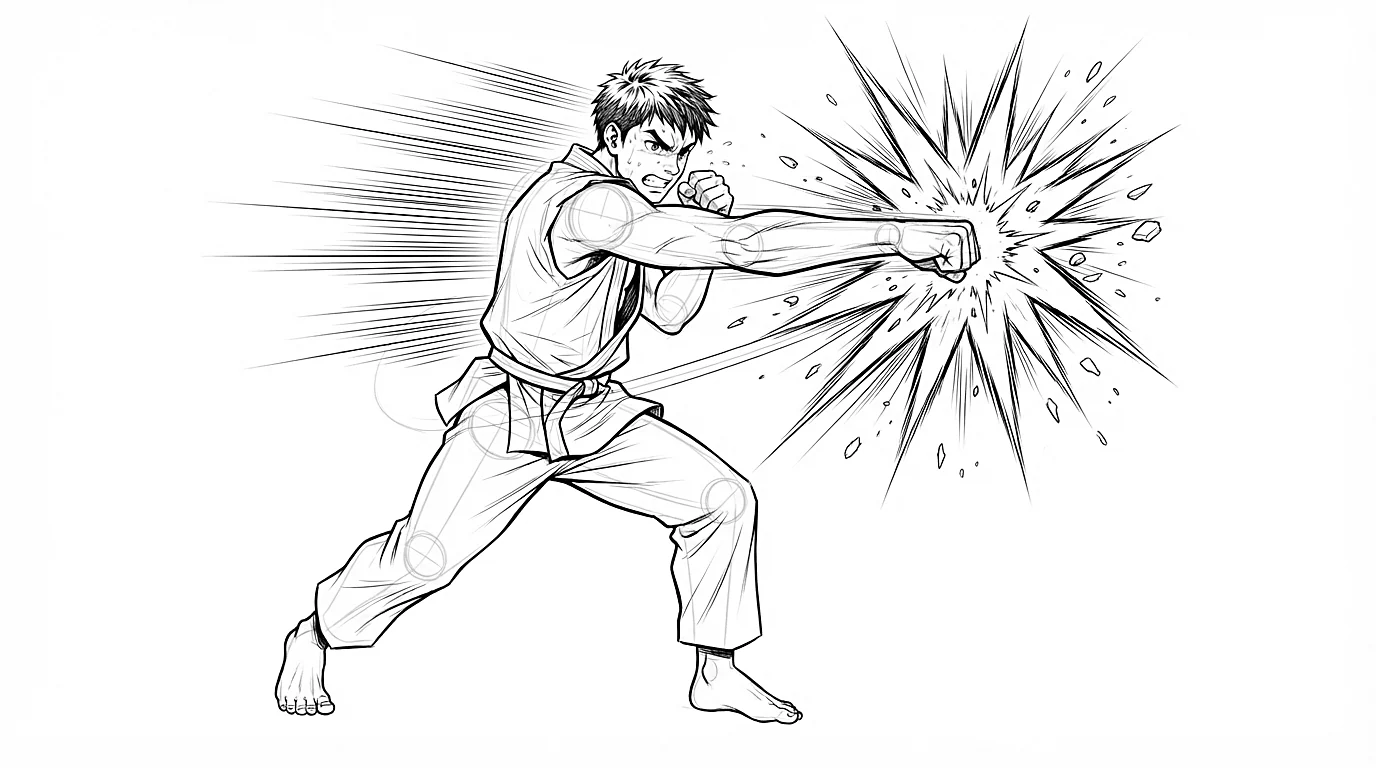
Second panel, the biggest: the movement fully stretched, speed lines, an impact. Pick a strong angle, from below or with the fist toward the reader.
-
Step 3The aftermath
Third panel: the opponent knocked back, the dust settling, a look. It tells whether the blow landed.
-
Step 4Keep the direction
If the attack goes from right to left in the first panel, it must keep that direction in the next ones. The reader follows the movement effortlessly.
The moment just before the impact is often stronger than the impact itself: don't hesitate to give it its own panel.
The coach's tips
- Draw the character first and the effects after, on a separate layer if you're on a tablet.
- Draw speed lines fast, in one stroke: a slow line looks limp.
- Fewer, stronger effects: a panel saturated with effects loses its readability.
- Hair and clothes must go the same way as the speed lines.
- In the app, pick a character in the middle of an action and imagine the effects around them before tracing.
Practice right now
Once the lesson is read, draw this exercise: it takes about 15 minutes.
Draw a bouncing ball in five positions, stretched as it falls and squashed on the ground, then a simple character running with speed lines behind them.
Keep learning
 Intermediate
How to draw anime poses, step by step
Start with a line of action, build the mannequin on it, then add balance, depth and action.
 Intermediate
Inking: confident lines, and line weight that builds volume
Confident lines, and line weight that builds volume.
 Intermediate
The manga page: panels, reading order and balloons
Panels, reading order and balloons.