
Lesson · Making manga
Inking: confident lines, and line weight that builds volume
Inking turns a sketch into a finished drawing. It isn't going over the pencil: it's choosing the right line, drawing it in one stroke, and using its thickness to add depth.
- Intermediate
- 15 min practice
- 3 min read
- Updated
Key takeaways
- On a tablet, stroke stabilization helps, but it doesn't replace the gesture: practice without it too.
- In manga, hatching is mostly for shadows on faces and hair and for tense moods. Use it sparingly.
- Let the ink dry before erasing the pencil, or hide the sketch layer on a tablet, to judge the drawing on its own.
On this page
A confident line
-
Step 1Draw with your arm
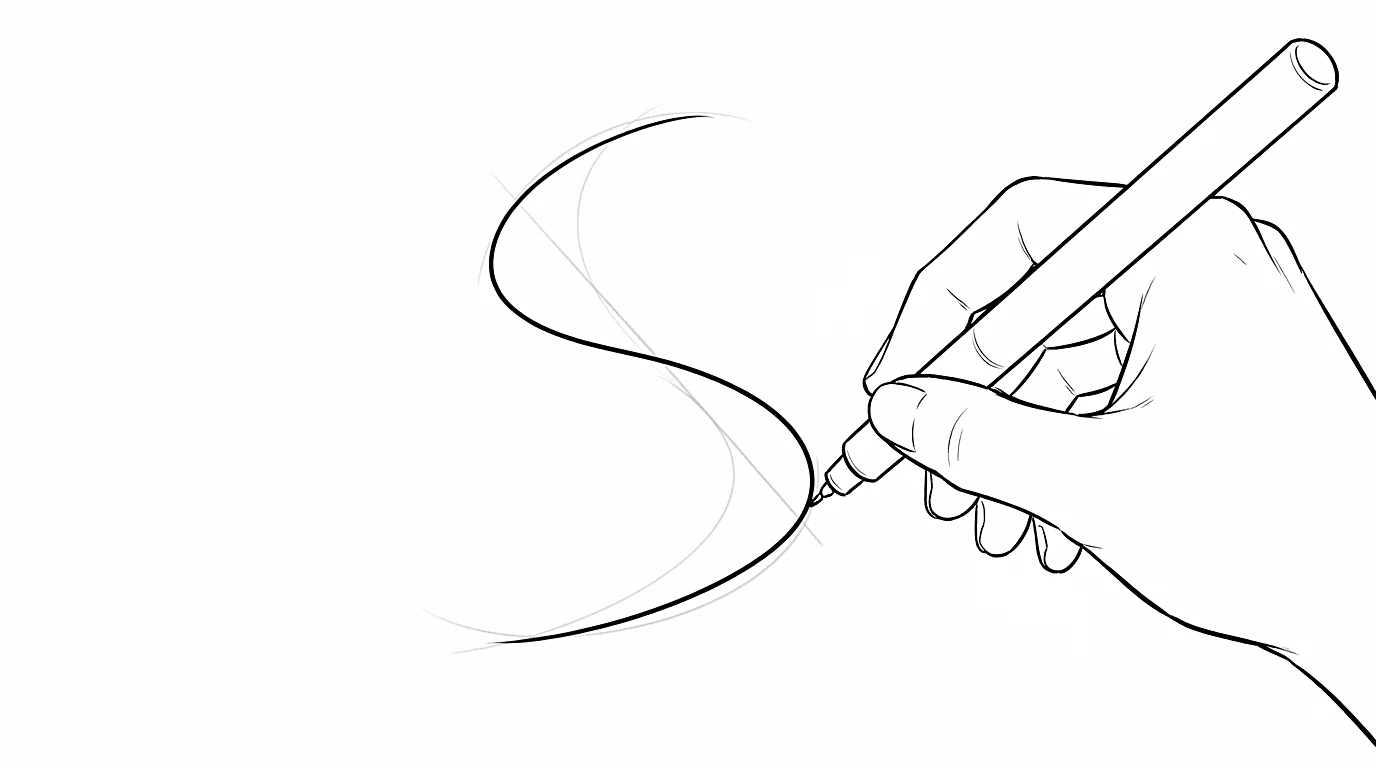
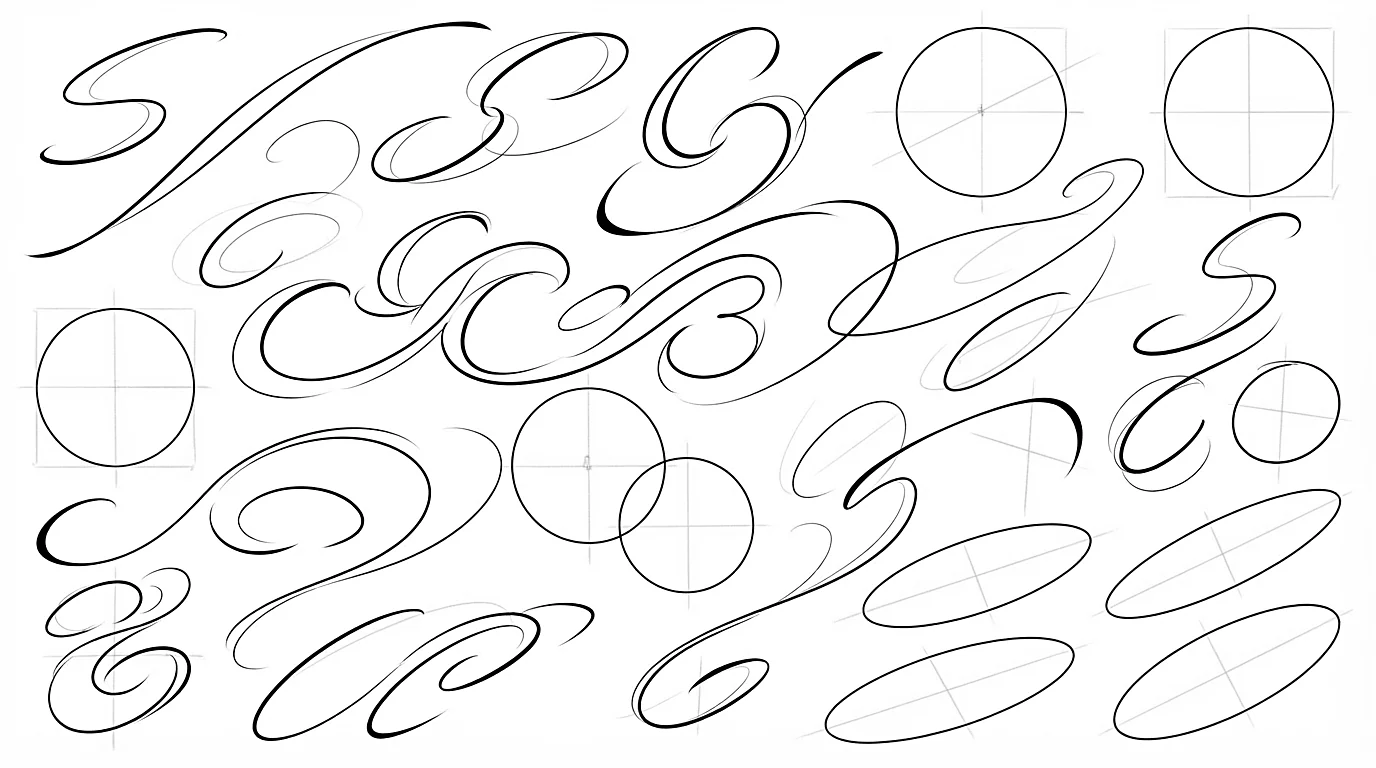
For a long curve, move from the elbow or the shoulder, not the wrist. The wrist makes short, shaky strokes.
-
Step 2Ghost the motion
Before putting the pen down, do the motion two or three times just above the paper. Then draw it in one go.
-
Step 3One line, not ten
A line made of small overlapping strokes looks hesitant. Better a confident line that's slightly off.
-
Step 4Turn the page
Your hand has easy directions. Turn the paper, or the canvas on a tablet, so you always draw in the direction that suits you.
On a tablet, stroke stabilization helps, but it doesn't replace the gesture: practice without it too.
Varying line weight
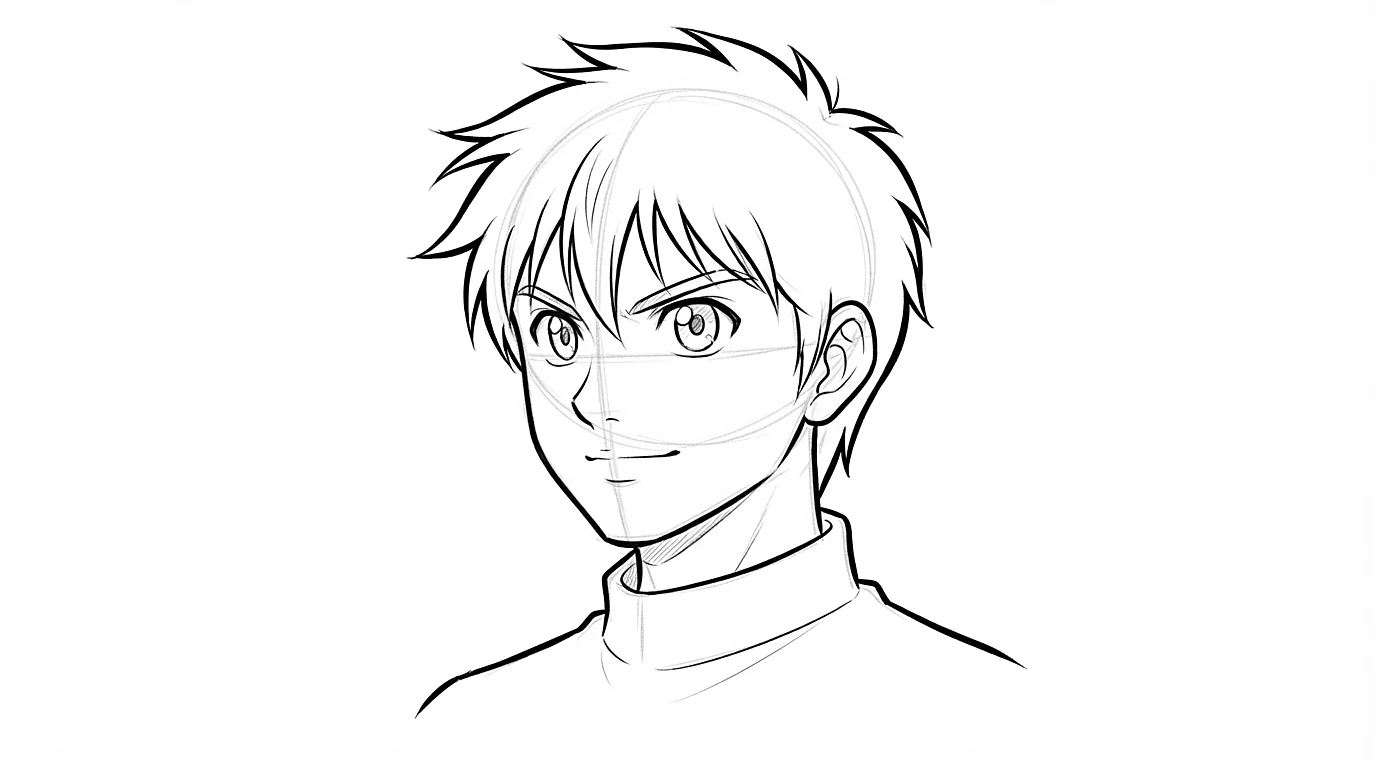
- A character's outer contour is thicker than the inner lines: it separates them from the background.
- Lines on the shadow side are thicker, lines on the light side thinner, or even broken.
- What is close to the reader gets a thicker line than what is far.
- Thicken the line where two forms cross or overlap: under the chin, under locks of hair, in folds.
- Taper lines at their ends: a tapering line looks alive, a line of even width looks mechanical.
Hatching
-
Step 1Parallel lines
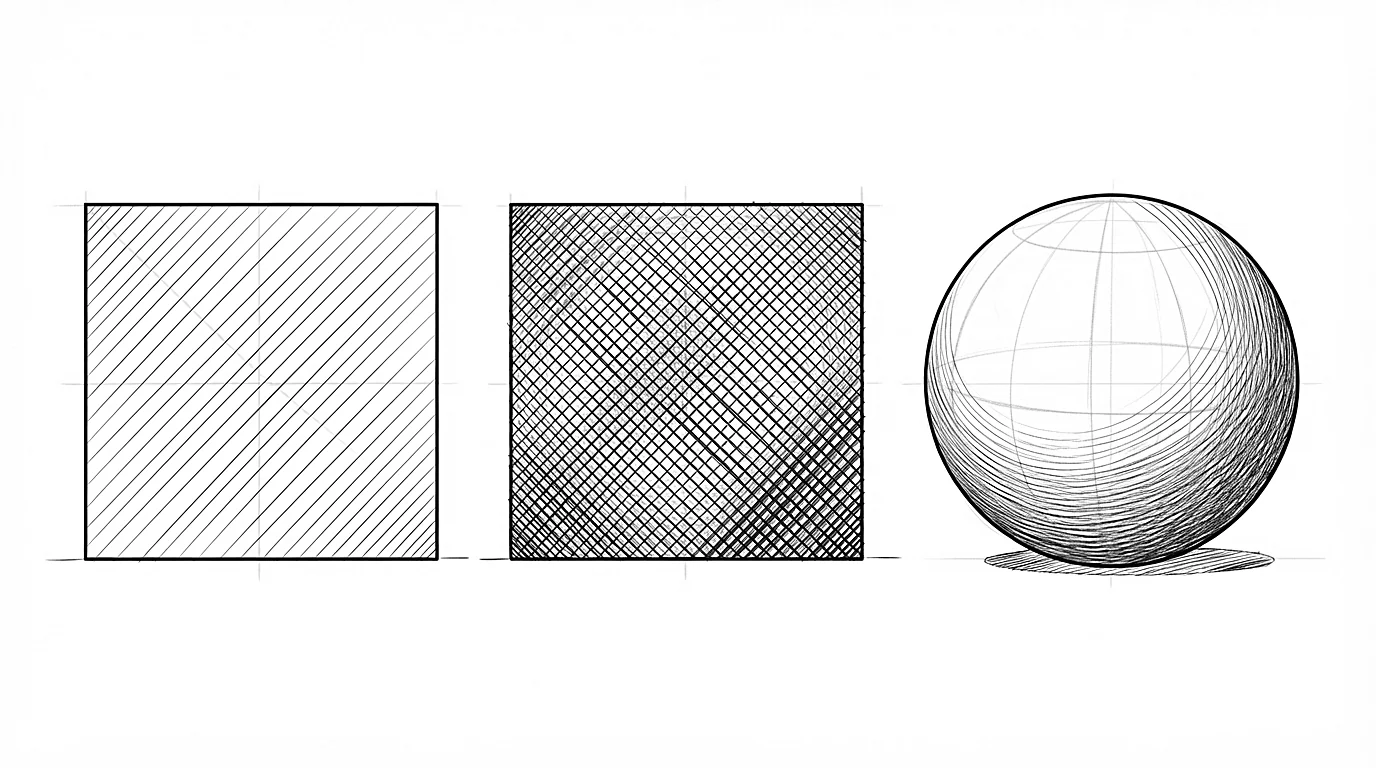
Short lines, all in the same direction, evenly spaced. The tighter they are, the darker the area.
-
Step 2Cross-hatching
Add a second layer in another direction for the deepest shadows.
-
Step 3Follow the form
Curve the hatching around the volume, like lines hugging the surface: they describe the form as well as the shadow.
In manga, hatching is mostly for shadows on faces and hair and for tense moods. Use it sparingly.
Inking a whole illustration
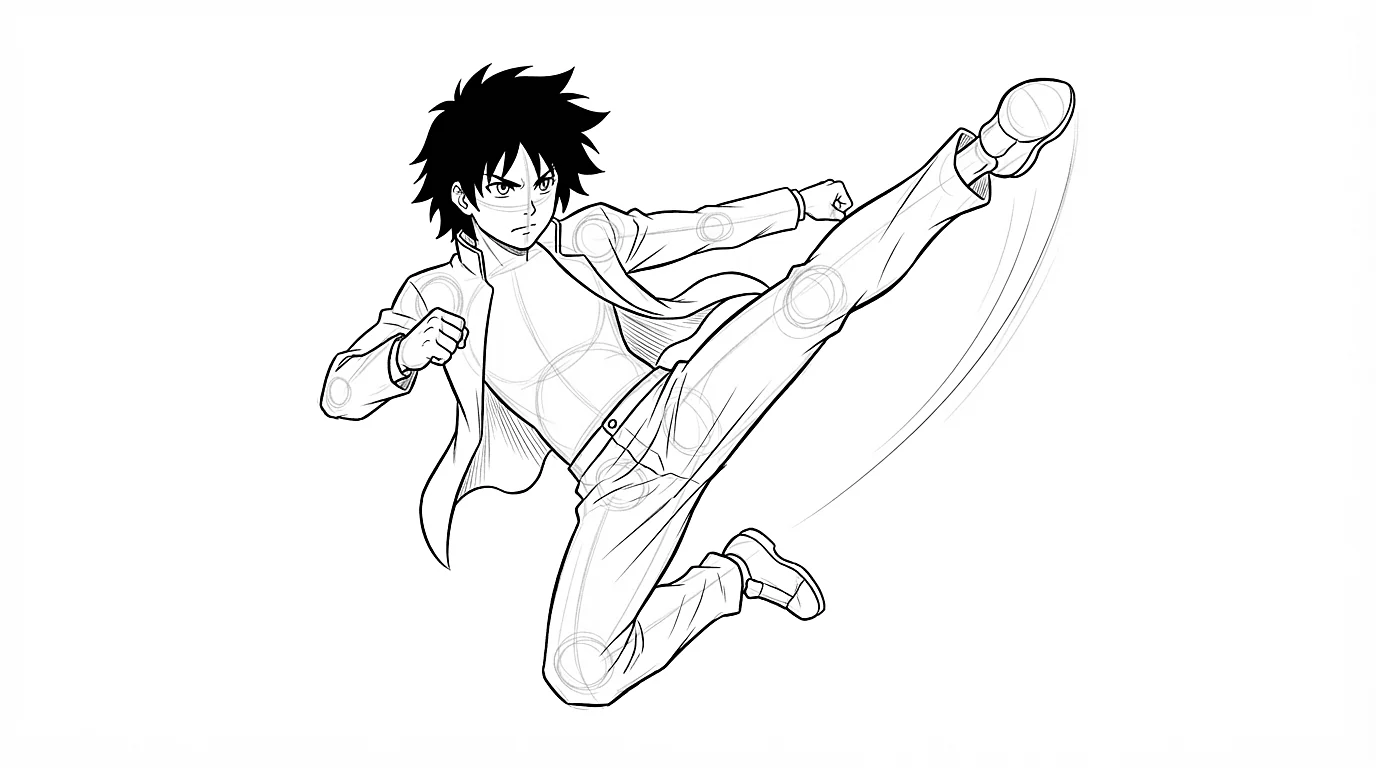
Inking a whole drawing takes method: the order you work in changes the result.
-
Step 1Clean pencils
Clean your sketch up into neater pencils, in light blue or on a faded layer. The ink shouldn't be searching for the shape anymore.
-
Step 2From the most important to the details
Start with the face, then the body's contours, then the clothes, and finish with the hair and small details.
-
Step 3Big blacks at the end
Fill the blacks (hair, dark clothes, deep shadows) once every line is down. They balance the page.
-
Step 4Go over the contour
To finish, thicken the character's outer contour. That last pass makes them pop.
Let the ink dry before erasing the pencil, or hide the sketch layer on a tablet, to judge the drawing on its own.
The coach's tips
- Warm up for two minutes with lines and circles before inking: the first line of the day is always the shakiest.
- A fine 0.3 mm felt-tip pen and a thicker 0.8 mm one are enough to start.
- Draw fast: a slow line wobbles, a fast line flows.
- Don't go over a missed line: keep going, and fix it on the next drawing.
- In the app, trace a character using only single-stroke lines, without going over them.
Practice right now
Once the lesson is read, draw this exercise: it takes about 15 minutes.
Fill a page with long curves, each drawn in a single stroke, then ink one of your sketches, thickening the outer contour and the shadow side.
Keep learning
 Intermediate
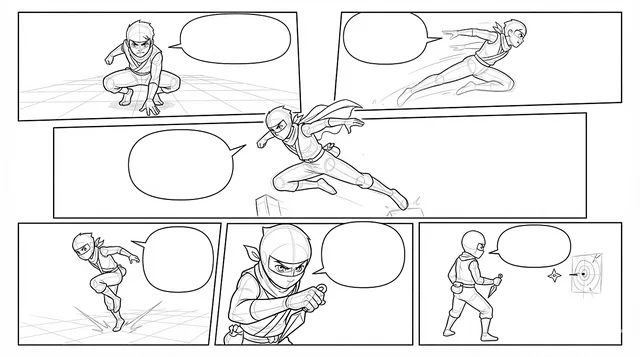
The manga page: panels, reading order and balloons
Panels, reading order and balloons.
 Intermediate
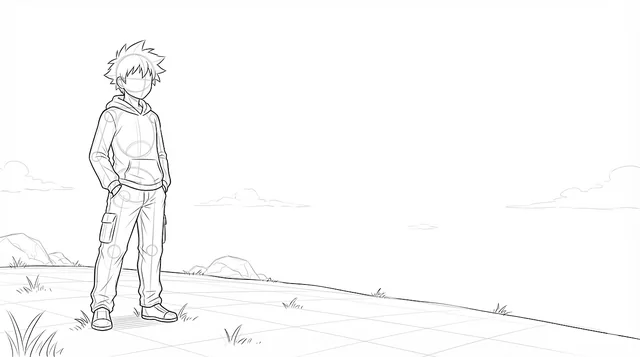
Composition and framing: where to place the subject and how to frame it
Where to place the subject and how to frame it.
 Intermediate
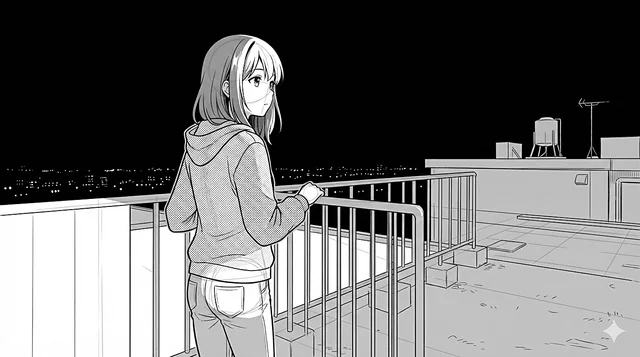
Black, white and screentones: solid blacks, screentones and black-and-white readability
Solid blacks, screentones and black-and-white readability.