
Lesson · Making manga
Black, white and screentones: solid blacks, screentones and black-and-white readability
Manga is read in black and white: without color, solid blacks and screentones separate the shapes, create the shadows and set the mood. Well balanced, they give a page its impact.
- Intermediate
- 15 min practice
- 2 min read
- Updated
Key takeaways
- A page without any black looks bland; a page with too much becomes unreadable. Aim for a balance of white, gray and black.
- Keep the same mood from panel to panel within a scene: a change of tone tells the reader the moment has changed.
- Squint at your page: if everything turns gray, add blacks.
- Test your blacks on a copy of the drawing before touching the original.
On this page
Solid blacks
-
Step 1Choose what is black
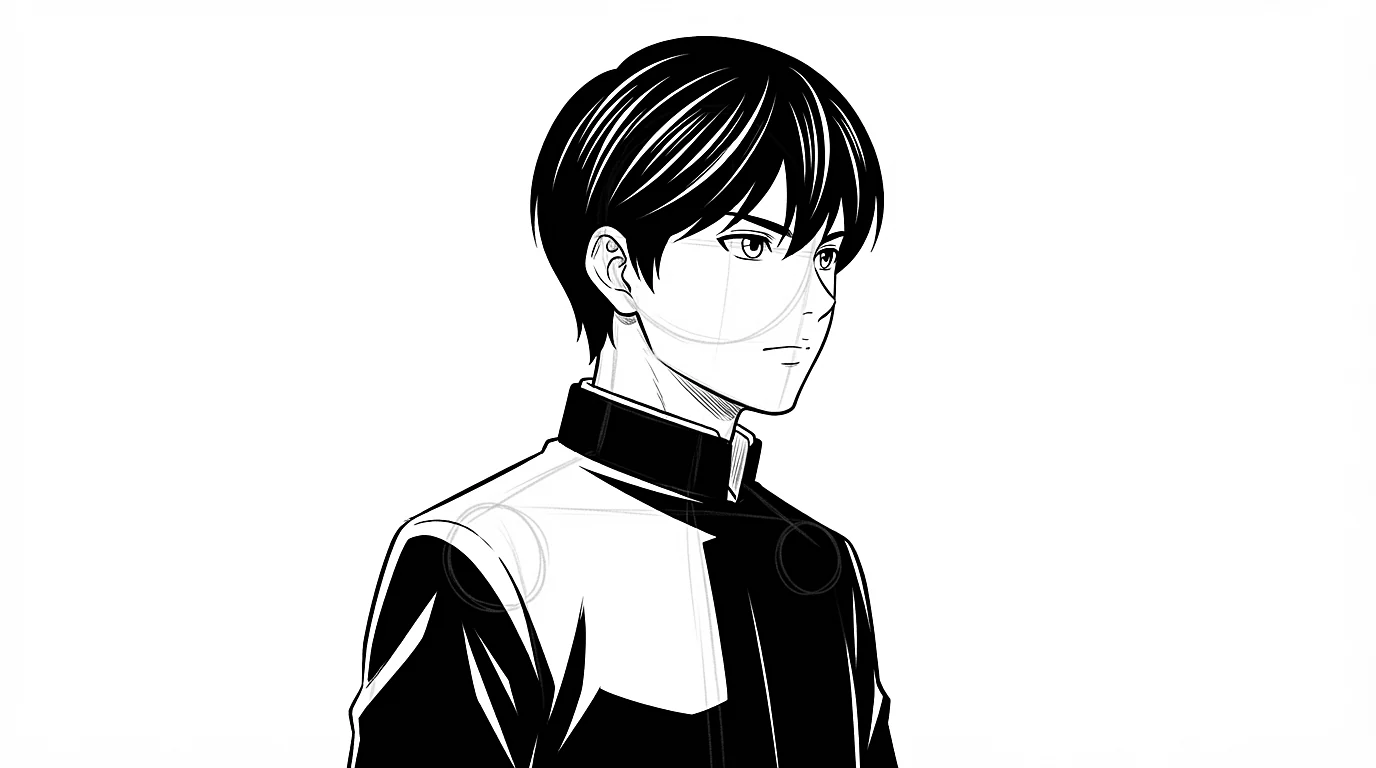
Dark hair, dark clothes, deep shadows: decide at the pencil stage which areas will be black.
-
Step 2Balance the page
Spread the blacks over the whole page rather than bunching them in a corner. The eye travels from one to the next.
-
Step 3Black makes things stand out
A light character in front of a black background, or the reverse, reads instantly. Avoid gray on gray.
-
Step 4Keep highlights
Leave a few white lines in big blacks, on hair or a leather garment: the black keeps its volume.
A page without any black looks bland; a page with too much becomes unreadable. Aim for a balance of white, gray and black.
Screentones
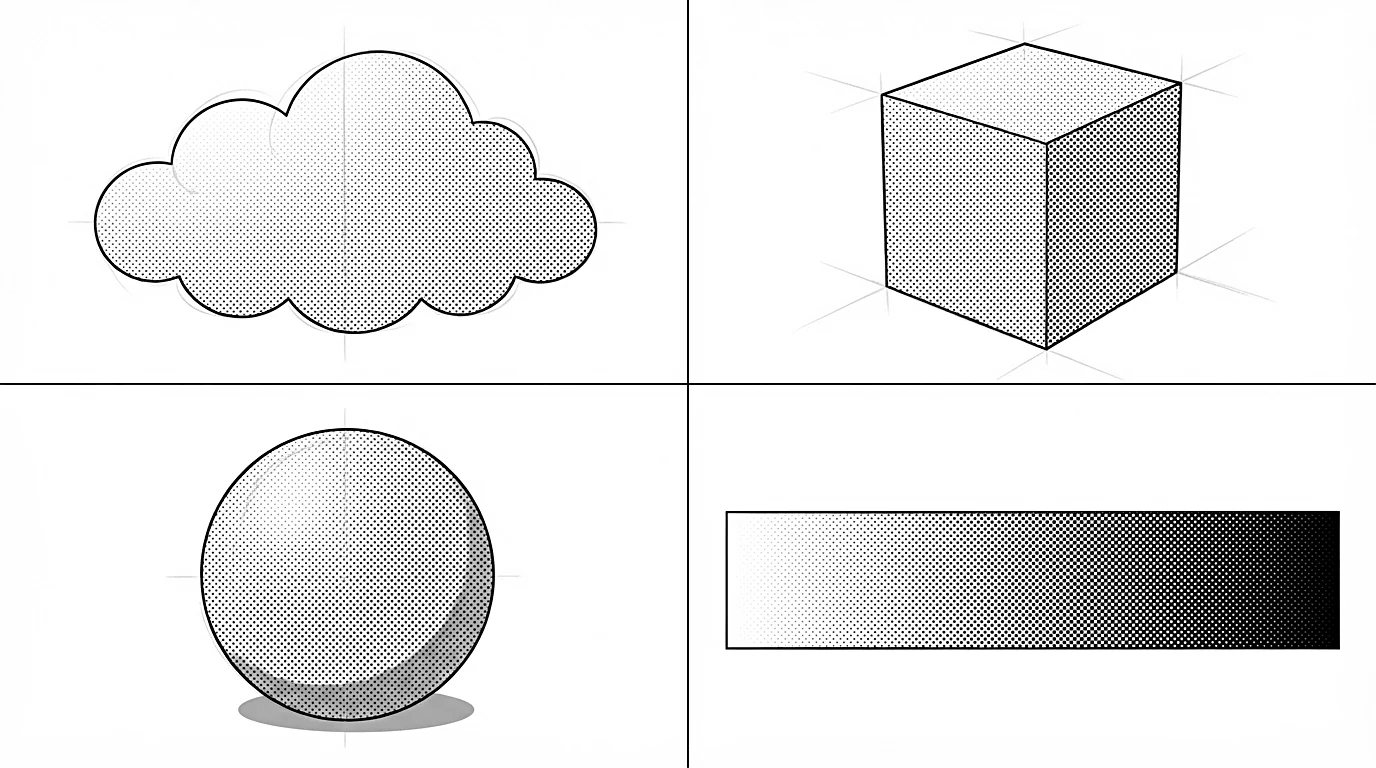
- A screentone is a pattern of dots that makes a gray. The bigger or tighter the dots, the darker the gray.
- Use few different grays: two or three values are enough for a whole page.
- A light tone for skin in shadow or colored clothes, a darker one for shadows and backgrounds.
- A gradient tone for a sky, falling light or an emotional background.
- On a tablet, drawing apps have ready-made tones; on paper, hatching does the same job.
Mood backgrounds
-
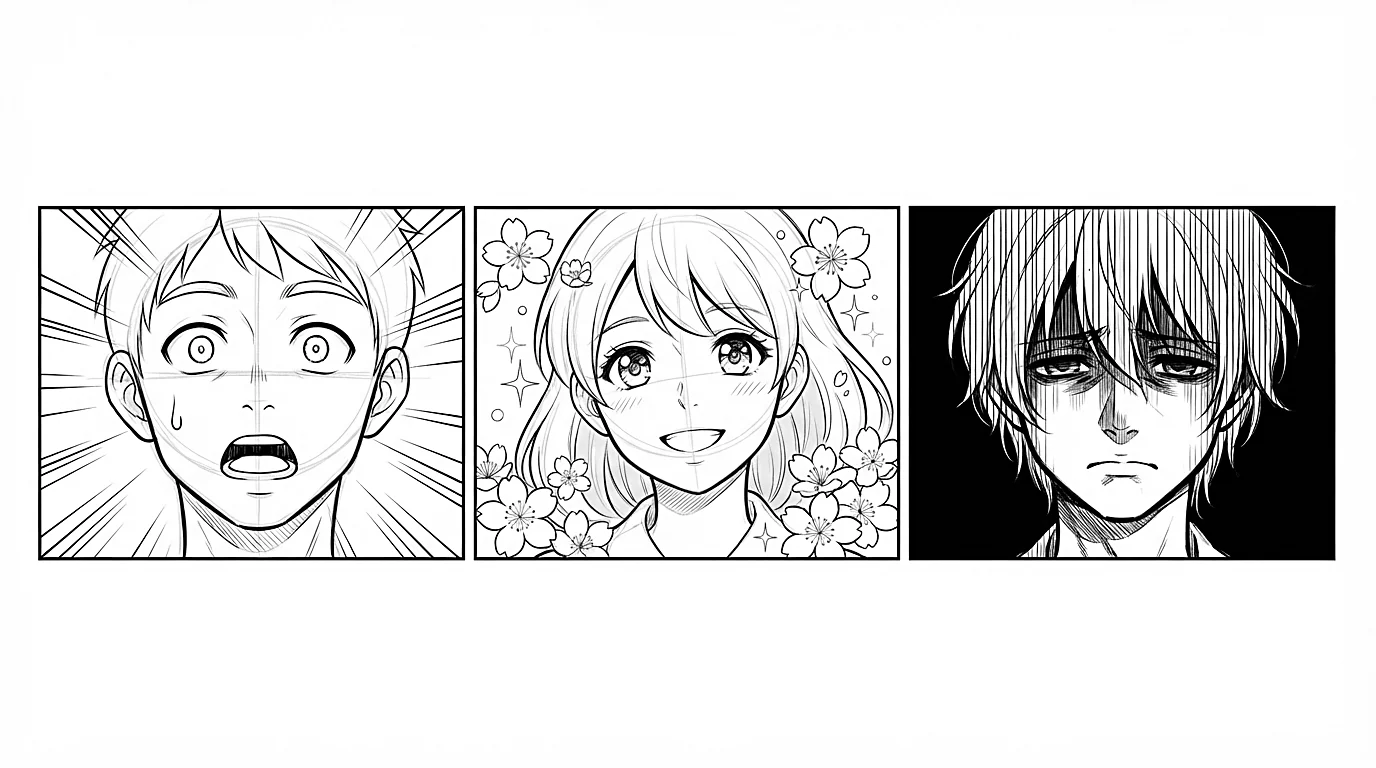
Step 1Focus lines
Lines converging on the character: surprise, revelation, shock.
-
Step 2Flowers and bubbles
A background of flowers, bubbles or sparkles: a romantic moment or a dazzling character.
-
Step 3Black and vertical lines
A black background, or one striped with vertical lines: despair, threat, unease.
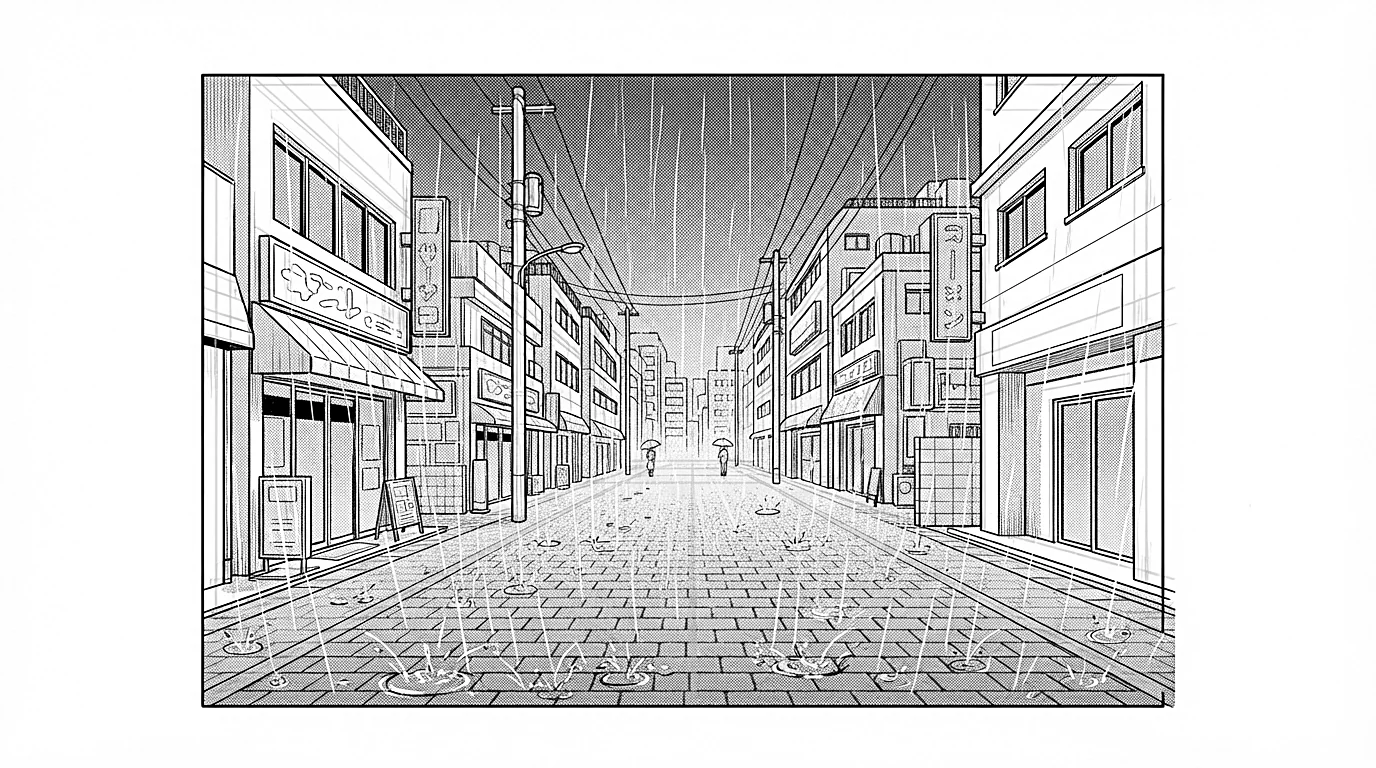
Moods: night, rain and memories
Tones aren't only for shading: they change the time and place of a scene without a word.
-
Step 1Night
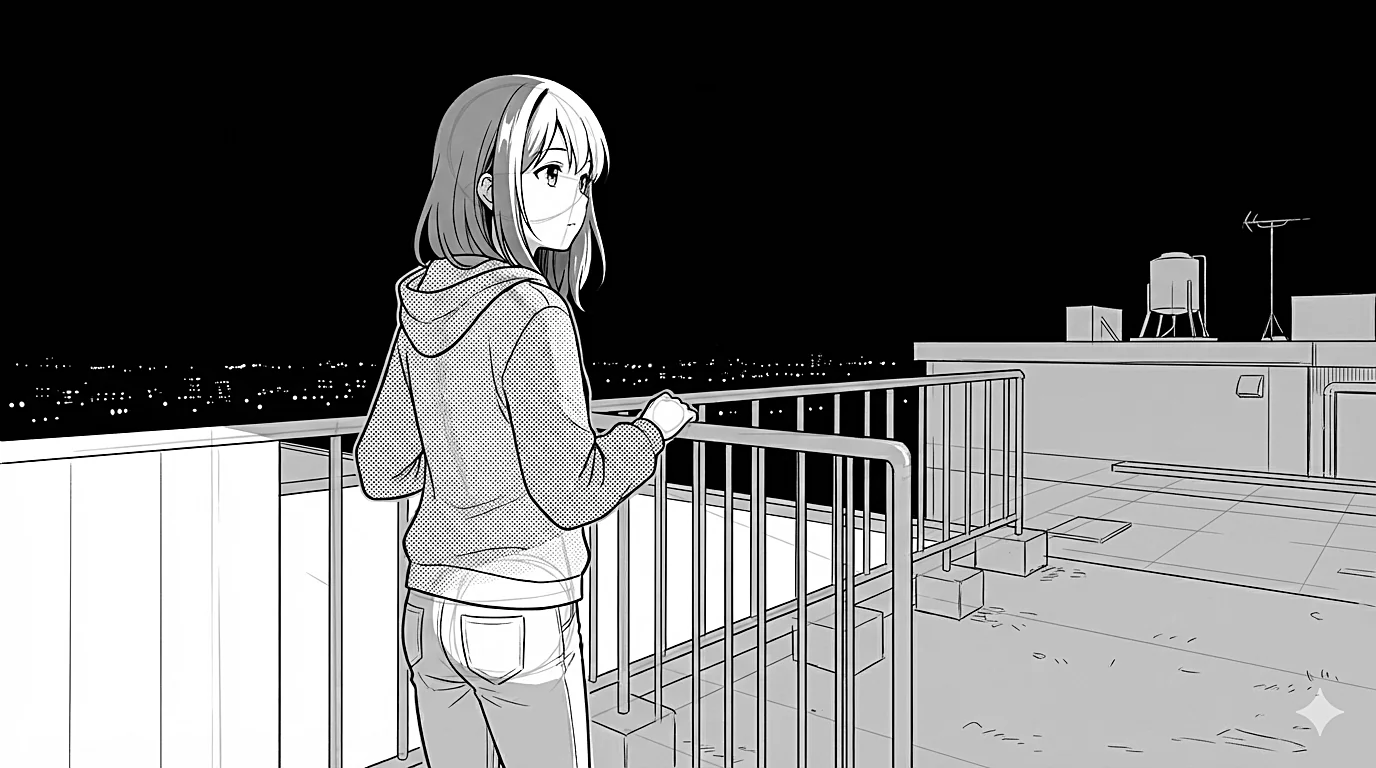
A dark tone over the whole sky and the backgrounds, the character left light where a light falls on them. Bold solid blacks for the shadows.
-
Step 2Rain
Thin white lines scratched diagonally over a gray tone, all in the same direction. Add splashes on the ground.
-
Step 3A memory
Panels with blurred or rounded edges, a black background around the panels, or a soft light tone over the whole scene.
-
Step 4Tension
Backgrounds getting darker from one panel to the next: the page darkens with the situation.
Keep the same mood from panel to panel within a scene: a change of tone tells the reader the moment has changed.
The coach's tips
- Squint at your page: if everything turns gray, add blacks.
- Test your blacks on a copy of the drawing before touching the original.
- Don't tone everything: the white areas matter as much as the gray ones.
- Look at a manga page from a distance: you'll see its big black shapes. That's its structure.
- In the app, trace a character, then choose their black areas: hair, clothes, shadows.
Practice right now
Once the lesson is read, draw this exercise: it takes about 15 minutes.
Take one of your drawings and make three versions of it: line only, with solid blacks, then with blacks and a single gray in hatching or tone.
Keep learning
 Intermediate
Inking: confident lines, and line weight that builds volume
Confident lines, and line weight that builds volume.
 Intermediate
The manga page: panels, reading order and balloons
Panels, reading order and balloons.
 Intermediate
Composition and framing: where to place the subject and how to frame it
Where to place the subject and how to frame it.