
Lesson · Making manga
Character design: creating a character people recognize at first glance
The most famous characters are recognizable by their silhouette alone. Creating a character isn't piling on details: it's finding a few strong choices that say who they are.
- Intermediate
- 15 min practice
- 2 min read
- Updated
Key takeaways
- If two of your characters have the same silhouette, change their hairstyle first: it's the fastest way to tell them apart.
- Keep the sheet next to you when you draw the character: even pros check it for every panel.
- Start with a sentence: who is this character, and what do they want? The drawing comes after.
- Make ten quick black silhouettes before choosing: the most original ideas rarely come first.
On this page
A readable silhouette
-
Step 1The black test
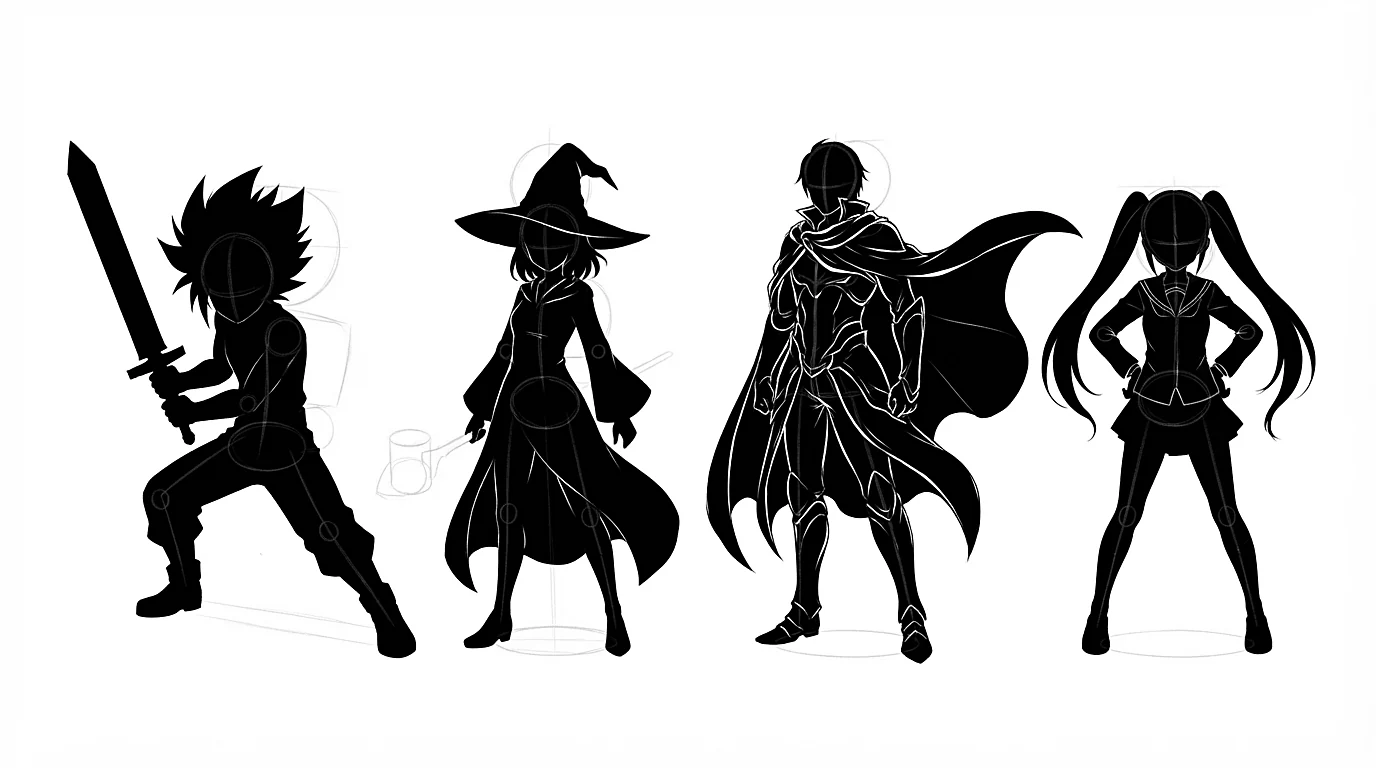
Fill your character in black. If you still recognize them and understand the pose, the silhouette works.
-
Step 2One unique element
A hairstyle, a hat, a weapon, a cape: give them at least one shape no other character has.
-
Step 3Different shapes in a group
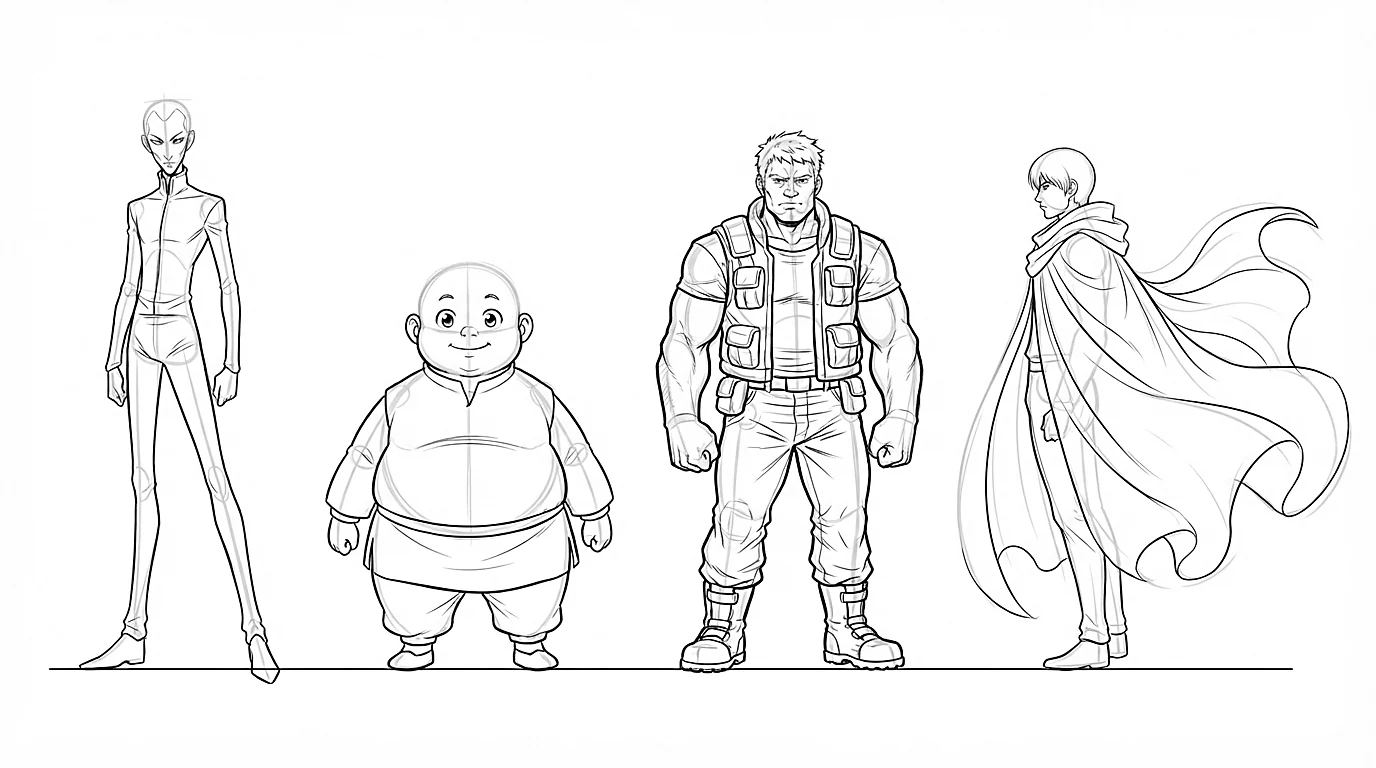
In a team, vary the sizes and shapes: a tall one, a short one, a stocky one, a thin one. You can tell them apart even from afar.
-
Step 4Open up the shapes
Move the arms away from the body, show the profile of the hairstyle: a silhouette where everything sticks together becomes a blob.
If two of your characters have the same silhouette, change their hairstyle first: it's the fastest way to tell them apart.
Shapes and personality
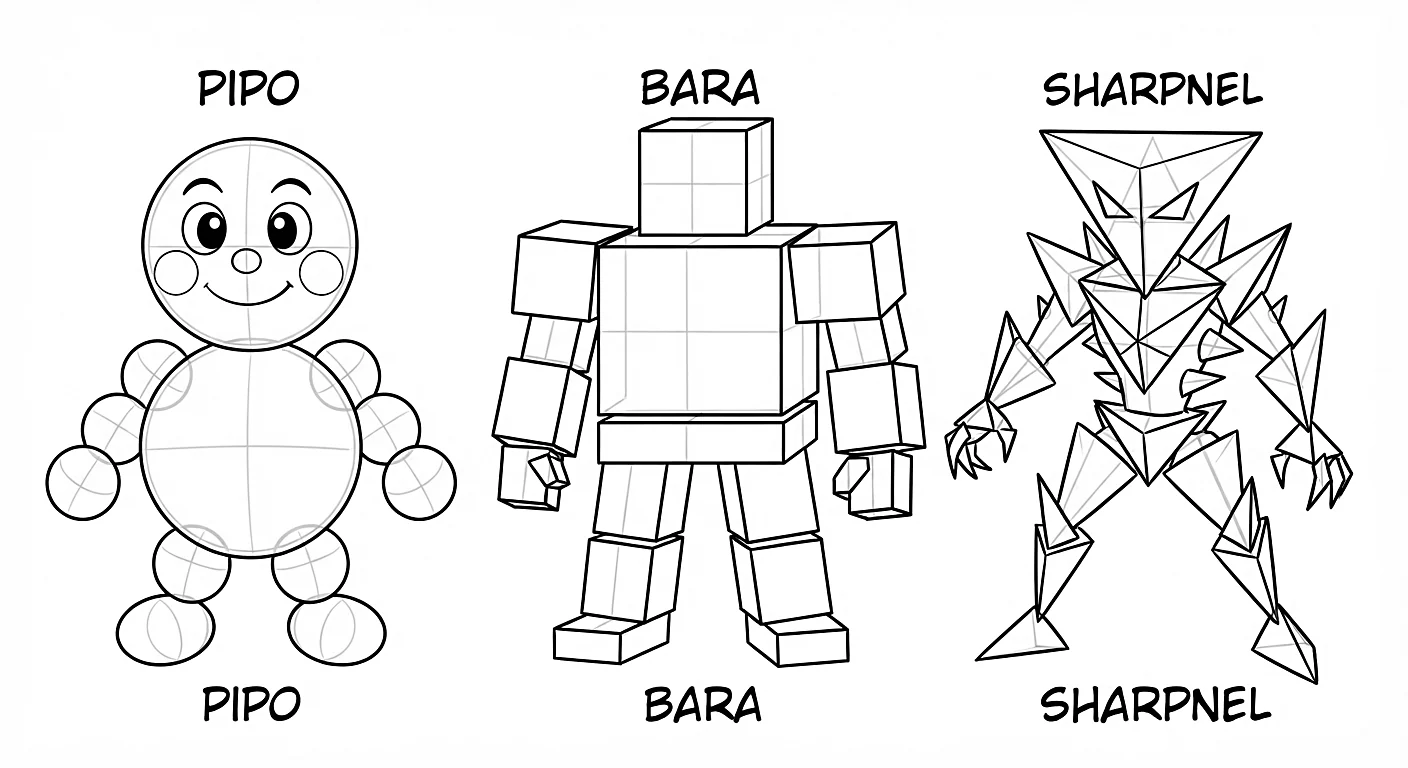
- Circles feel soft, kind and friendly: perfect for a likable or comic character.
- Squares feel solid, reliable and stubborn: for a protector, a strongman, a mentor.
- Triangles feel sharp, dangerous and ambitious: for a rival, a villain or an edgy hero.
- Mix them: one dominant shape for the personality, another as an accent for nuance.
- The shape shows up everywhere: in the hairstyle, the eyes, the clothes, the accessories.
Details that tell a story
-
Step 1Three colors
A main color, a secondary one and an accent. More than that, and the character gets hard to remember.
-
Step 2Details with a story
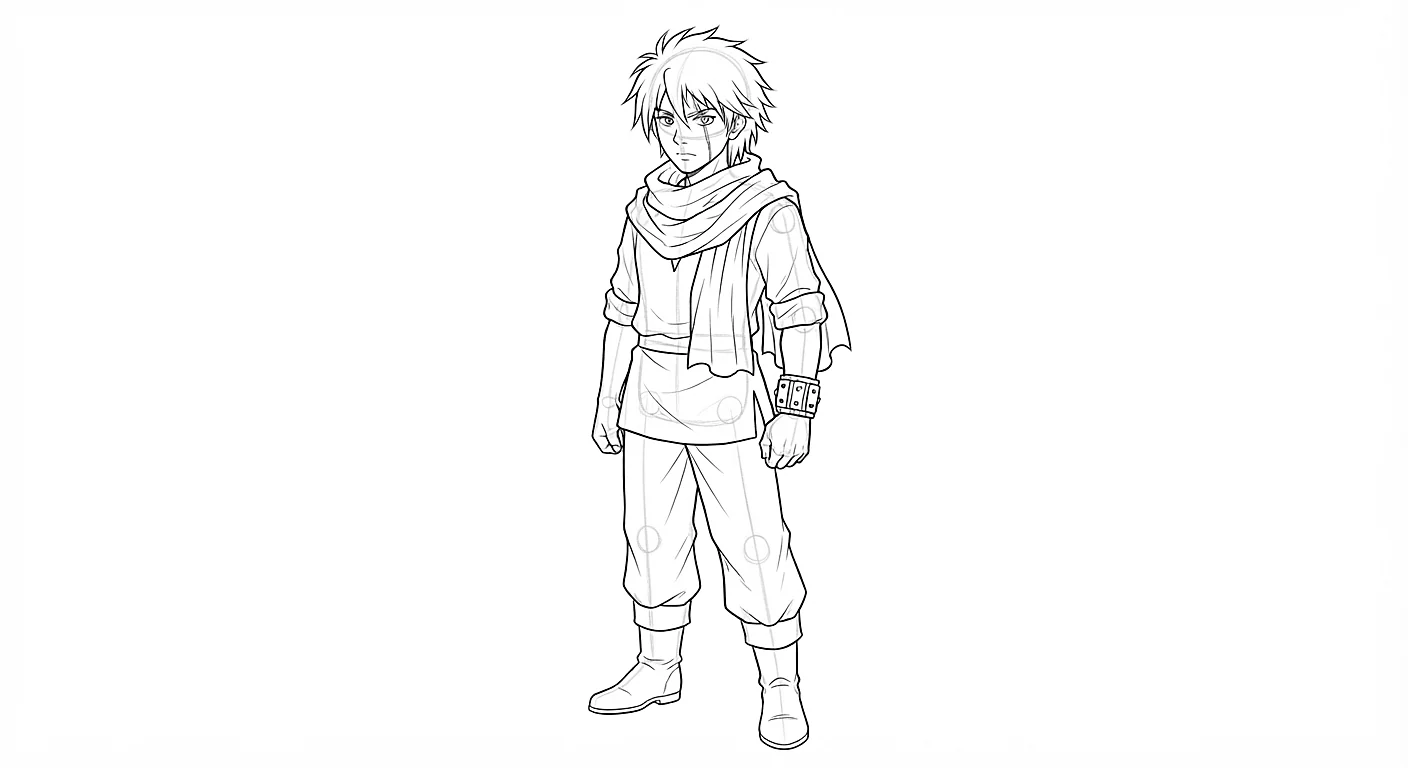
A scar, a bracelet, an oversized scarf: each detail should say something about their past or their personality.
-
Step 3Easy to redraw
You'll draw them hundreds of times: keep details you can redraw quickly, and always the same way.
The model sheet
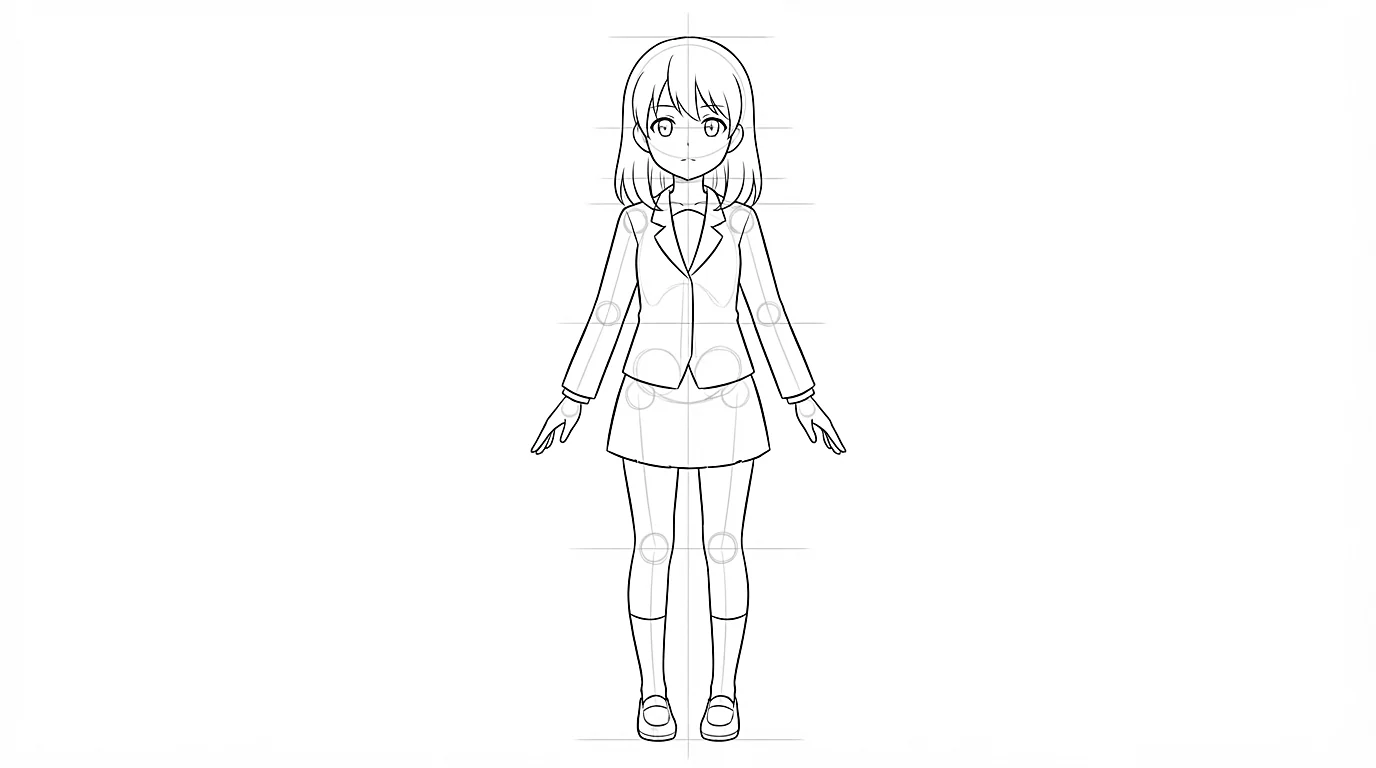
A model sheet shows the character from several angles, at the same proportions. It keeps them identical from one panel to the next.
-
Step 1Guide lines
Draw horizontal lines across the whole sheet: top of the skull, eyes, chin, shoulders, waist, knees, feet. Every drawing lines up on them.
-
Step 2Front, three-quarter, side, back
Draw the character standing, arms slightly apart, from these four angles, side by side.
-
Step 3Details on the side
Add the important details, enlarged, in a corner: an accessory, a pattern, the shape of the eyes.
-
Step 4A few expressions
Finish with three or four heads showing their typical expressions.
Keep the sheet next to you when you draw the character: even pros check it for every panel.
The coach's tips
- Start with a sentence: who is this character, and what do they want? The drawing comes after.
- Make ten quick black silhouettes before choosing: the most original ideas rarely come first.
- Exaggerate a personality trait in the drawing: a shy one slightly hunched, a proud one chest out.
- Avoid details you don't like drawing: you'll end up forgetting or botching them.
- In the app, trace a well-known character, then fill their silhouette in black: see what makes them recognizable.
Practice right now
Once the lesson is read, draw this exercise: it takes about 15 minutes.
Draw five black silhouettes of invented characters, each built on a shape: circle, square or triangle. Pick the strongest one and draw it in line.
Keep learning
 Intermediate
Inking: confident lines, and line weight that builds volume
Confident lines, and line weight that builds volume.
 Intermediate
The manga page: panels, reading order and balloons
Panels, reading order and balloons.
 Intermediate
Composition and framing: where to place the subject and how to frame it
Where to place the subject and how to frame it.