
Lesson · Bodies, hands & poses
Chibi: a character two to three heads tall
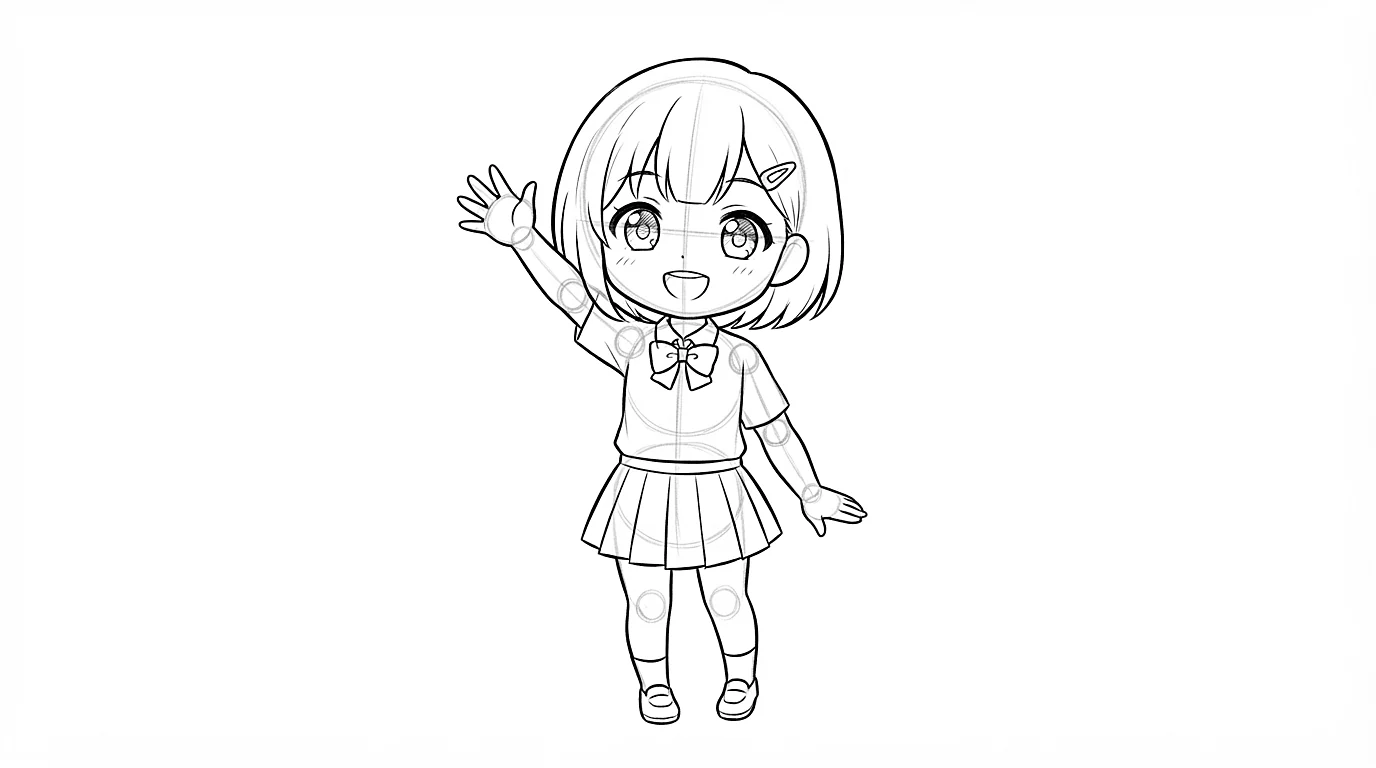
A chibi is a pocket-sized version of a character, with a big head and a small body. It is used for comic scenes, stickers and merch. It is also a great exercise: it forces you to keep only what matters in a character.
- Beginner
- 15 min practice
- 3 min read
- Updated
Key takeaways
- If your chibi looks like a child rather than a chibi, the head isn't big enough: make it bigger before touching anything else.
- Keep both feet firmly planted when the chibi stands still: with such a heavy head, it has to look stable.
- Always build the head first and the body under it: the head sets the scale.
- Thicker, rounder lines make a chibi cuter: avoid sharp angles.
On this page
The proportions
-
Step 1Count in heads
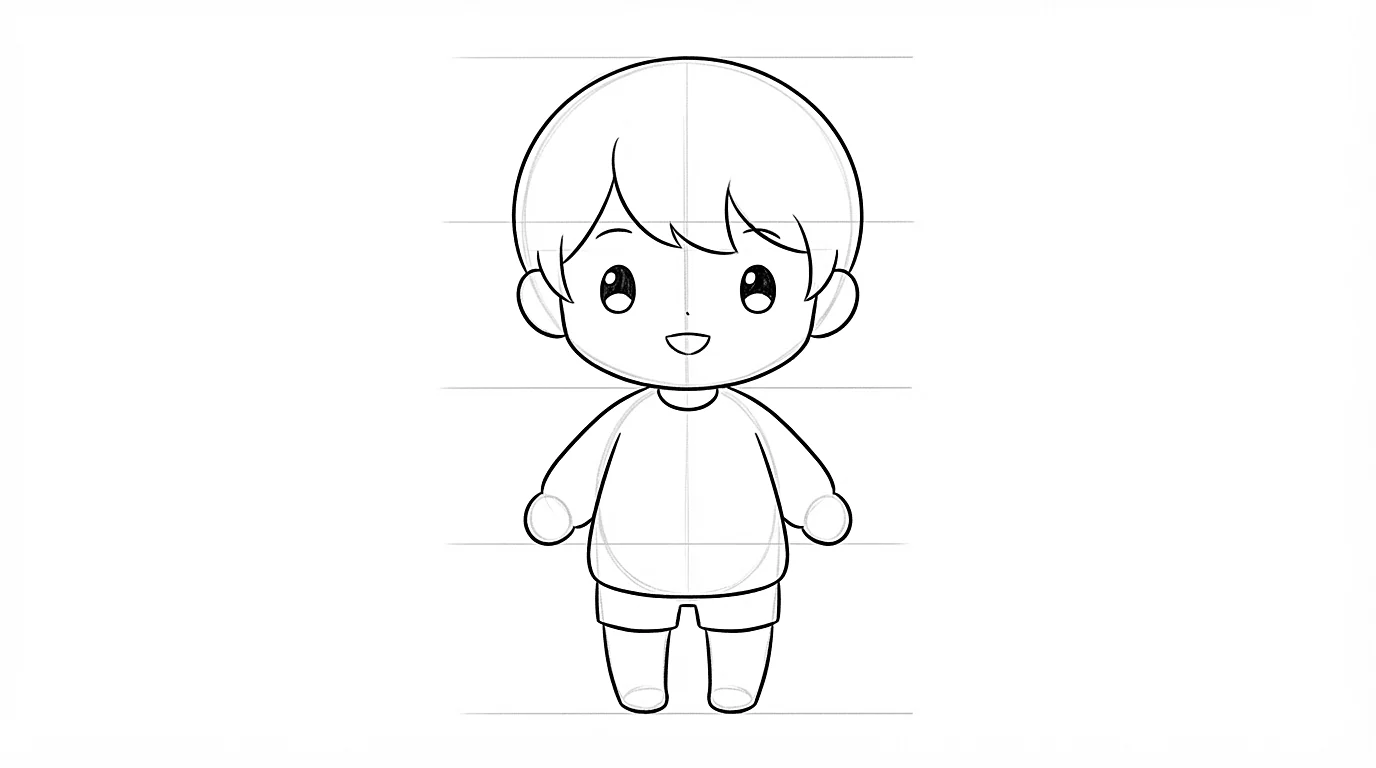
An adult manga character is about 7 heads tall. A chibi is only 2 to 3: the head alone makes a third to a half of the height.
-
Step 2The head
A big sphere with a short, rounded chin. The eyes move below the middle of the head and become very big.
-
Step 3The body
A small bean- or pear-shaped torso, about half as tall as the head. No waist, no muscles.
-
Step 4The limbs
Short, rounded arms and legs, with no visible elbows or knees. Hands become mittens, feet small ovals.
If your chibi looks like a child rather than a chibi, the head isn't big enough: make it bigger before touching anything else.
Simplifying the face
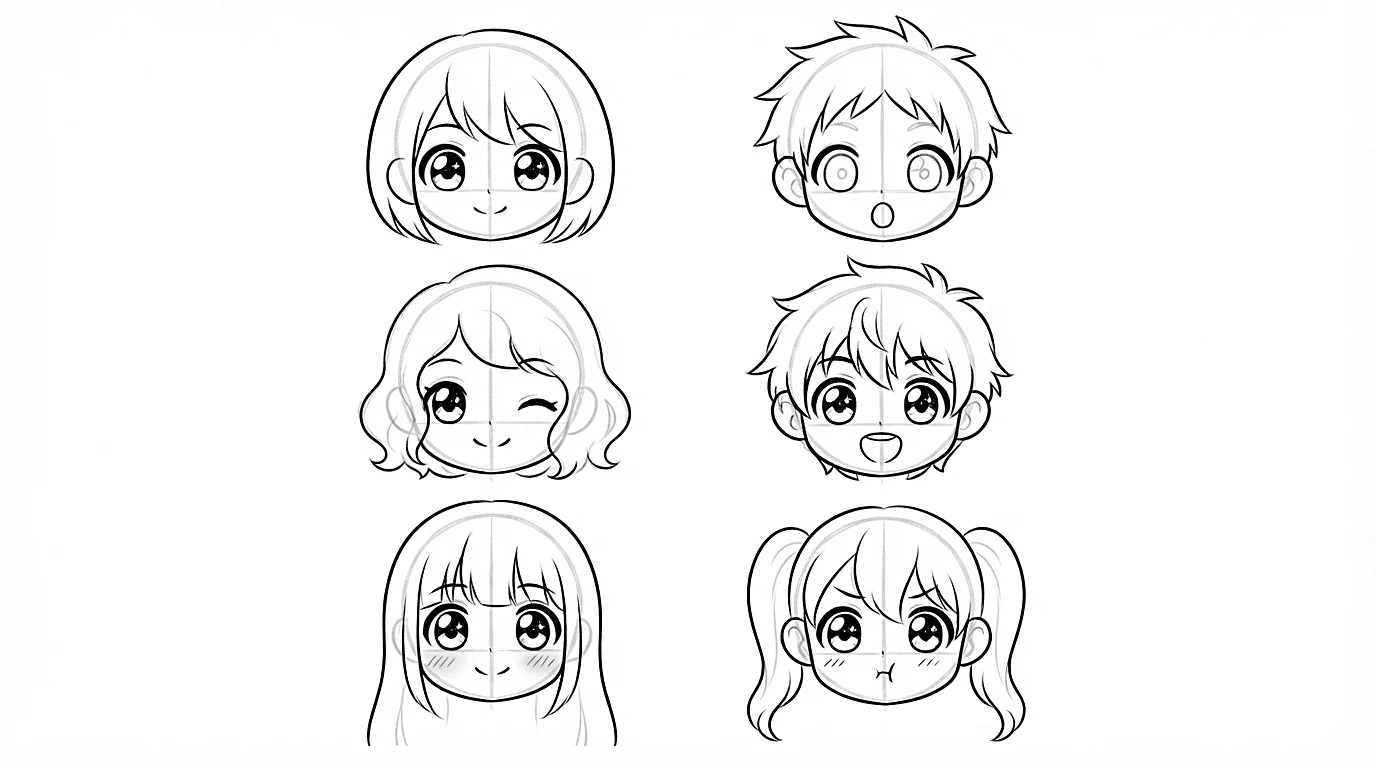
- The nose disappears or becomes a tiny dot.
- The mouth is a small line or shape, placed very low, close to the chin.
- The eyes take up almost the whole width of the face, with big highlights.
- The ears are small or hidden by the hair.
- The hair keeps the overall shape of the character's hairstyle, but with fewer, bigger locks.
Turning a character into a chibi
-
Step 1Find what makes them unique
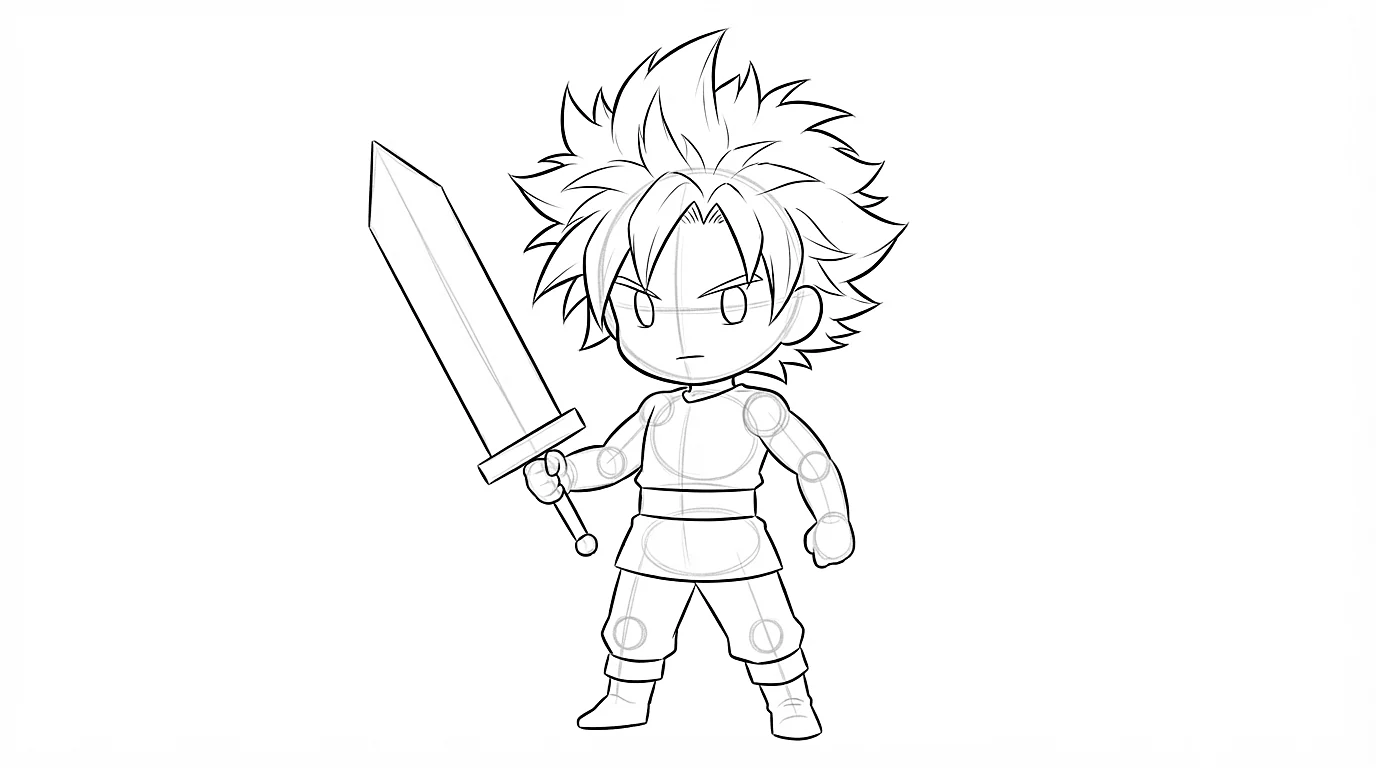
Their hairstyle, their outfit, an accessory, their main color. These are what must stay.
-
Step 2Keep, enlarge, remove
Enlarge what matters (an iconic lock, a weapon, a hat) and remove the small details (folds, buttons, patterns).
-
Step 3A pose that tells who they are
A chibi shows its personality through its pose: arms up for an energetic character, hands behind the back for a shy one.
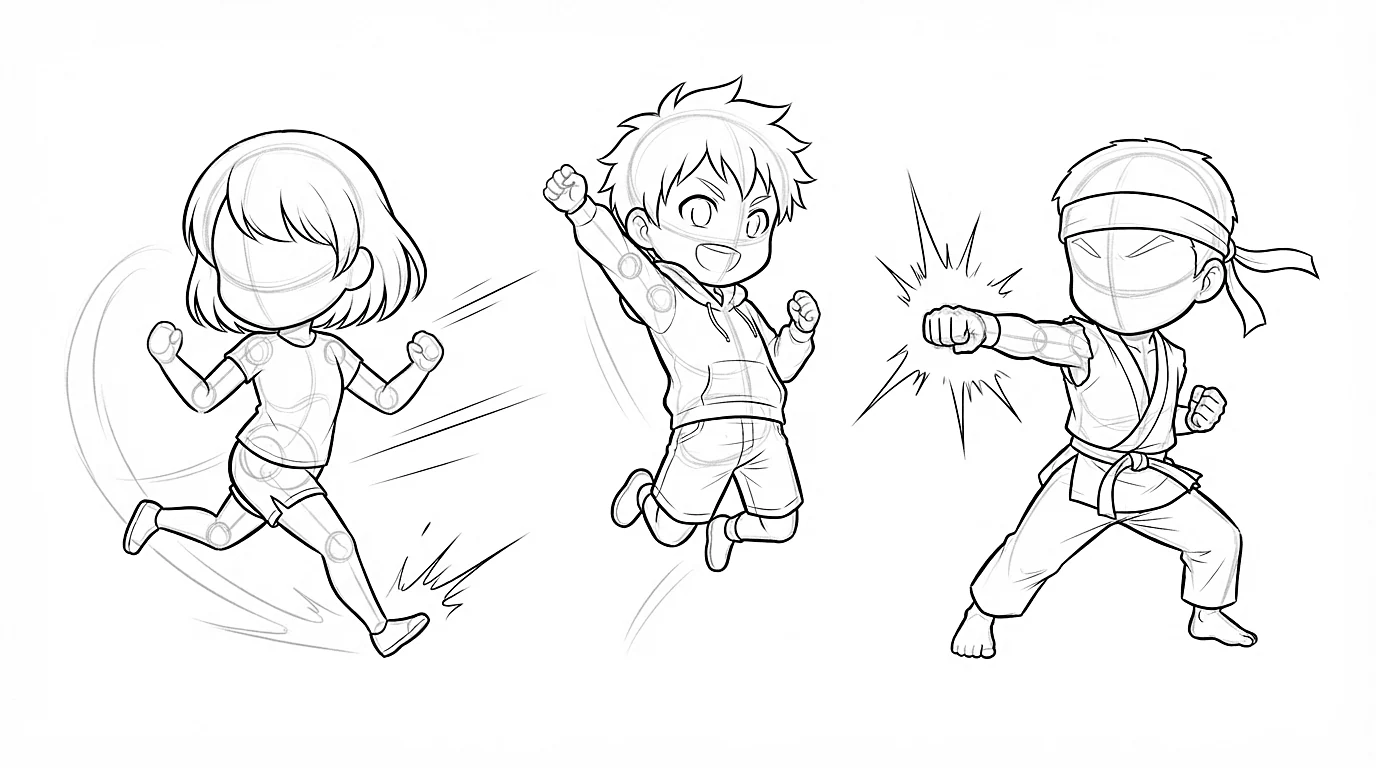
Chibis in action
With such a short body, every movement has to be exaggerated to read.
-
Step 1The line of action
It matters even more than on a regular character: bend the whole body in one direction, from head to feet.
-
Step 2The head leads
Tilt the big head toward the movement: it shows the direction far more than the little arms.
-
Step 3Stretchy limbs
To run or punch, stretch an arm or a leg a bit longer than usual. On a chibi, nobody will call it cheating.
-
Step 4The effects around
Speed lines, little dust clouds, stars: on a chibi, they do half of the action.
Keep both feet firmly planted when the chibi stands still: with such a heavy head, it has to look stable.
The coach's tips
- Always build the head first and the body under it: the head sets the scale.
- Thicker, rounder lines make a chibi cuter: avoid sharp angles.
- Try several head sizes side by side: 2 heads for a very cute style, 3 for a more readable one.
- Chibi expressions can be very simple: a line for closed eyes, an oval for surprise.
- Pick a character from the catalog you have already drawn and make their chibi version: you already know their details.
Practice right now
Once the lesson is read, draw this exercise: it takes about 15 minutes.
Pick a character you like and draw them at three sizes: 3 heads, 2.5 heads and 2 heads. Keep their hairstyle and outfit recognizable each time.
Keep learning
 Beginner
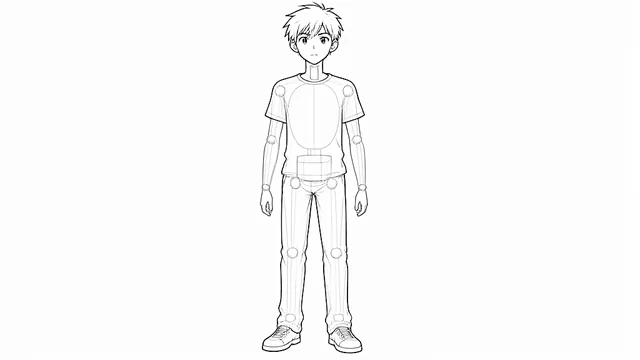
How to draw an anime body, step by step
Measure the body in heads, build it with simple volumes, then draw the outline and the clothes.
 Beginner
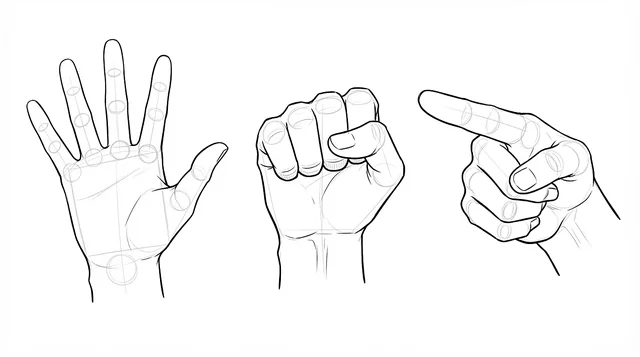
Hands: a box, an arc and five fingers are enough
A box, an arc and five fingers are enough.
 Intermediate
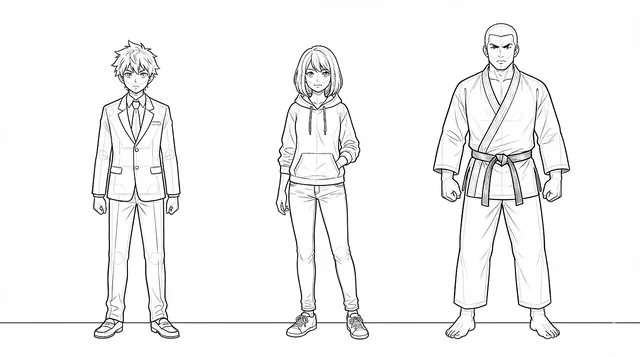
Clothes: see where fabric pulls, falls and folds
See where fabric pulls, falls and folds.